In this photograph from my evening walk along Piney Woods Church Road, an unidentified brown beetle pauses at the edge of a leaf.
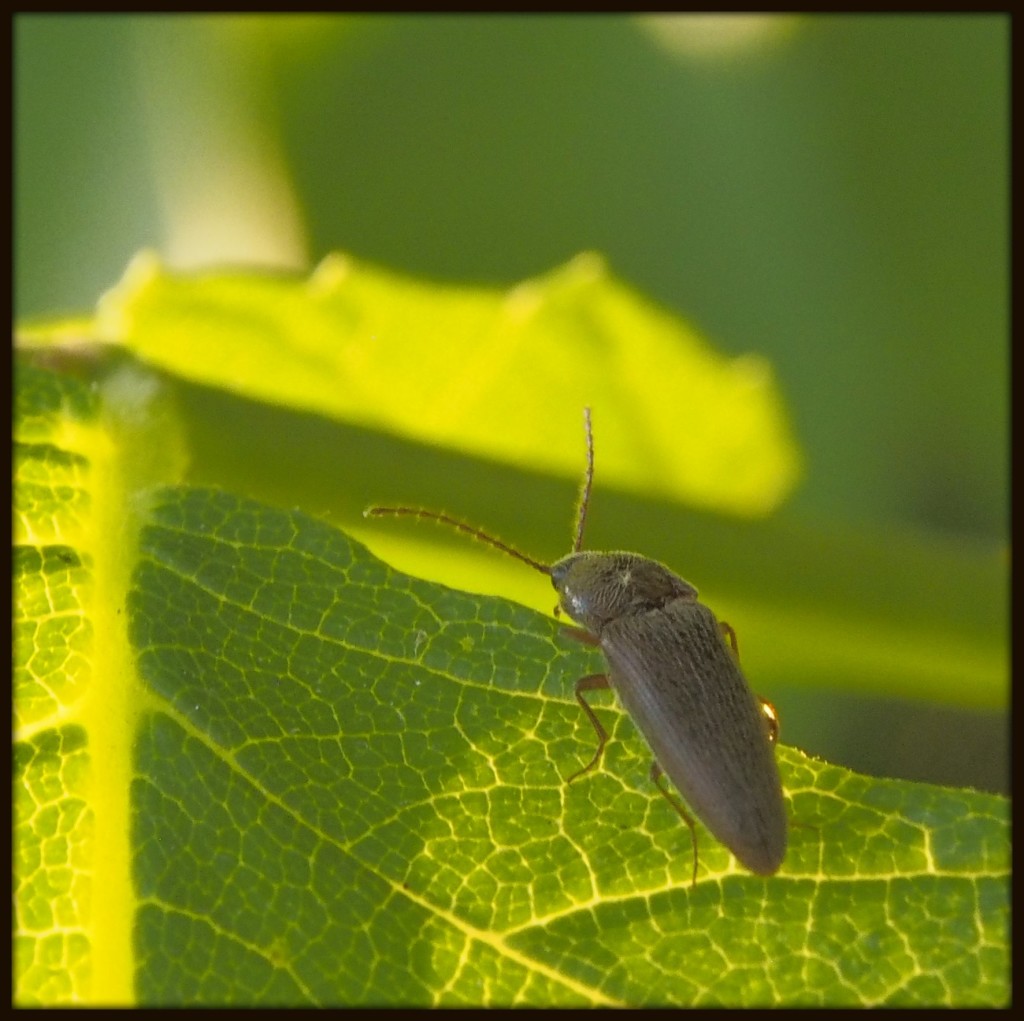
In this photograph from my evening walk along Piney Woods Church Road, an unidentified brown beetle pauses at the edge of a leaf.
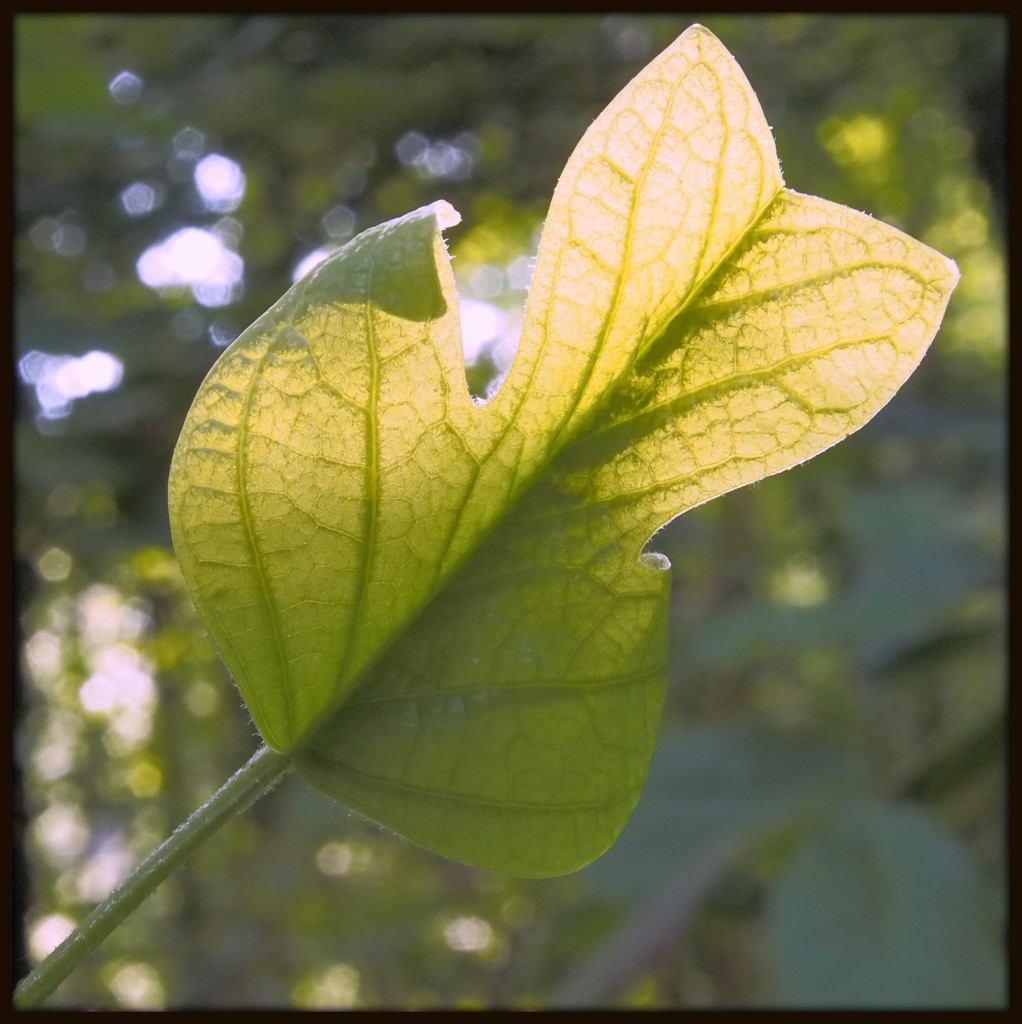
This morning I set out down Piney Woods Church Road as usual, in search of an image for Day 140. I knew it would be practically impossible to match yesterday’s photographs of a pair of mating silkmoths. I settled, instead, for yet another tulip poplar leaf, illumined by the mid-morning sun. There is so much beauty in even the most commonplace expressions of nature.
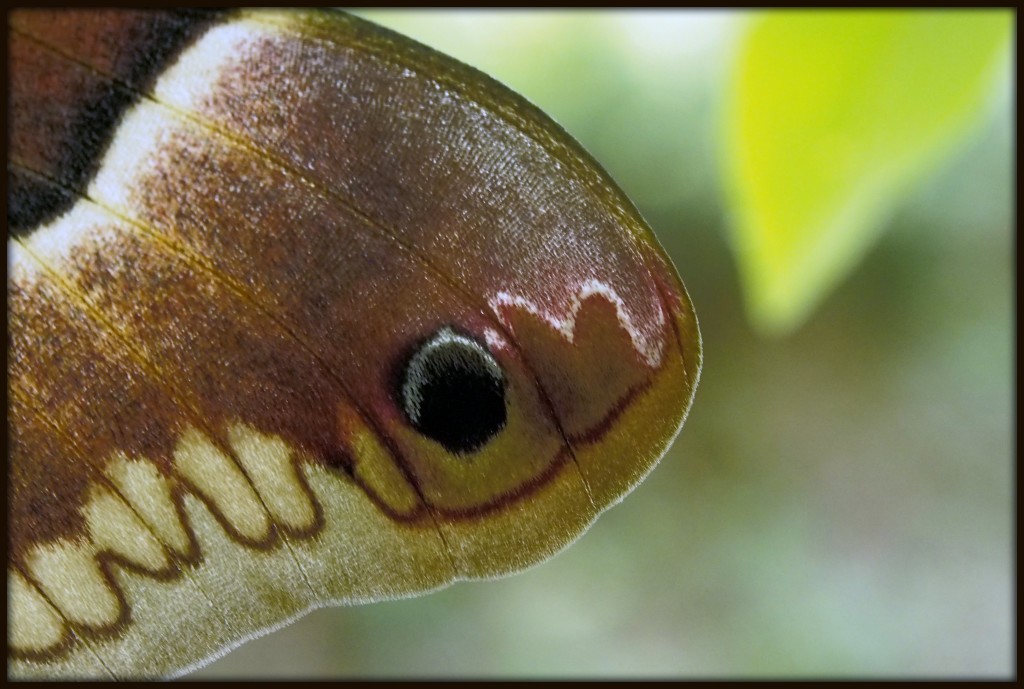
On my walk late this afternoon, I was startled and delighted to discover that the Saturniid moth whose cocoon I photographed earlier this year had chosen this very day to emerge. It was a female tulip-tree silkmoth (Callosamia angulifera). What a beautiful creature, and how fortunate I was to be passing by — and to notice this moth — at the time of her emergence.
As an addendum, I discovered the next day that I was mistaken — it was a different moth from the one in the cocoon! The cocoon remains intact as of 23 May, and I continue to await the emergence of yet another moth.
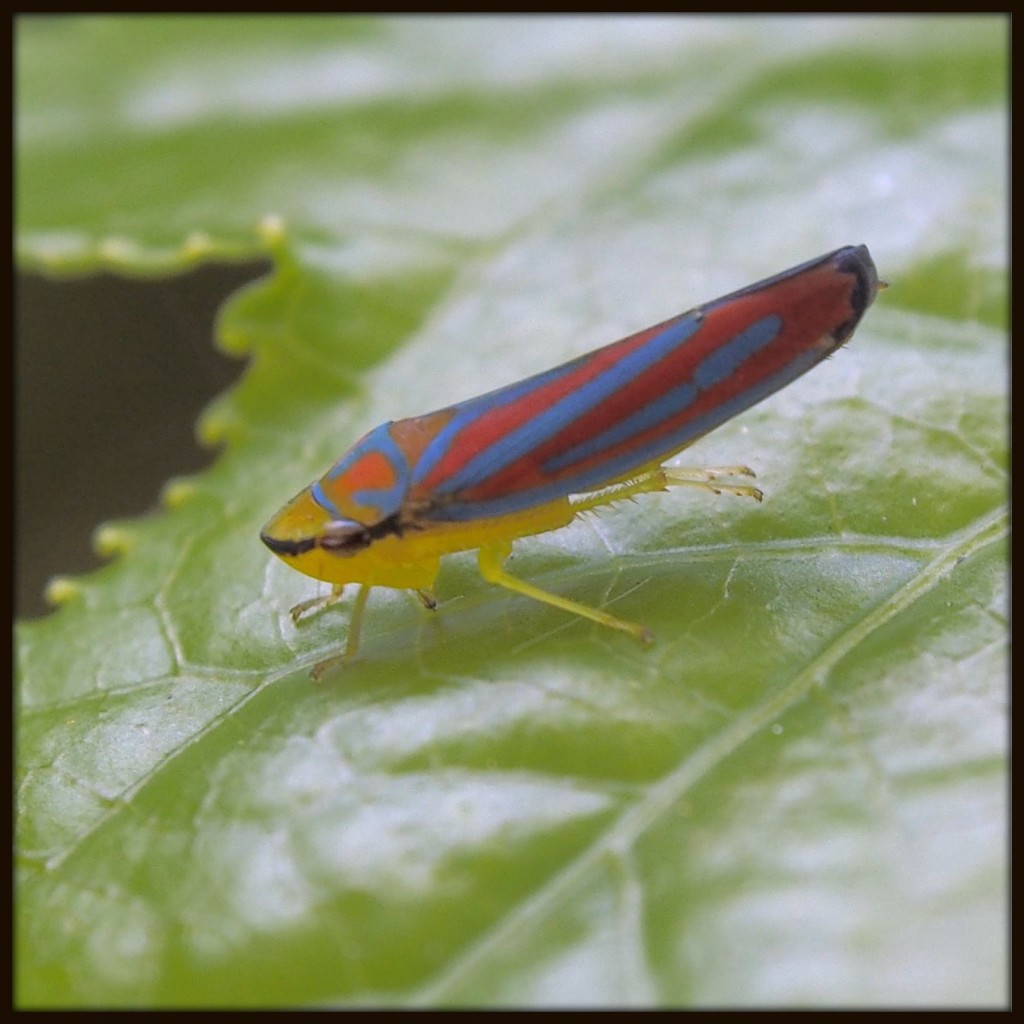
I caught this red-banded leafhopper (Graphocephala coccinea) resting on a sweetgum leaf along Piney Woods Church Road this afternoon. Although common, they are quite small (less than half an inch in length), and easily overlooked (unless they have become a plague in one’s garden). Because they feed on the sap of plants, they are generally considered agricultural pests. I still find them fascinating, with their almost alien shape and brilliant coloration.
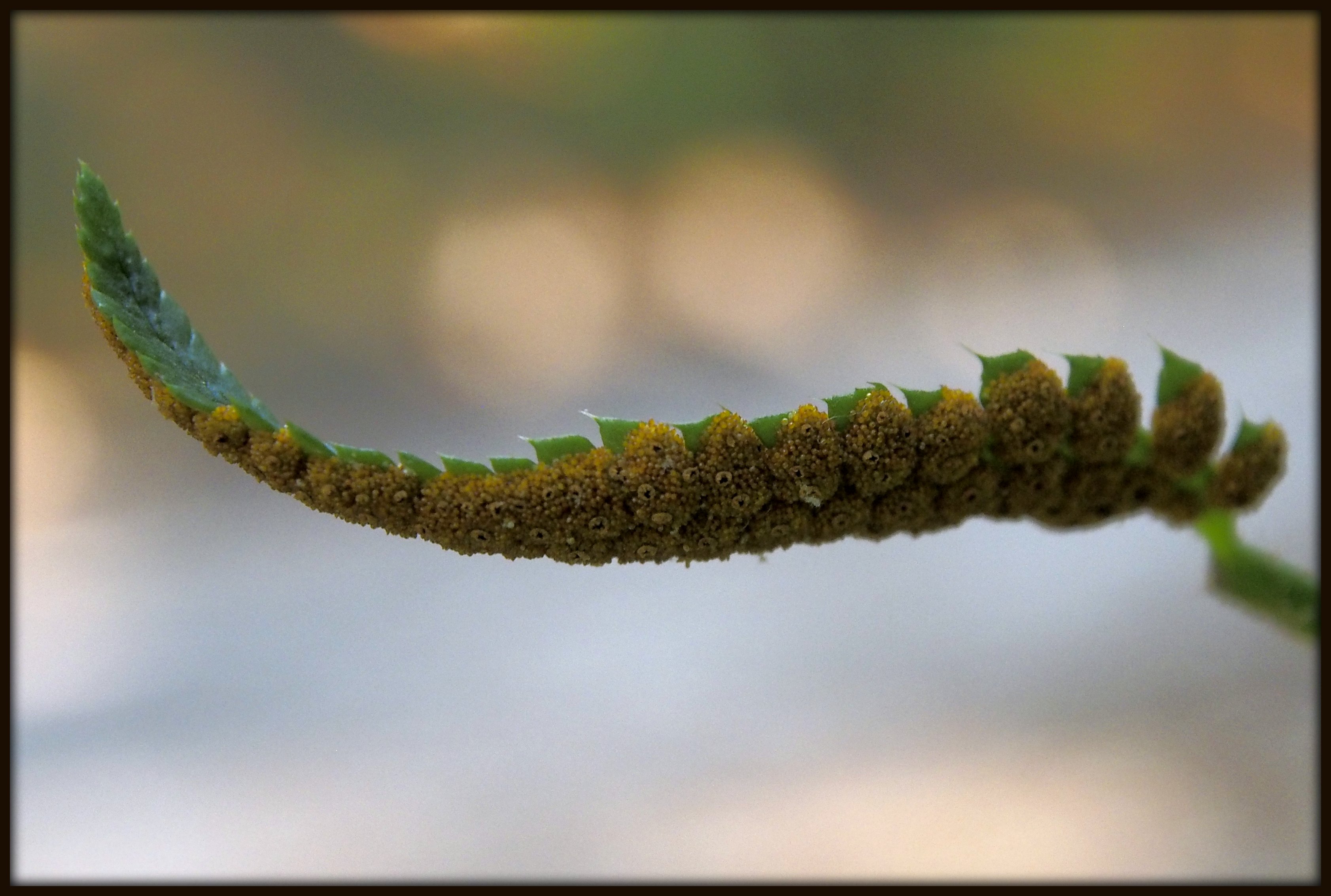
Today I dashed off to Piney Woods Church Road mid-afternoon, having returned from one hike (Line Creek Preserve in Peachtree City; photos from that walk will be posted tomorrow) and being about to leave for another one (Boundary Waters Park in Douglasville, where I hiked sans camera). I took few photographs; one feature that caught my eye was a Christmas fern (Polystichum acrostichoides) sporophyte frond covered with tiny brown dots, called sori (singular: sorus), which are clusters of spore-bearing structures called sporangia. Each sprangium, in turn, contains countless dust-like spores. Basically, there is a whole lot of reproduction going on here. No sex, though — that is reserved for a separate generation of fern plants, called gametophytes. Alternation of generations (from gametophyte to sporophyte and back to gametophyte) is characteristic of ferns, mosses, and their ilk.
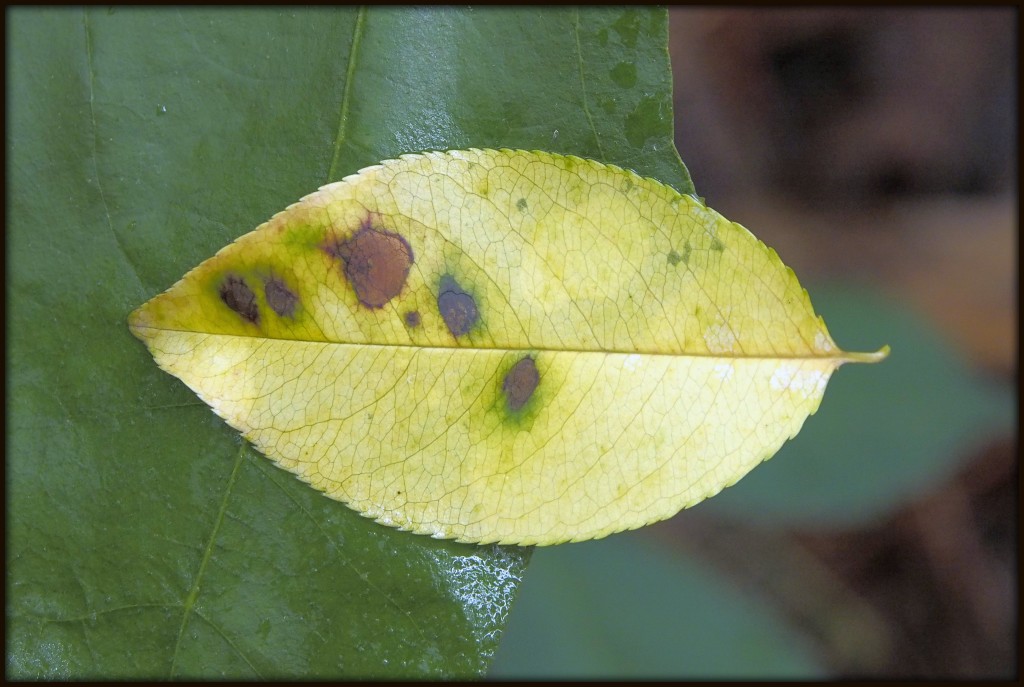
Late spring has come to Piney Woods Church Road, and everywhere I look I encounter shades of green. After last night’s rainfall, the green is vibrant, pulsing with life. It claims nearly every inch of my journey, apart from the road surface and cloud-filled sky. Splashes of other colors are rare and precious. Here are two gems from my return walk toward Hutcheson Ferry Road. The first is a bull thistle — certainly a pestilential weed, but also the only bit of brilliant magenta along the roadside. The second is a yellow leaf — probably pin cherry — balanced on the edge of a deep green oak leaf.

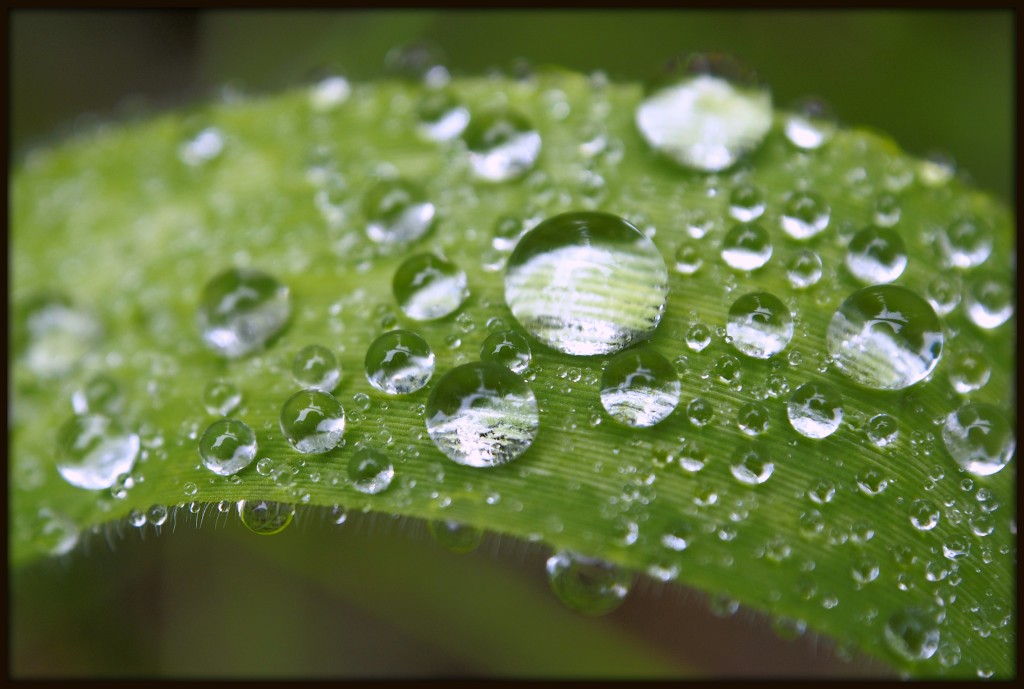
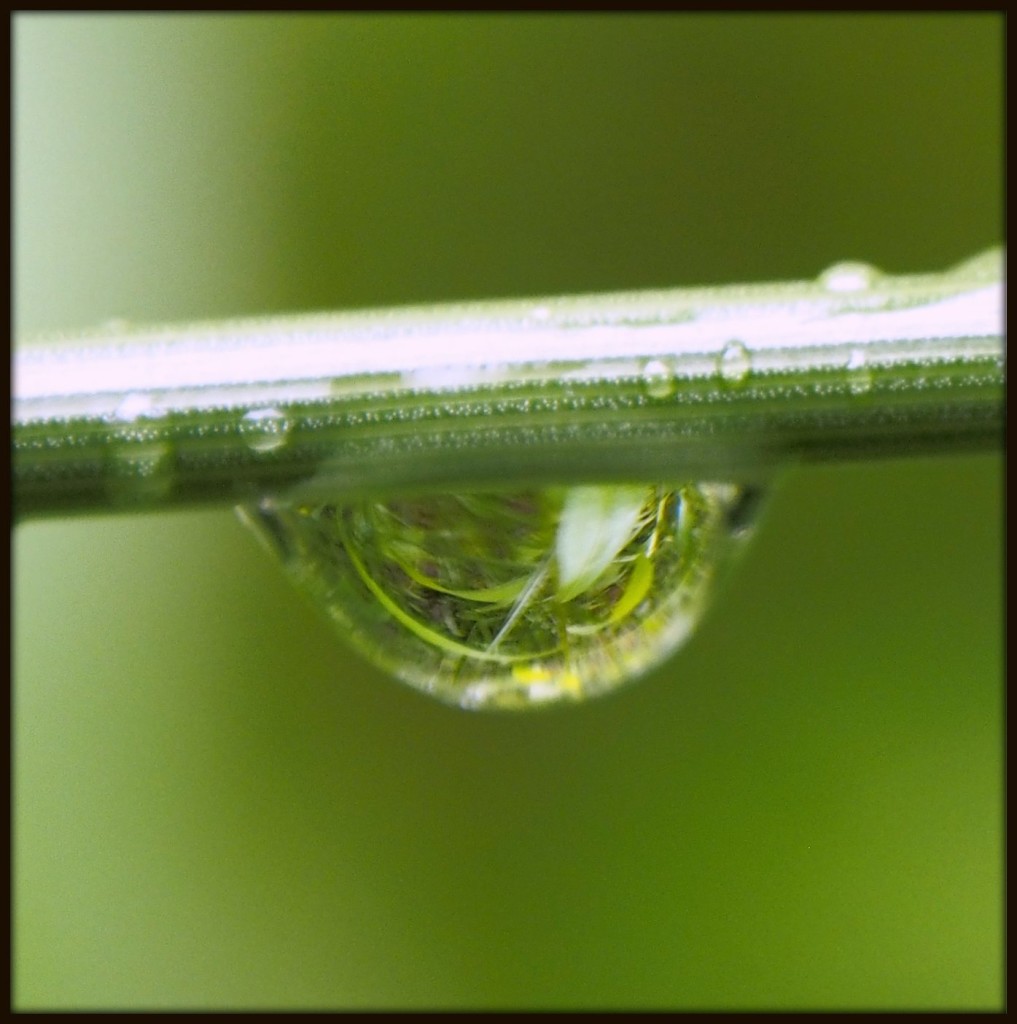
From this morning, I offer two more water droplet photographs along Piney Woods Church Road. I ought to do an exhibit on water someday….
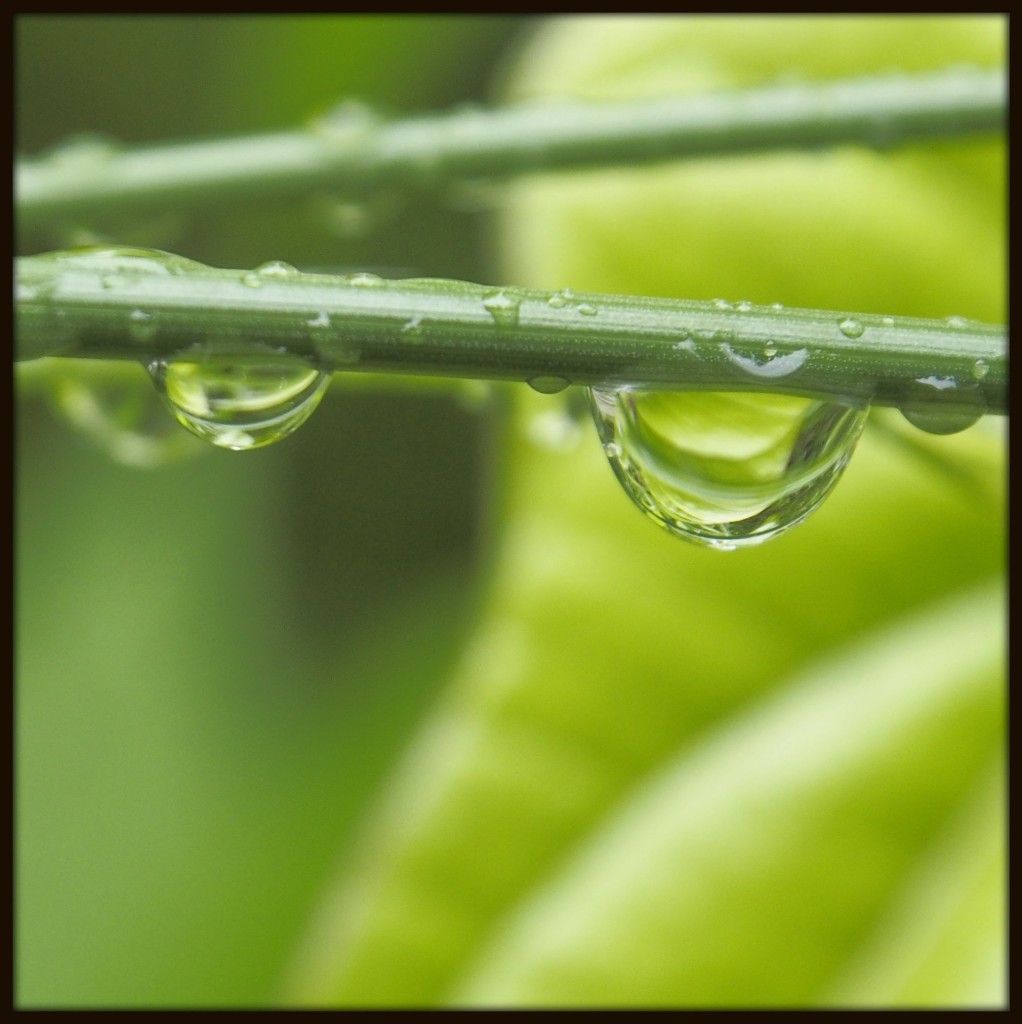
Oh, what a magnificent morning! The air temperature was about sixty degrees, and the cool breeze was delightful. The sky was still overcast, and I felt a bit of mist against my skin as I made my way to Piney Woods Church Road. Evidence of the long overnight rainstorm were everywhere. To celebrate Day 135, I have chosen this macro of a single drop of water, containing an inverted roadside landscape, suspended from a horizontal plant stem.
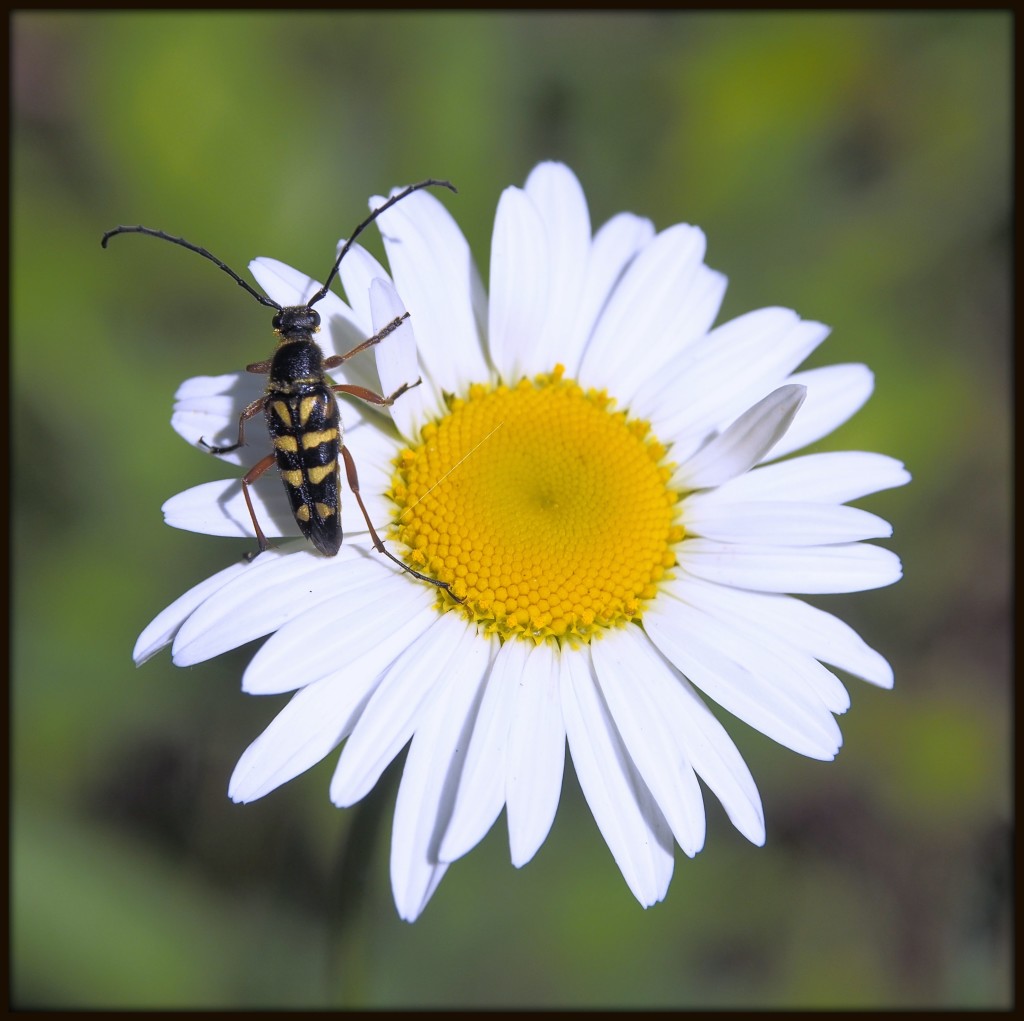
On my walk home today along Hutcheson Ferry Road, I noticed this banded flower longhorn beetle (Typocerus velutinus) resting on an English daisy flower head. The larvae of this beetle feed on decaying hardwood trees, while the adults, not surprisingly, dine on nectar and pollen.
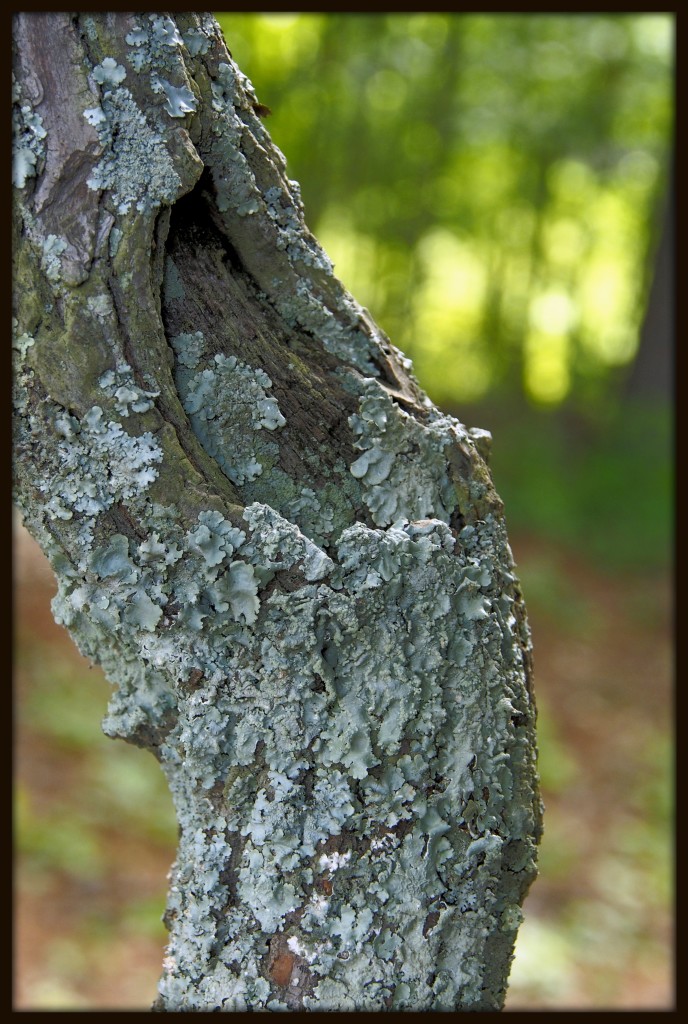
After so many photographs of light on leaves (and so many more to come, no doubt), today I photographed this sassafras tree trunk along the edge of Piney Woods Church Road.