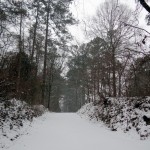
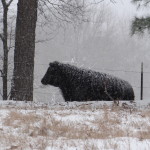
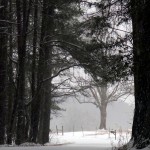
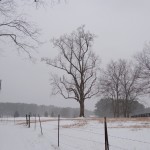
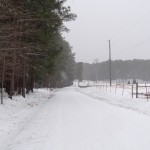
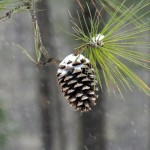
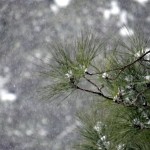
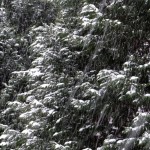
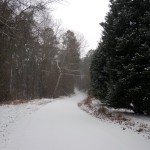
Snow is quite unusual in this part of Georgia, so it seems worthwhile to devote a post to documenting this past Tuesday’s snowstorm, from the perspective of my daily journey down Piney Woods Church Road. When I walked the road late Tuesday afternoon, the snow was still falling, and there were no tracks — vehicular or otherwise — on the roadway. From Rico Road to Hutcheson Ferry Road, it was covered over with a pure white veil.
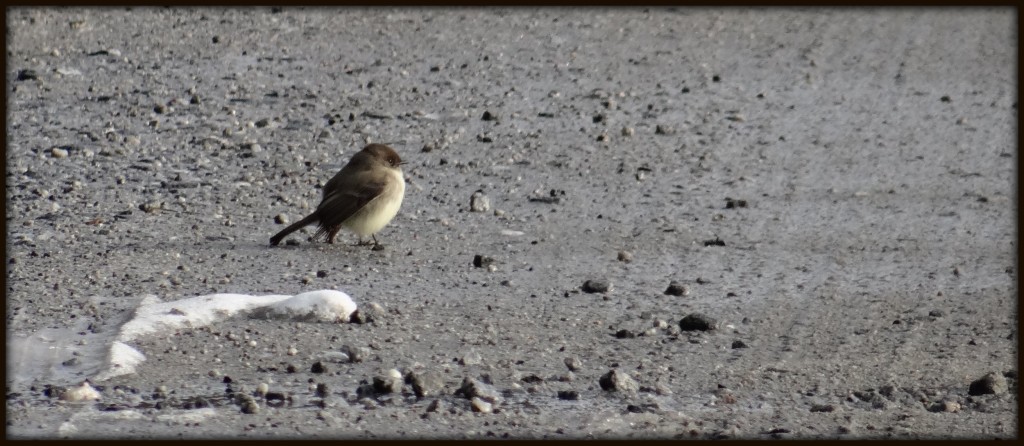
According to Birds of Georgia, the eastern phoebe (Sayornis phoebe) is a “drab” bird, although it makes up for this with its trait of enthusiastically pumping its tail up and down, “exhibited with a zest and frequency that few species can match.” This particular phoebe paused just long enough for me to take its photograph, looking particularly contemplative (and rather cold), set against a gravel road backdrop evocative of a Japanese rock garden.

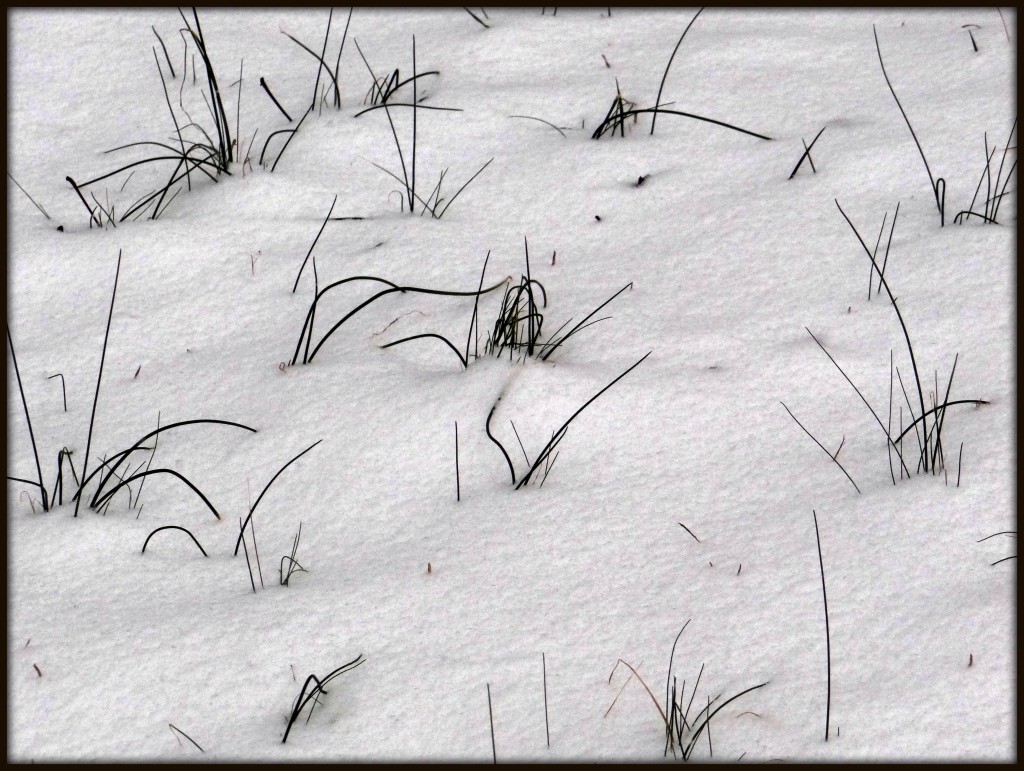
Snow is a great transformer of landscape. Pick the most mundane scene imaginable, add a layer of freshly-fallen snow, and the result can border on magical. I set out this afternoon into a steady snowfall, looking for images of trees and animals enduring the elements — pines catching snow on their needles, cows hunkered down in the pasture. Ultimately, though, my favorite photograph of the lot is probably this one: wild onion grass (the kind that occupies much of my front yard every spring) in the snow. The photograph was an afterthought, really — practically the last one I took, just before rounding the corner onto Rico Road and heading home.

This time of year in Georgia, unless it snows (which may happen tomorrow!), the landscape takes on a dull, sere, gray-brown appearance. The eye yearns for splashes of color. Some of the plants oblige with still-green leaves, such as water oaks and greenbriers. For yellows, there are the pine warblers, when one happens to catch a glimpse of one. For purples and reds, there is always the possibility of another sunset. For blues, there is the sky. And, occasionally, there are bluebirds.
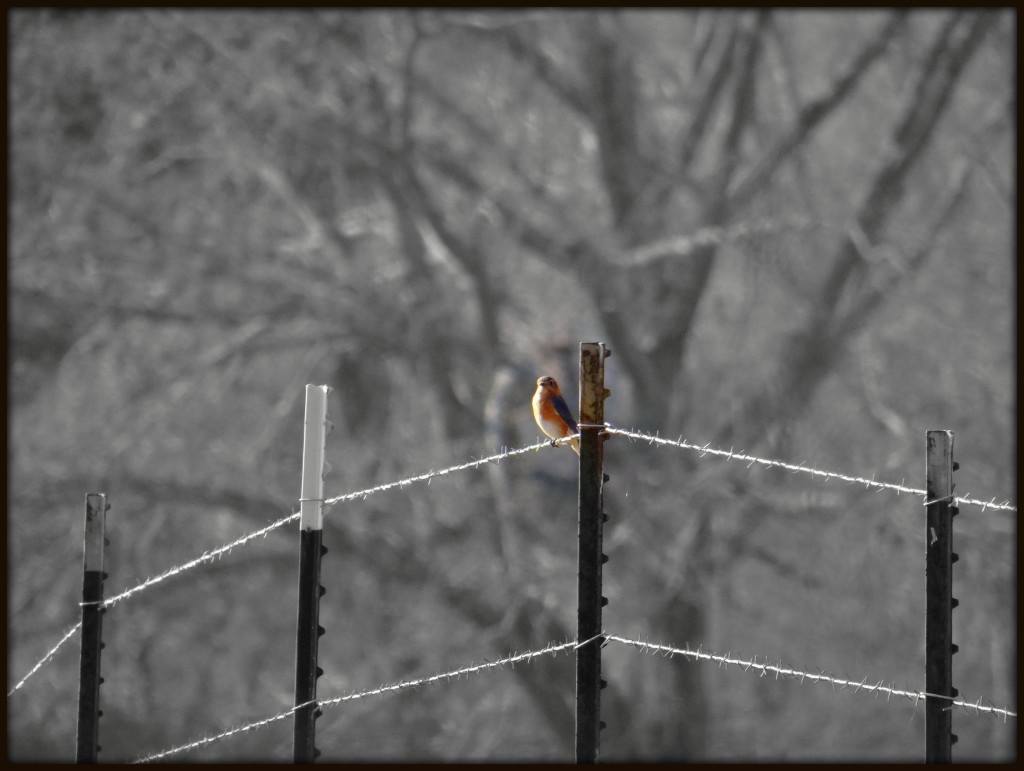
This is an accidental photograph; I am not a wildlife photographer. Still, this time of year there is so little changing along Piney Woods Church Road (apart from the weather, that is), that I eagerly photograph anything that moves on wings or feet. Whenever I see a bird perch on a fence (which usually happens when the plus four macro is screwed onto my camera lens, preventing me from zooming until I remove it) I quickly try to take a photo, without really thinking about composition or light or anything but whether or not the bird will fly before I zoom, focus, and snap the shutter. Usually, I get but one image, and rarely two. It is as if the birds know I am trying to photograph them, and dash away. That happened today — I saw a distant bird alight on a barbed wire fence, I zoomed in, took the photo, and the bird flew off. I thought nothing more of it until I returned home, reviewed the photographs on Picasa 3, and discovered my subject was a lone bluebird, against a nearly monochromatic background. Beautiful.

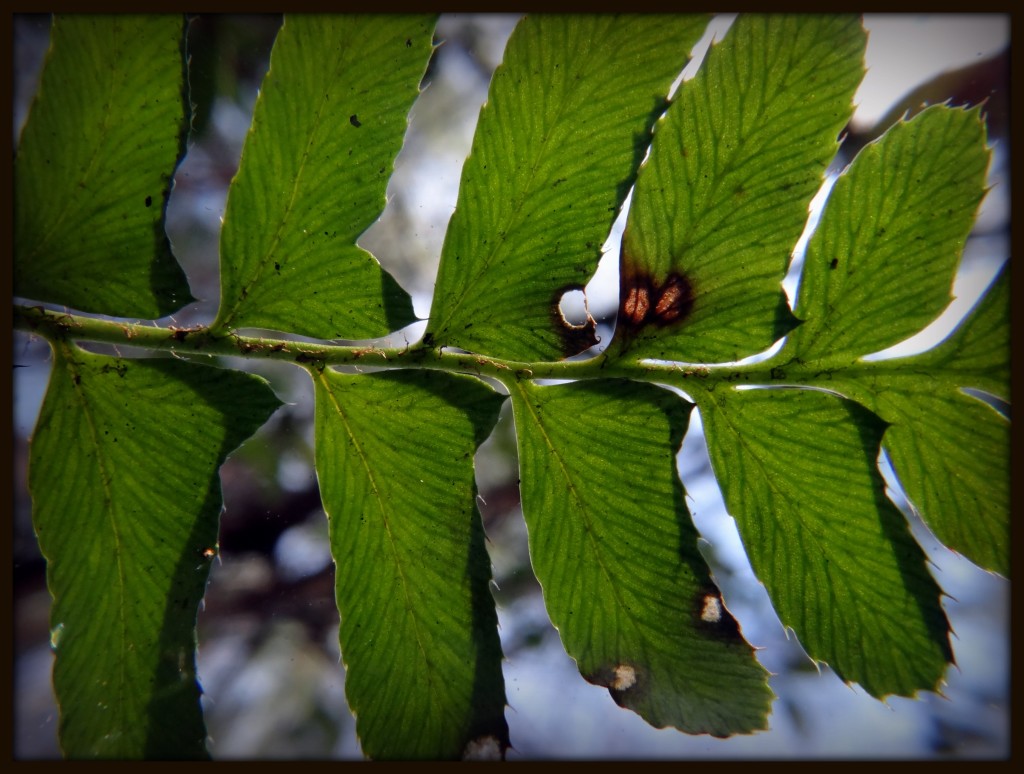
Today offered me yet another in a string of cold mornings, and coming home from errands I stopped at Piney Woods Church Road, my camera with plus ten macro in hand. I explored worlds contained in leaves, mosses, and bark from a long-dead pine tree. My choice from the day’s ramblings is this image of the leaflets of a Christmas fern, verdant green in a stark brown and gray Georgia winter landscape.

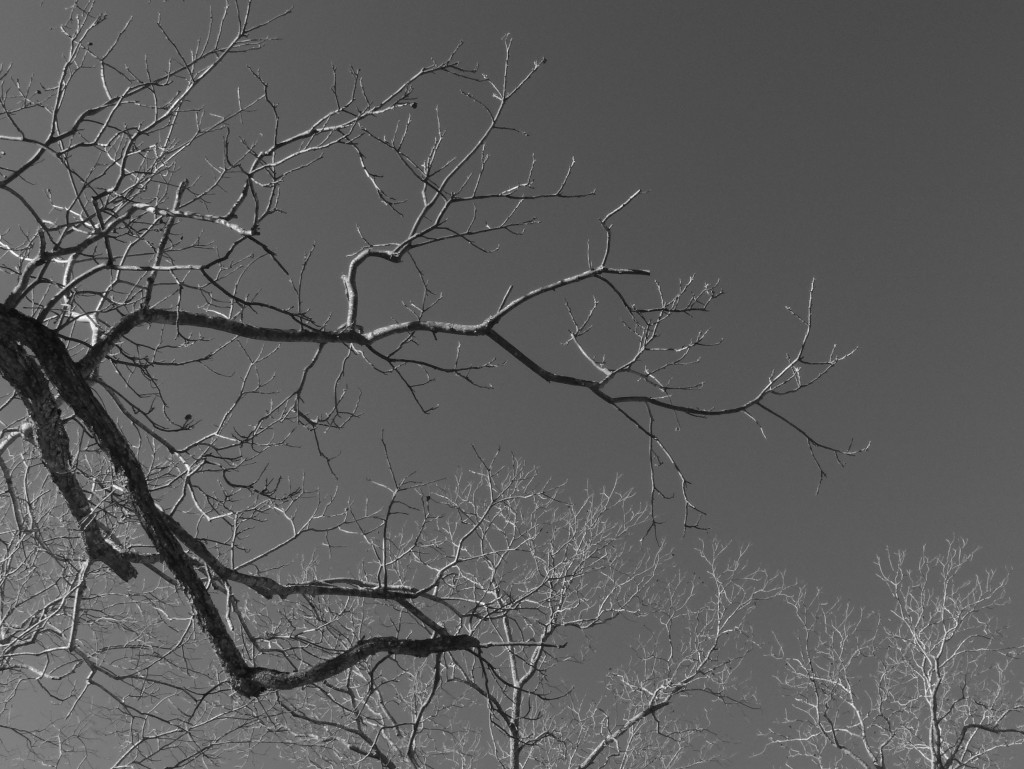
Another shot of arctic air arrived yesterday, and this morning it was twenty-five degrees, with a light breeze. Bare hands became partially numb after just four or five photographs. It was a day for admiring Mark Hirsch, who photographed an old burr oak tree in a pasture every day of the year, including on days that were bitterly cold by Wisconsin standards, not Georgia ones. Adapting to the cold, I have identified a few images I have been taking practically every day, and for the next few days I will focus on each one of them in turn. Today, I drove to the midway point of Piney Woods Church Road, to photograph some old pecan trees, some of which actually appear on an aerial photograph of the area back in 1938,making them probably 100 years or more in age. The most grizzled veteran stands in one of the pastures, and merits its own photograph, which I will take sometime soon. For today, though, I offer the image of bare tree branches, reaching for the sky.

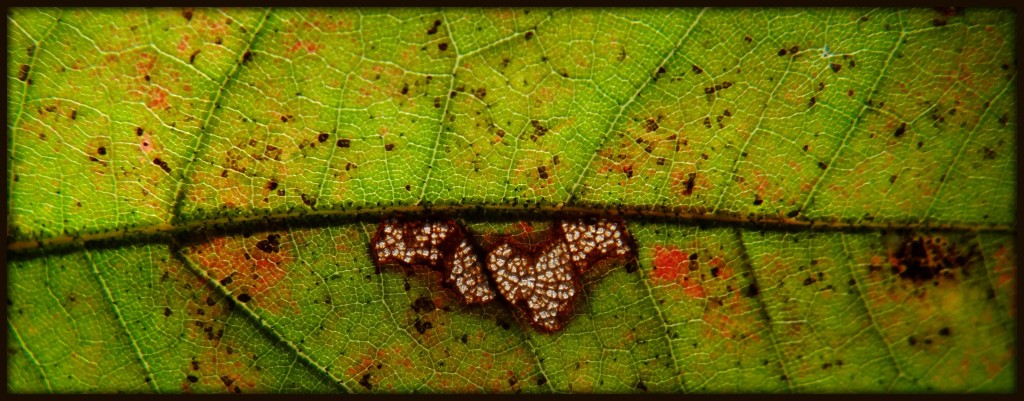
I raced and approaching front (with its impending clouds, colder temperatures, and strong winds), getting out to Piney Woods Church Road while the skies were still clear. Morning sunshine offered marvelous backlighting for macro photographs of oak leaves, mosses and fern fronds. The veins on this water oak leaf (Quecus nigra) form a kind of botanical map, reminiscent of medieval strip maps showing paths of pilgrimage (you can view an example of one here). What kind of journey does this leaf offer us? What holy lands does it reveal?

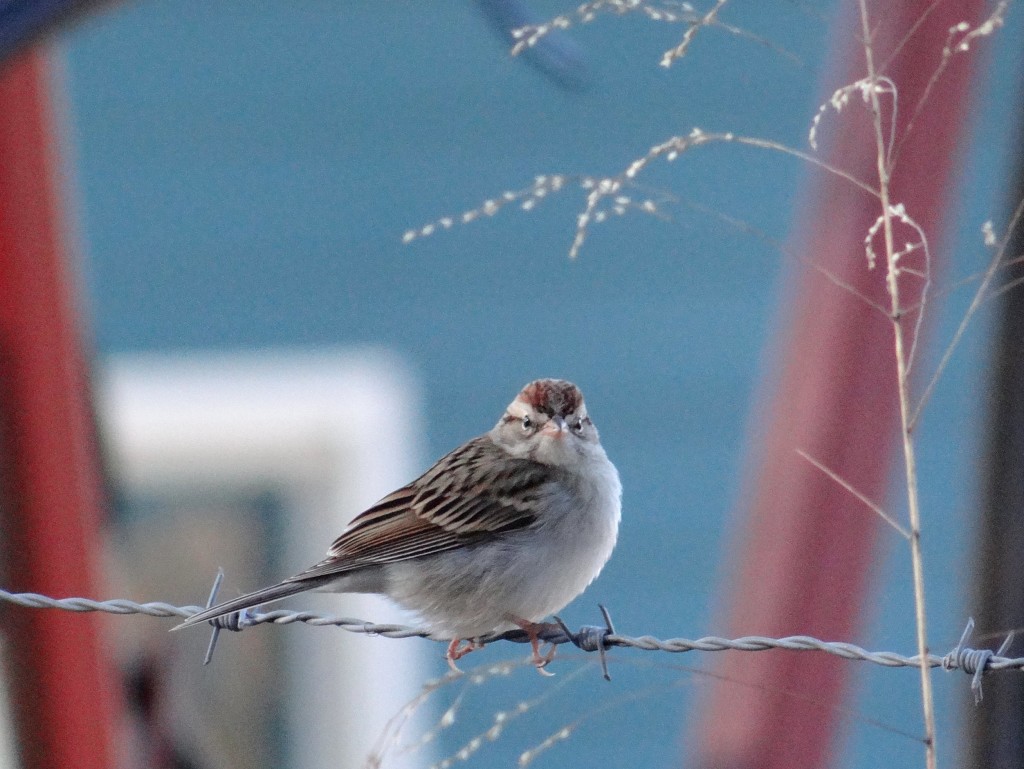
On yet another in a near-endless stream of clear and sunny days, I set out for Piney Wood Church Road convinced, yet again, that I would bring back a macro image to share. I photographed quite a few still partly green oak leaves, backlit by the morning sun. I immersed myself in a couple of clumps of moss, too. My favorite photograph of the day, however, is this sparrow, perched on a barbed wire fence in front of an old barn (formerly used for mules that plowed the cotton fields in the area). He (or she) is gazing straight at me. Looking at this picture, I remember that, as I walk the road, I am under near-continual surveillance by a host of avian presences. Turkey buzzards circle overhead, a bluebird pauses on its territorial circuit to observe me from a pecan tree branch, and sparrows hunt for seeds in a cow pasture. Carrying my camera, it is easy for me to think of the Piney Woods Church Road landscape as a collection of objects to be photographed, rather than being alive, participatory. Then my eyes catch those of a sparrow, gazing back, and I know that I am not alone.


Lichens are true oddities of the natural world. They do not fit squarely into any botanical category, or, for that matter, kingdom of living things. They are composed of fungi and plants that are either collaborating in a symbiotic relationship or represent the successful enslavement of a member of one kingdom by a member of another. Are they “algae with space suits”, wrapped in the hyphae (threads) of fungi, and therefore capable of living in such inhospitable environments as bare rock faces? Or are the “fungi that have taken up farming”, using algae and cyanobacteria (“photobionts”) to produce their food so that they no longer need to work as decomposers? Either way, the result is an organism whose thallus (body) looks neither like an alga nor a fungus.
There is an impressive body of vocabulary words peculiar to lichens. One set of terms classifies lichens by the form that the lichen takes. Lichens that form crusts on rocks are crustose; ones that appear leafy are foliose; and those that have three-dimensional, shrubby forms are called fruticose. Another set of terms classifies lichens by where they are found: corticolous (on tree bark); saxicolous (on rock); terricolous (on bare earth); and even lichenicolous (on other lichens).
Then there are the terms for the fruiting bodies, all of which are best appreciated with a hand lens. These are important to be able to distingish (a task that is both an art and a science), because they play a significant role in lichen identification. Apothecia are shaped like cups or disks, and release fungal spores. Perithecia are also spore-bearing structures, but ones that are embedded within the lichen’s body, opening with pores. Isidia are fingerlike projections from a lichen which break off, enabling the lichen to reproduce vegetatively. Soralia are another means by which lichen can spread vegetatively. They are dusty patches on the surface of a lichen’s body that release fine particules of algae and fungal threads mixed together (called soralia). This list is not exhaustive. And there are even some lichens that have not been observed bearing fruiting bodies of any kind; biologists still do not know how they reproduce.
The oddest thing about lichens, though, might be that they can be found living almost anywhere, yet so few people stop to notice them. As long as you live where the air is relatively pollution-free (downtown Atlanta has a “lichen-free zone”), you will find them on rocks, tree branches, and disturbed soil. The best way to enter their world is on hands and knees, with a magnifying lens. Bring a child along, too. She will notice them before you do, and will explore their shapes and patterns with a sense of wonder that we adults would do well to emulate.
This article was originally published on April 5, 2010.
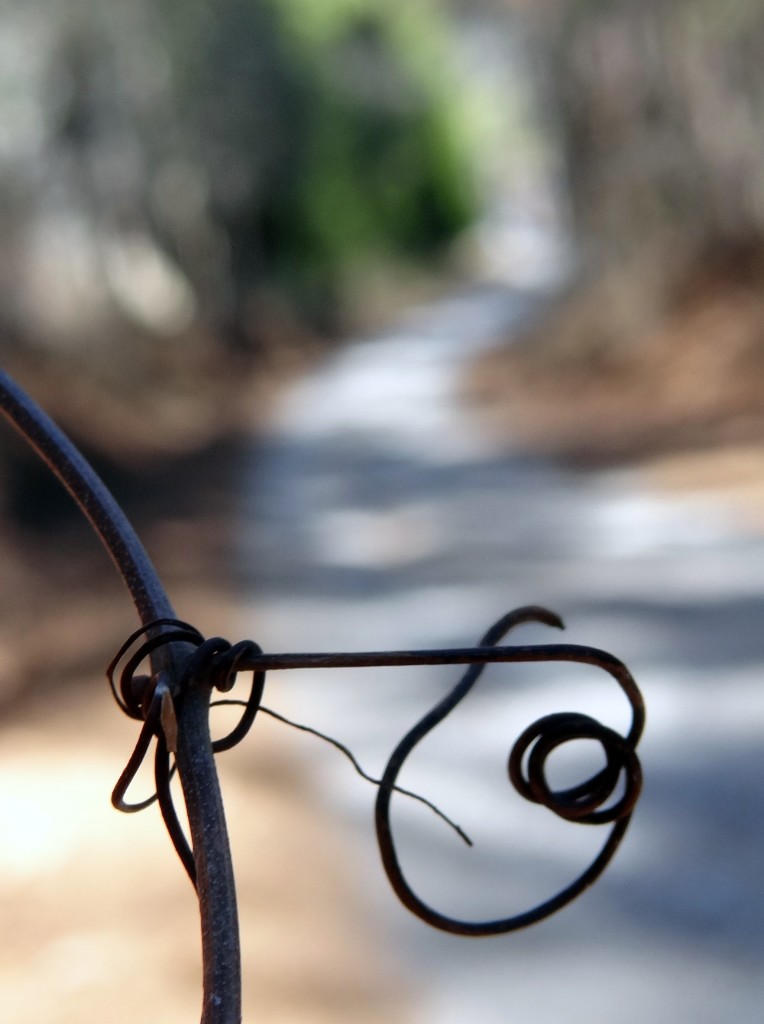
Under clear skies and with the temperature at about freezing, I set off late on a Saturday morning in search of adventures along Piney Woods Church Road. Perhaps it was the forecast, calling for more of the same for days on end, briefly interrupted by warmer weather on Monday, that made me seek out patches of green and buds suggesting spring. I took quite a few photographs of mosses and the green leaves of a vine I have yet to identify. But in the end, I selected this photograph of a vine tendril beside the roadway, looking back toward the junction with Rico Road. There is a patch of distant green, at least — the blurred outlines of a pair of cedars. Springtime seems quite distant at the moment, too.