Sep 062014
 

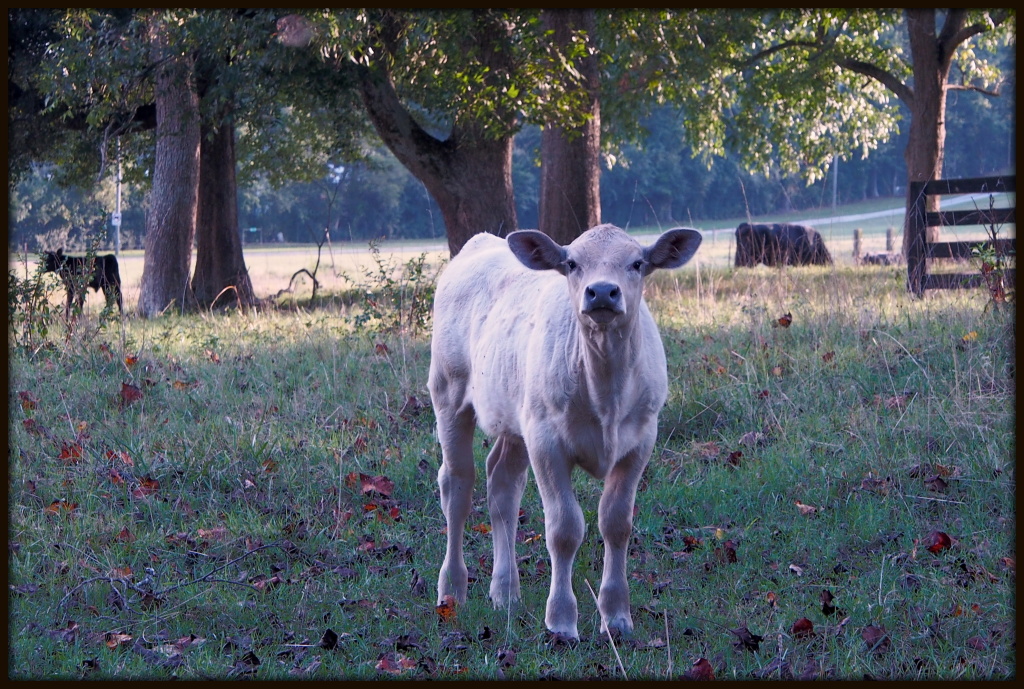
On Day 249, for Blog Post #499, here is this evening’s photograph of a white calf in a pasture along Piney Woods Church Road.  He watched me for a minute or so as I beckoned him to approach. His caution eventually overrode his curiosity, and he hurried off to join the rest of his herd grading placidly beside the road.


OLYMPUS DIGITAL CAMERA

Sep 052014
 

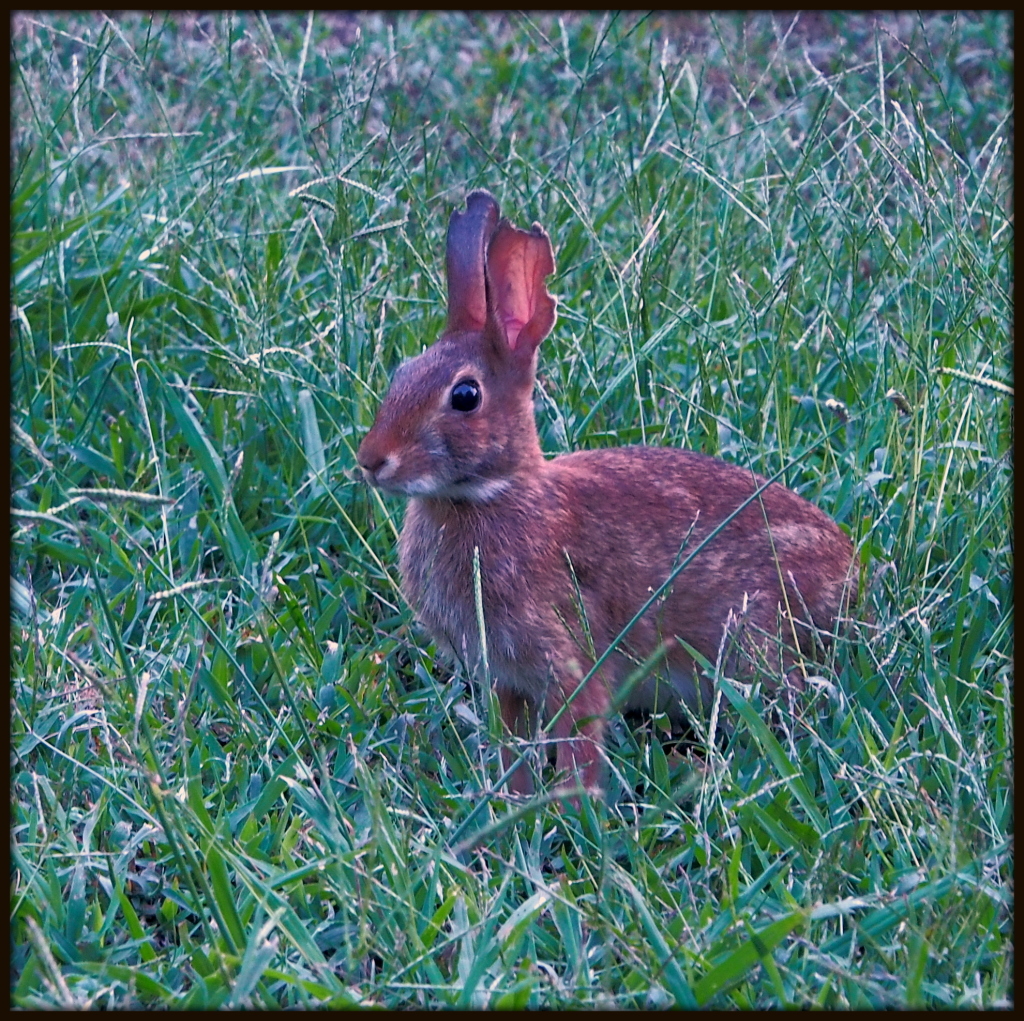
This evening I set out for Piney Woods Church Road a scant hour before sunset.  The air was a bit cooler, though still rather warm and muggy.  About halfway down the road, beside what was once a mule barn, I noticed a lean and wary Eastern Cottontail Rabbit (Sylvilagus floridanus).  It stood motionless in the grass, probably hoping to escape unnoticed.  It was completely alert, ears raised — though not quite “all ears”, as it apparently lost a couple of pieces of one of them in some past mishap.  I was able to approach to within eight feet or so of this rabbit before it turned tail and hopped a short distance away.  We parted company, and I continued on my walk.


OLYMPUS DIGITAL CAMERA


Sep 042014
 

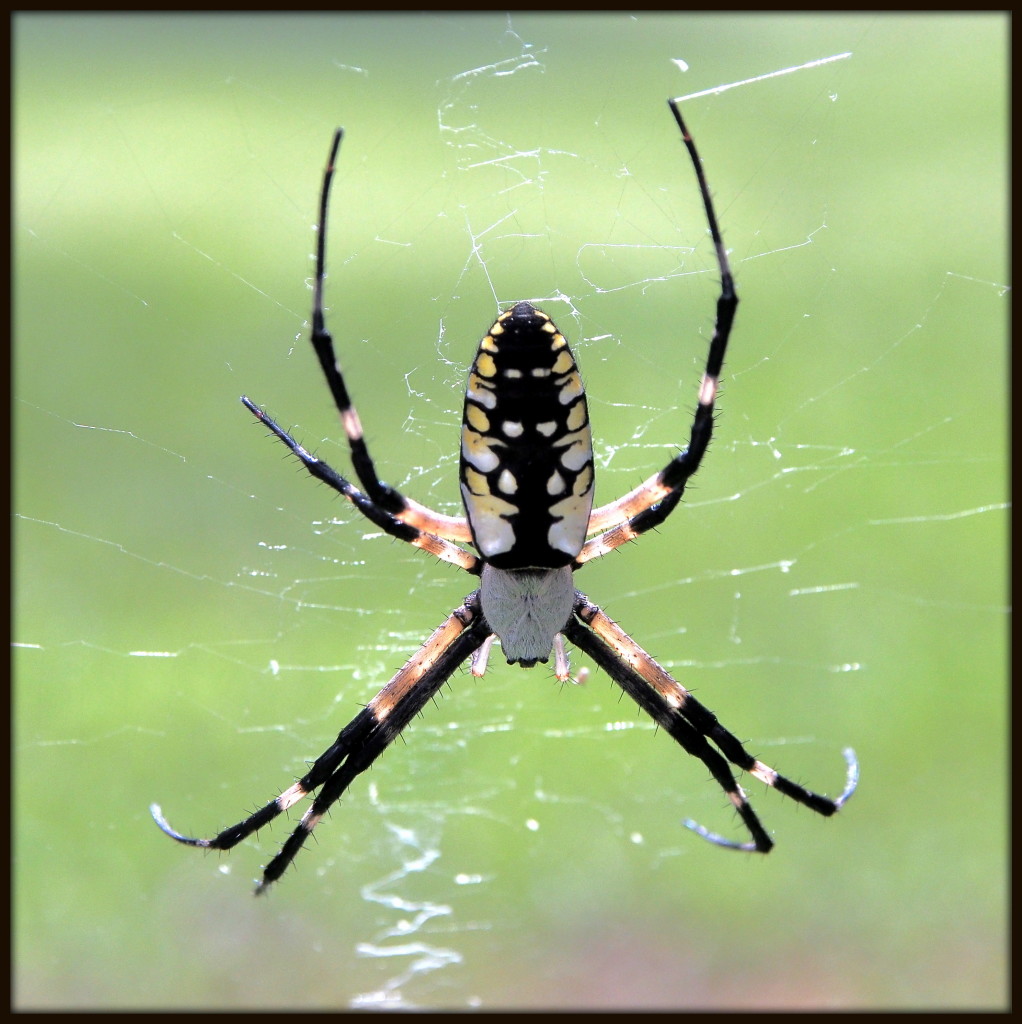
I know, yet another photograph of the Yellow Garden Spider (Argiope aurantia)….  I was on Facebook yesterday, and saw an entire discussion thread loaded with everyone’s photos of this enormous spider.  I can understand why, of course — this spider is easily among the most dramatic and photogenic of our orb-weavers.  Practically no other spider in the Southeast approaches it in size, and its vivid yellow coloration is quite conspicuous against the greens and browns of a forest edge.  Then there is its huge web, with its carefully-stitched “zipper” that helps to prevent wayward birds from crashing into it.

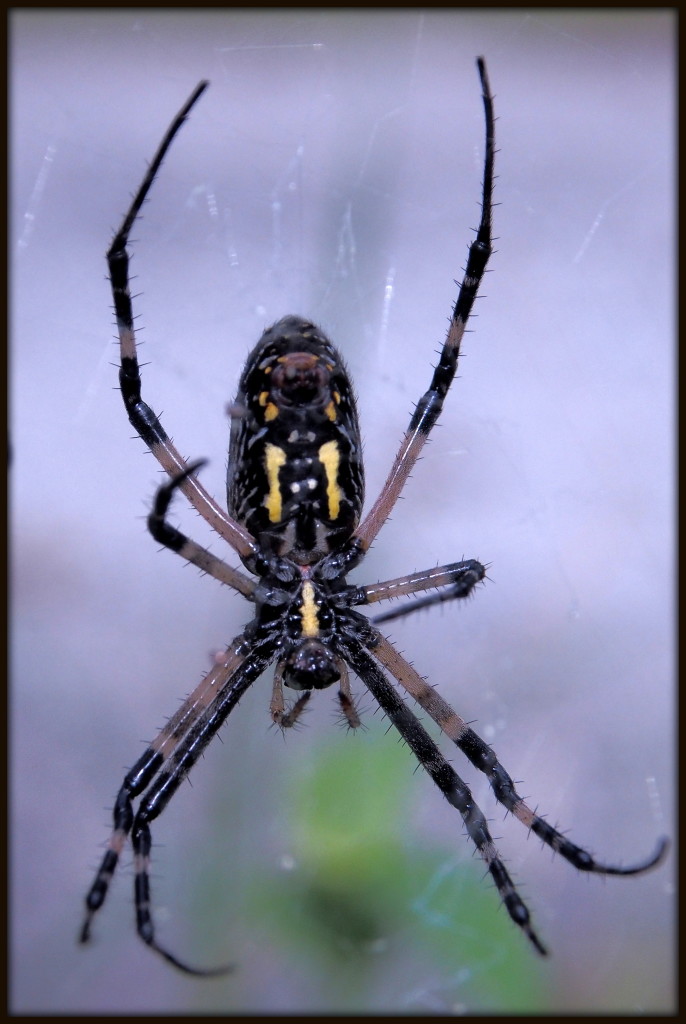
For a slightly different take on Argiope aurantia, I am including photographs of a moderately-sized female I saw along Piney Woods Church Road today, taken both from both the front and the back.  Her underside is not quite as visually stunning, but still imposing enough.  And this particular one was only an inch and a half across.


OLYMPUS DIGITAL CAMERA


OLYMPUS DIGITAL CAMERA

Sep 042014
 

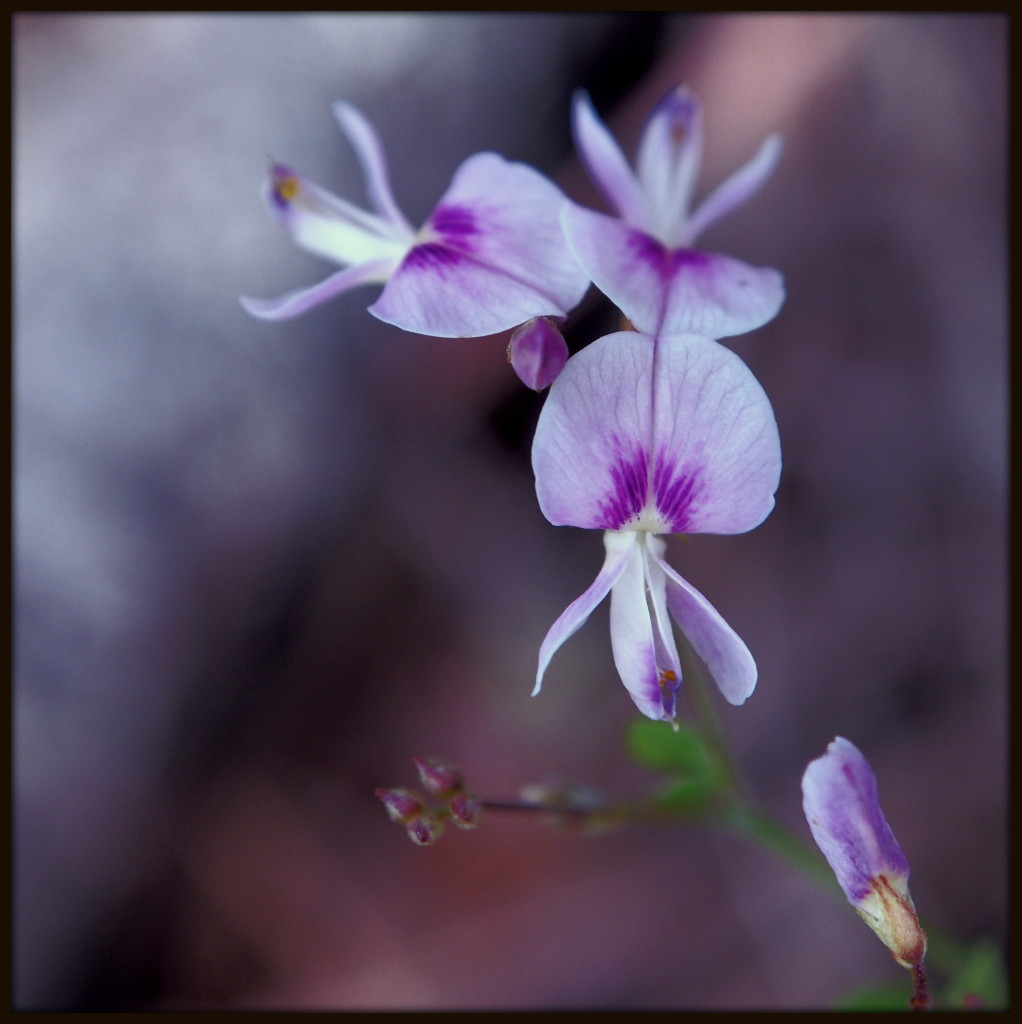
This time of year, there are precious few flowers coming into bloom along Piney Woods Church Road.  I was elated to encounter diminutive pea-like blossoms in a small gully beside a neighbor’s driveway during my walk earlier this afternoon.  I am fairly confident that the quarter-inch blooms belong to Creeping Lespedeza, also known as Smooth Creeping Bush Clover (Lespedeza repens).  Like all members of the Pea Family (Fabaceae), this perennial, common to open woods and roadsides throughout the Eastern United States, enhances soil quality by fixing nitrogen.  Plus, it adds lovely tiny splashes of pinkish-purple to the roadside that I can enjoy on my daily walks during the hot and humid days of early September in Georgia.


OLYMPUS DIGITAL CAMERA

Sep 032014
 

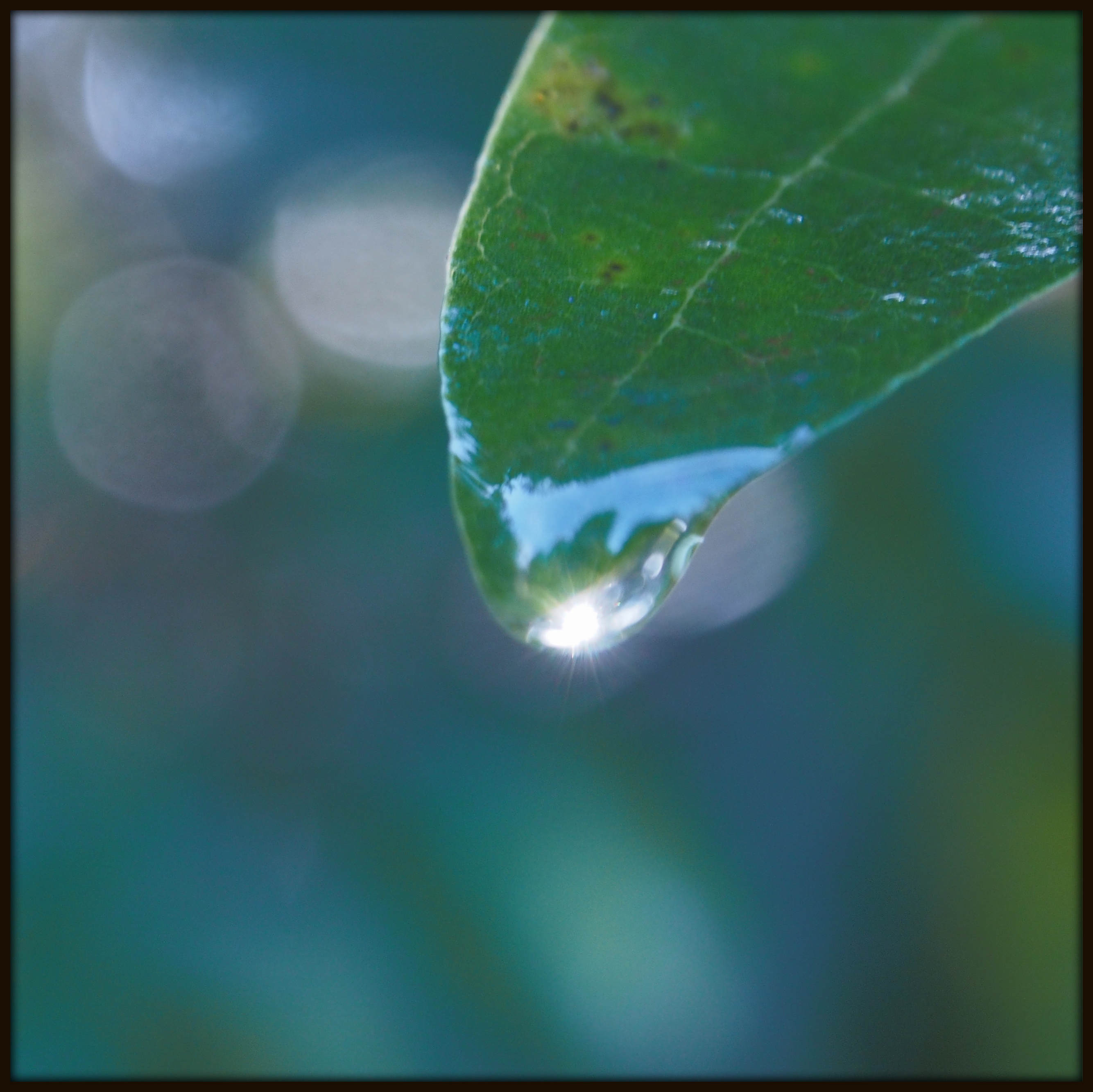
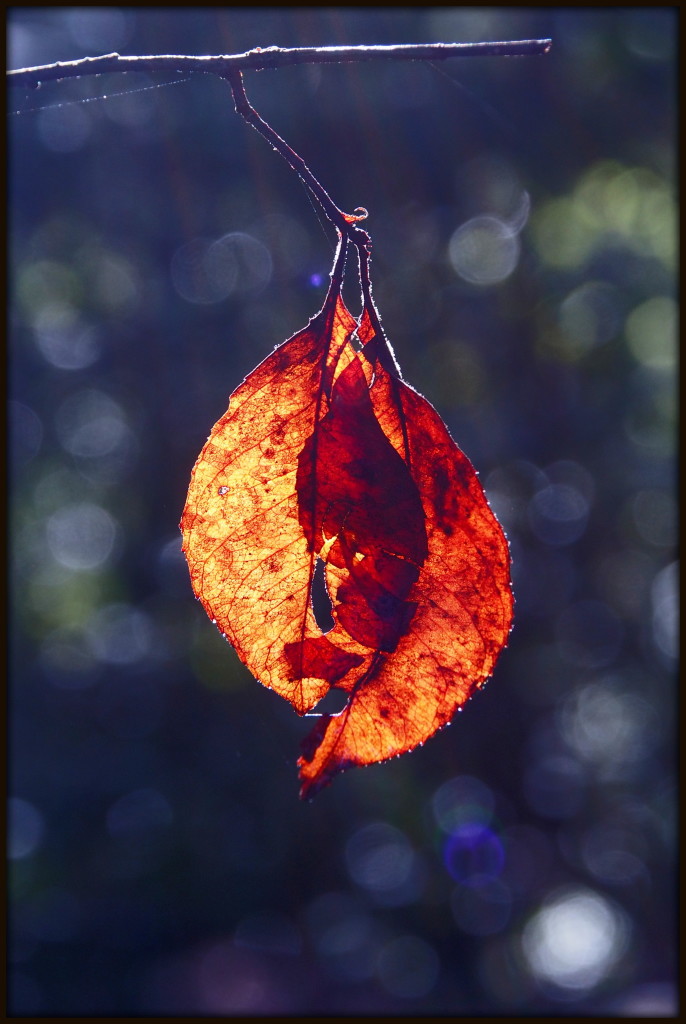
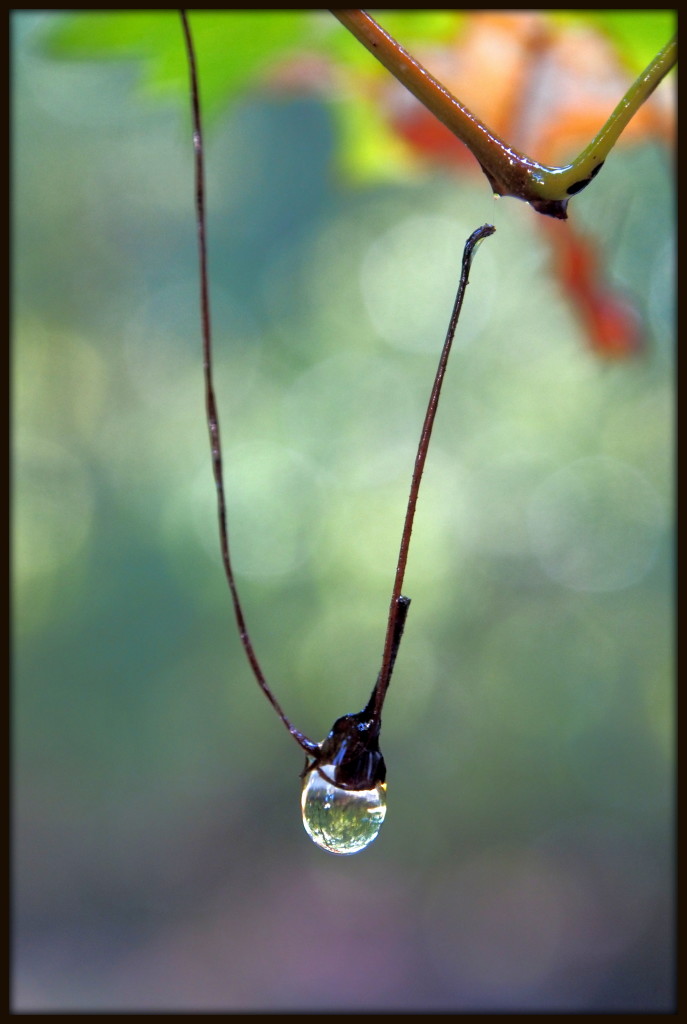
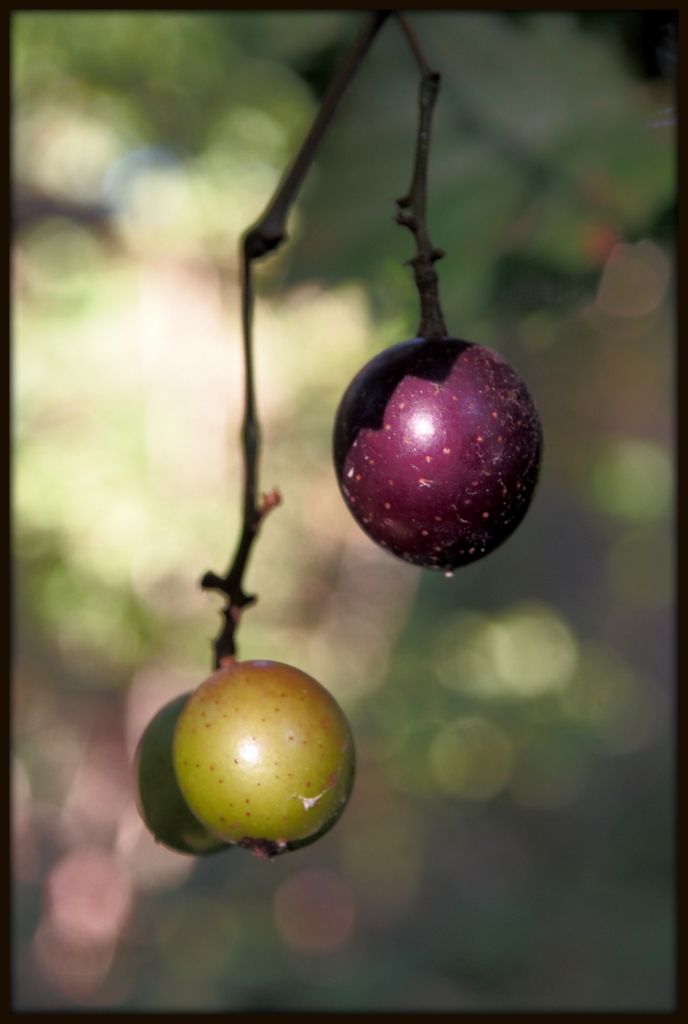
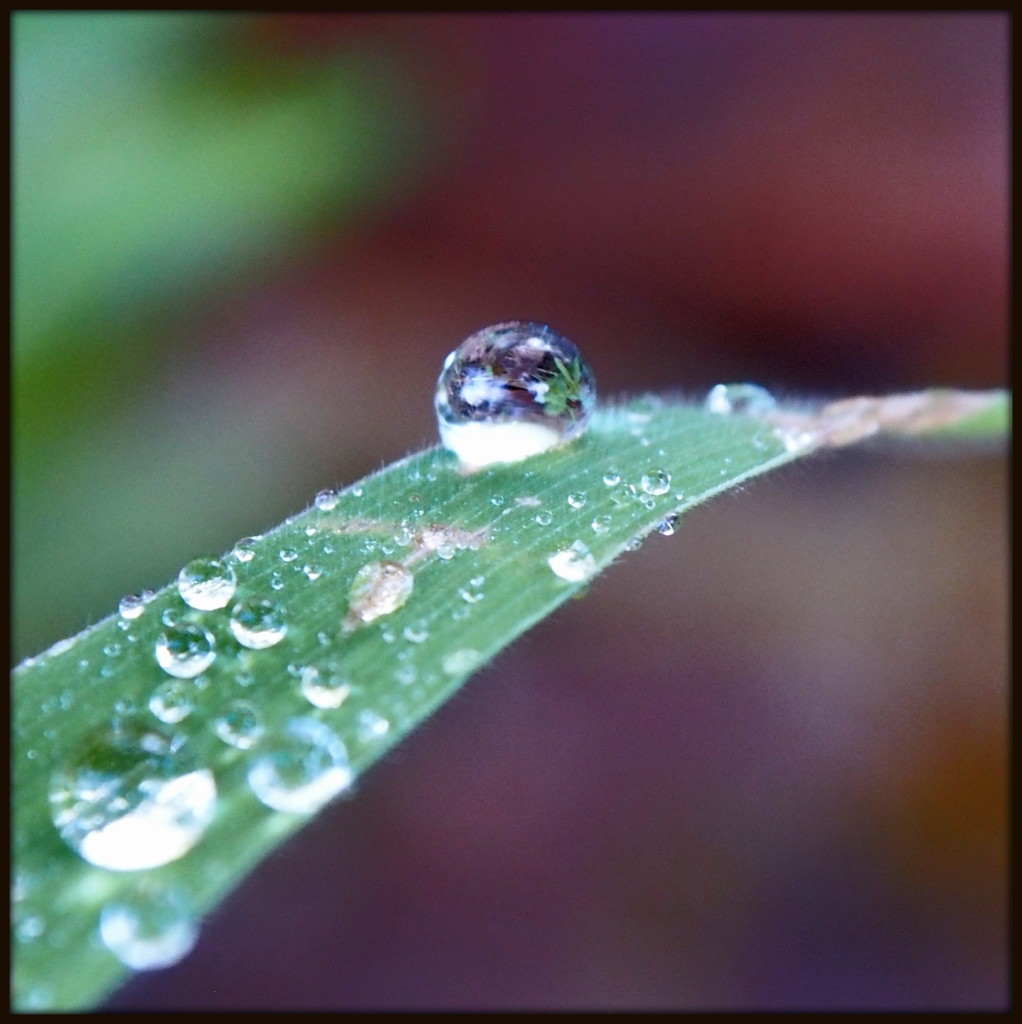
On my way to Atlanta on an errand, almost as an afterthought I stopped at Piney Woods Church Road this morning to take a few photographs.  The dew was still heavy on the grass everywhere, and it had rained heavily overnight, too.  As is so often the case, I found myself gravitating toward droplets of water.  Along the way, I also photographed a pair of reddish-brown leaves (probably pin cherry) at the end of a naked branch.  The result is these four photographs, and I simply couldn’t choose one picture among them to single out above the rest.  I find delight in the watery marble on a grass blade in the first image; the reflected sunlight in the drop of water on the tip of a sassafras leaf in the second (is that actually a heart I see?); the brilliantly backlit red-brown of the pair of dead leaves against the forest background in the third; and the elegance of the grapevine tendril necklace and with its watery pendant in the fourth.  I was blessed four times today, with such moments of stillness and delight.

(As an addendum, I did, in a sense, pay later for my morning.  Arriving home from Atlanta with ankles burning, I removed my shoes and socks to find chiggers everywhere!  They may have been lodging in my shoes (which I have since run through the washing machine) or they were waiting in the short grass just beside the road this morning to dive onto my feet.  Either way, I am beginning to get a bit terrified of the local chigger population this year.)
 

OLYMPUS DIGITAL CAMERA


OLYMPUS DIGITAL CAMERA


OLYMPUS DIGITAL CAMERA


OLYMPUS DIGITAL CAMERA

Sep 022014
 

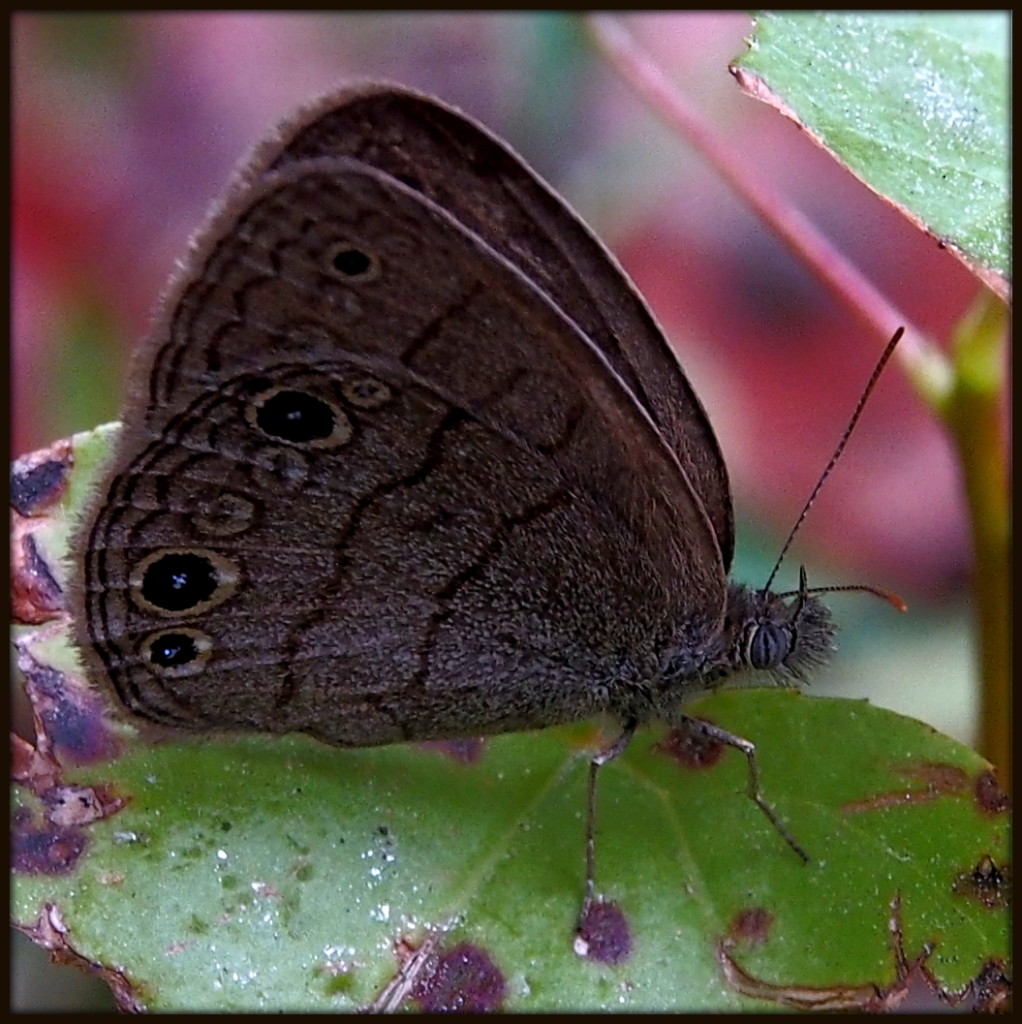
I was thrilled to be able to get quite close to this Little Wood Satyyr (Megisto cymela) on my Piney Woods Church Road walk earlier this afternoon.  I suspect its “beard” is what gives it the name of satyr, though I wasn’t able to find that in any of my field guides or favored websites.  Along the way, I did find out that satyrs tend to fly close to the forest floor, travelling with a quick, bobbing motion and occasionally landing on low vegetation, like this grapevine leaf.  Satyrs do not pollinate butterflies, but instead consume the sap of trees, as well as bits of dung, fermenting fruit, and rotting fungi.


OLYMPUS DIGITAL CAMERA

Sep 012014
 

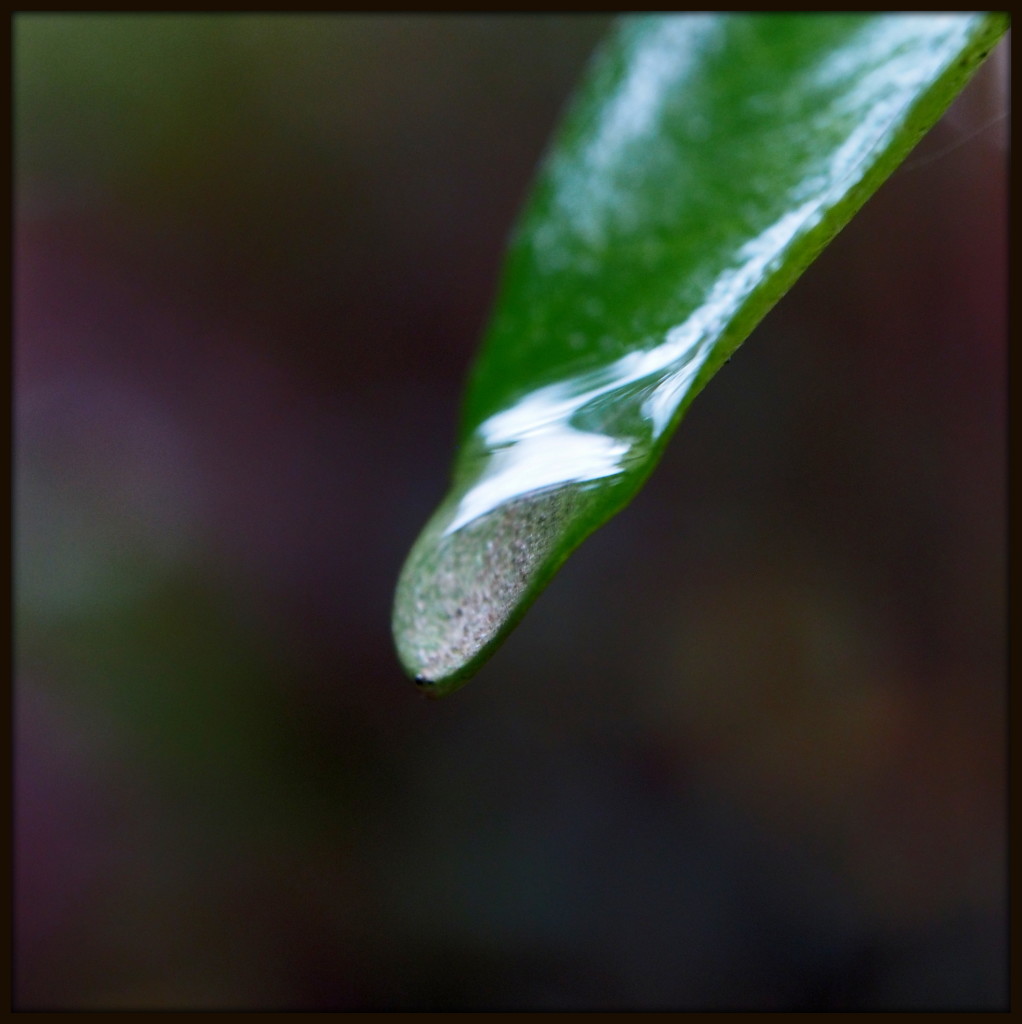
This image of water clinging to the tip of a leaf along Piney Woods Church Road (after an afternoon rain) reminds me for some reason of pour-offs out West:  places where water flowing down a gully after a rainstorm drops abruptly down a vertical face into a canyon — a temporary waterfall, lasting only until the flow subsides again.  At the base of this leaf the water pools and waits to fall down onto the waiting gravel far below.


OLYMPUS DIGITAL CAMERA