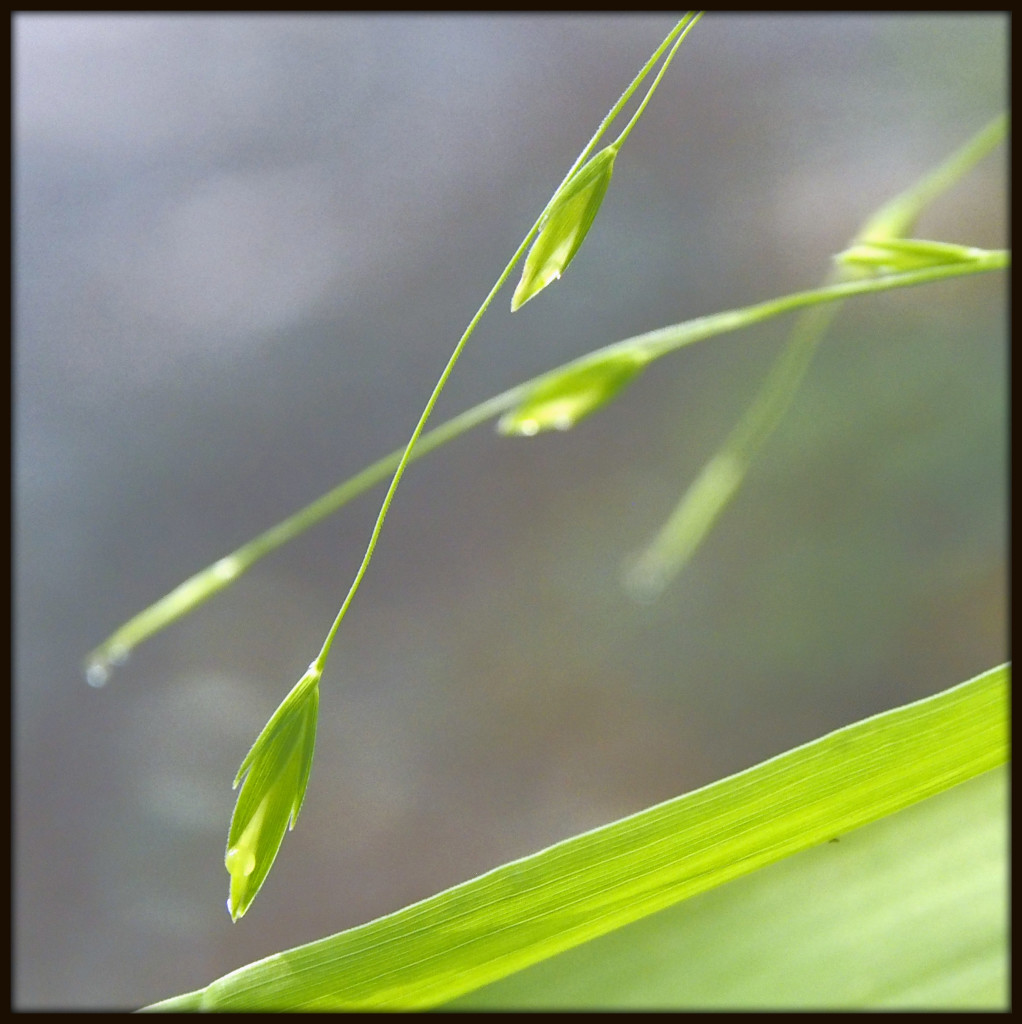
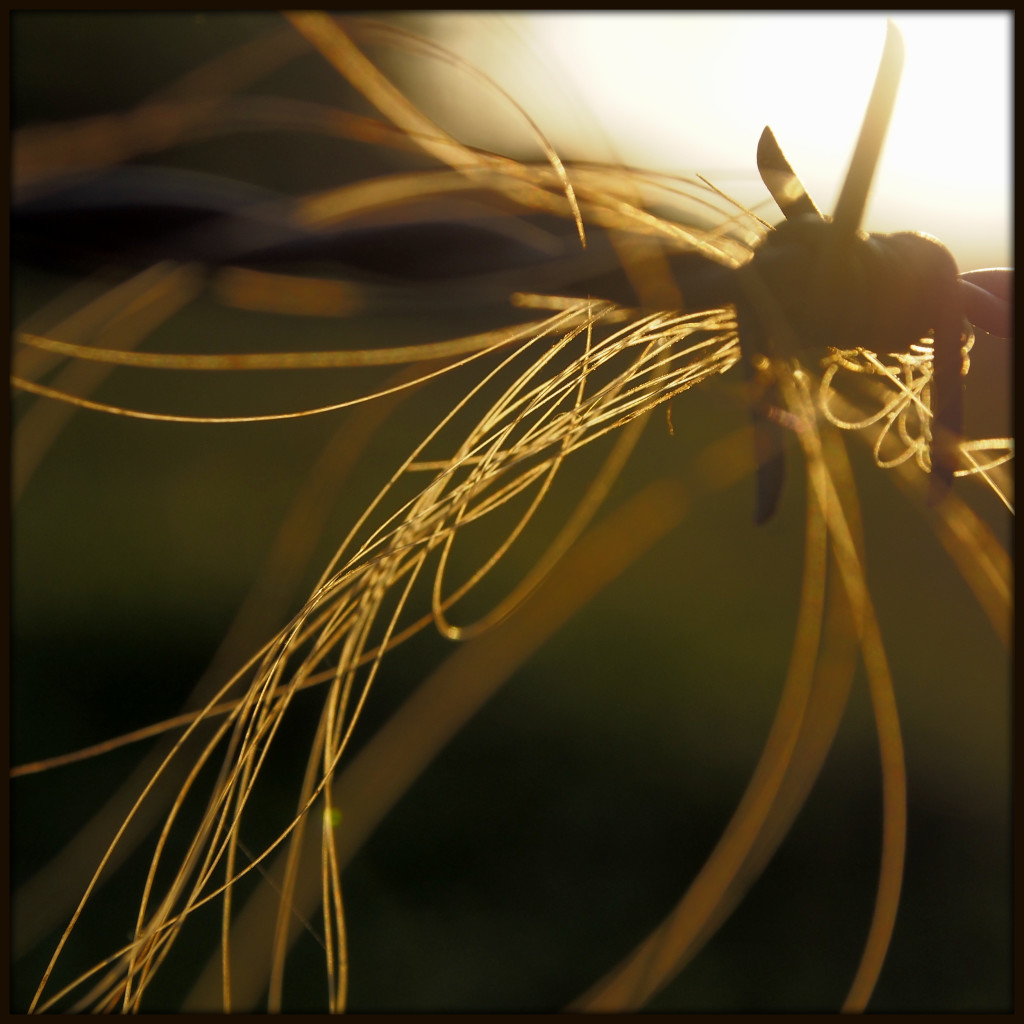
Jun 102014
 

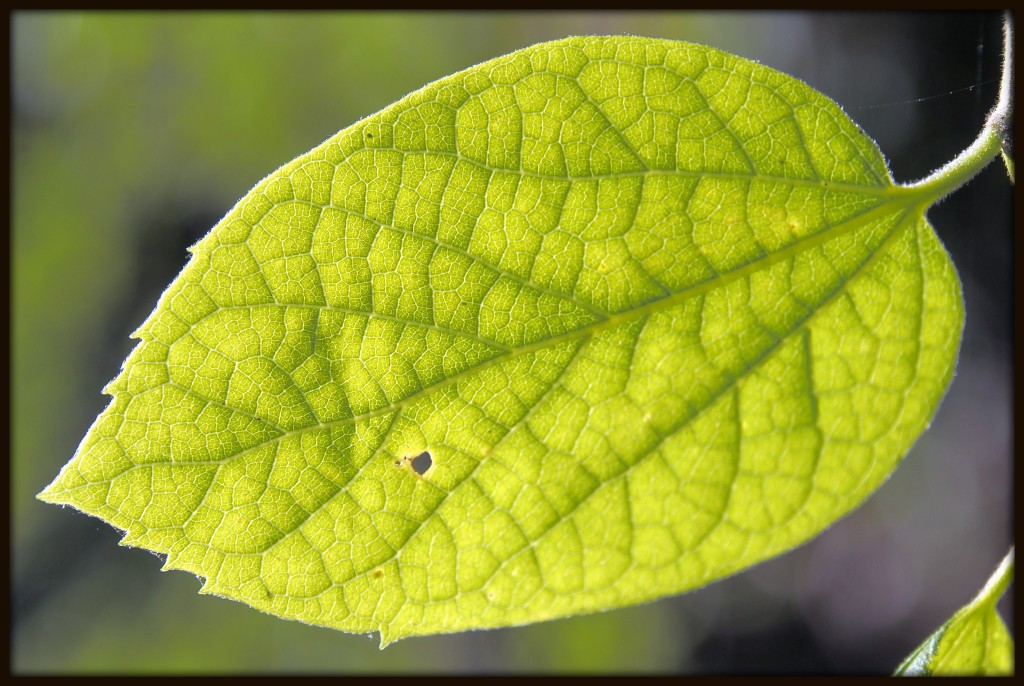
Nature will bear the closest inspection; she invites us to lay our eye level with the smallest leaf, and take an insect view of its plain. She has no interstices; every part is full of life.

               — H.D. Thoreau, “A Natural History of Massachusetts”


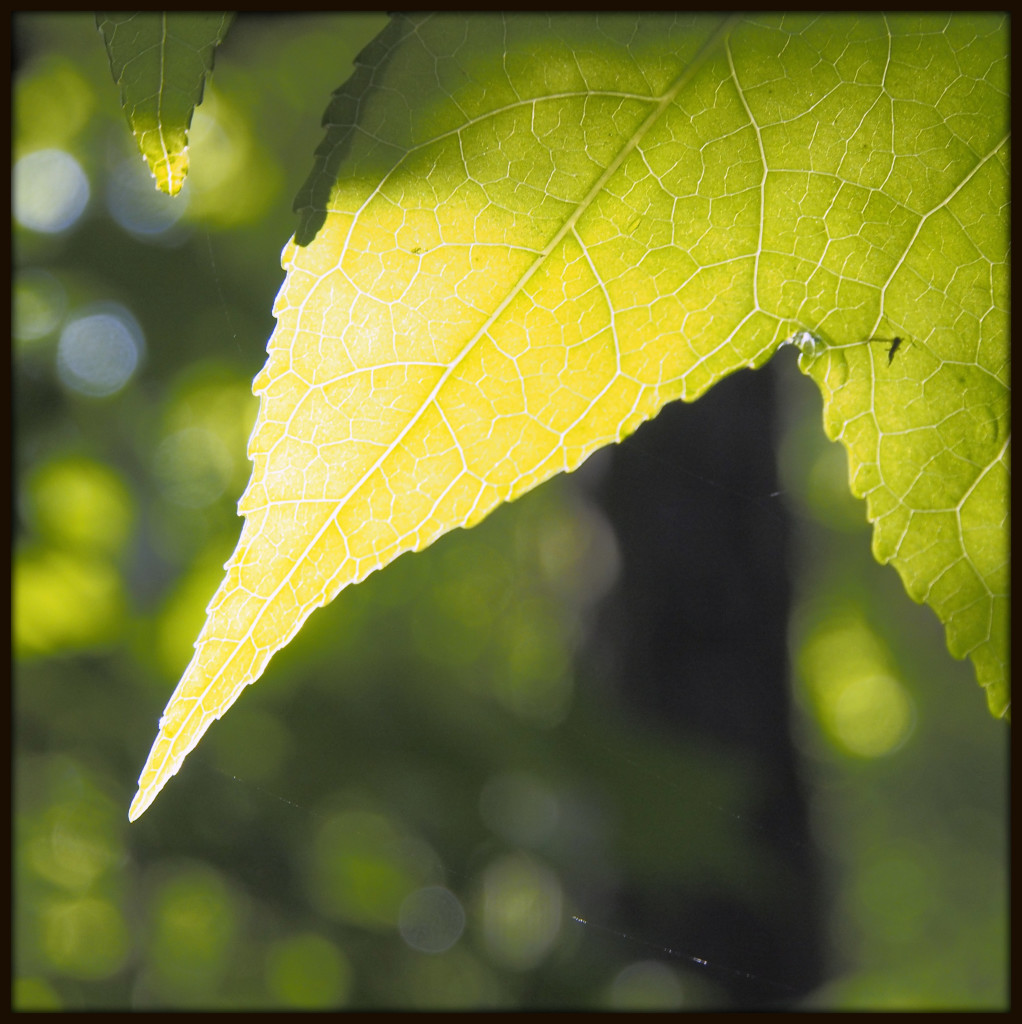
Below:  Leaf of an unidentified shrub, illumined by the afternoon sunlight, 10 June 2014.
 

The Closest Inspection


Jun 102014
 

At the still point of the turning world. Neither flesh nor fleshless;

Neither from nor towards; at the still point, there the dance is,

But neither arrest nor movement. And do not call it fixity,

Where past and future are gathered. Neither movement from nor towards,

Neither ascent nor decline. Except for the point, the still point,

There would be no dance, and there is only the dance.

                    — T.S. Eliot, “Burnt Norton” from The Four Quartets


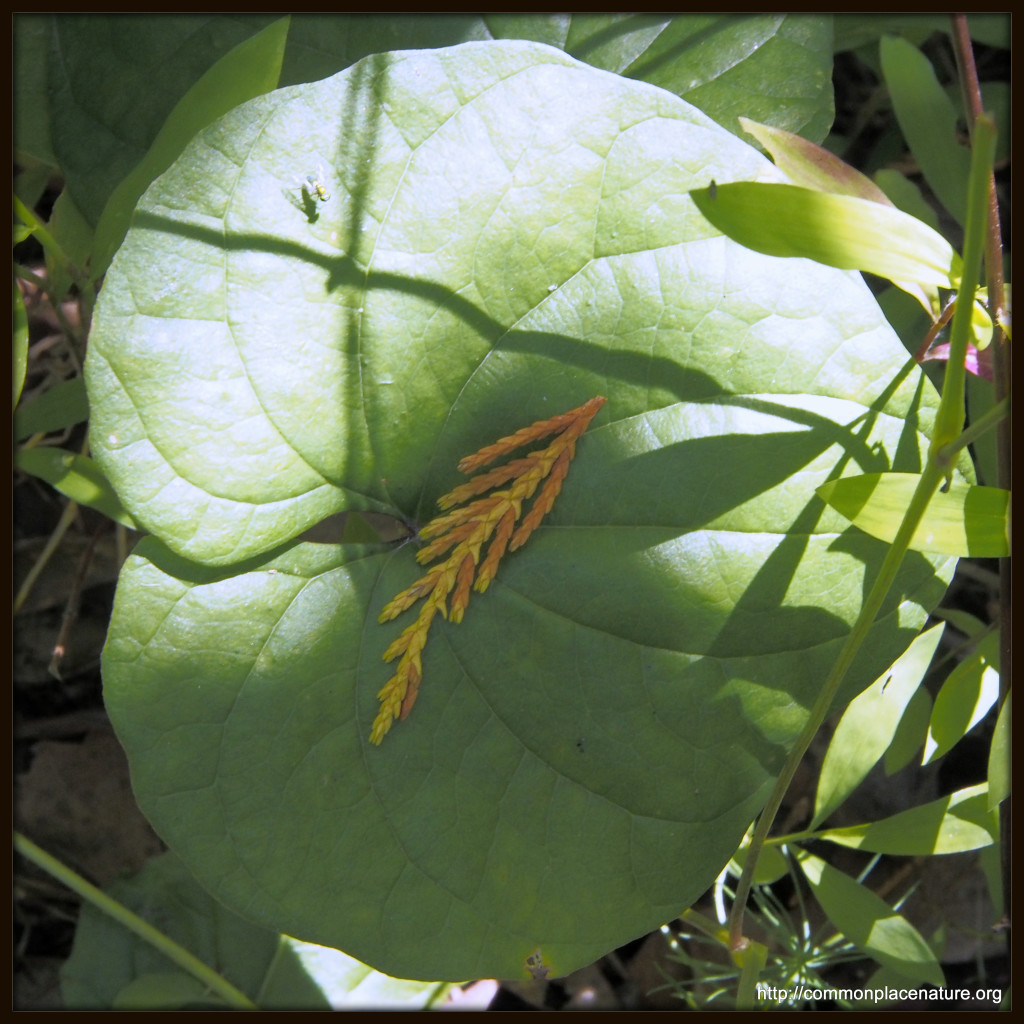
Below:  A fallen bit of red cedar lies on a leaf of air potato, Piney Woods Church Road, 10 June 2014.


Still Point

Jun 102014
 

The Road goes ever on and on

Down from the door where it began.

Now far ahead the Road has gone,

And I must follow, if I can,

Pursuing it with eager feet,

Until it joins some larger way

Where many paths and errands meet.

And whither then? I cannot say.

— J.R.R. Tolkien, The Lord of the Rings


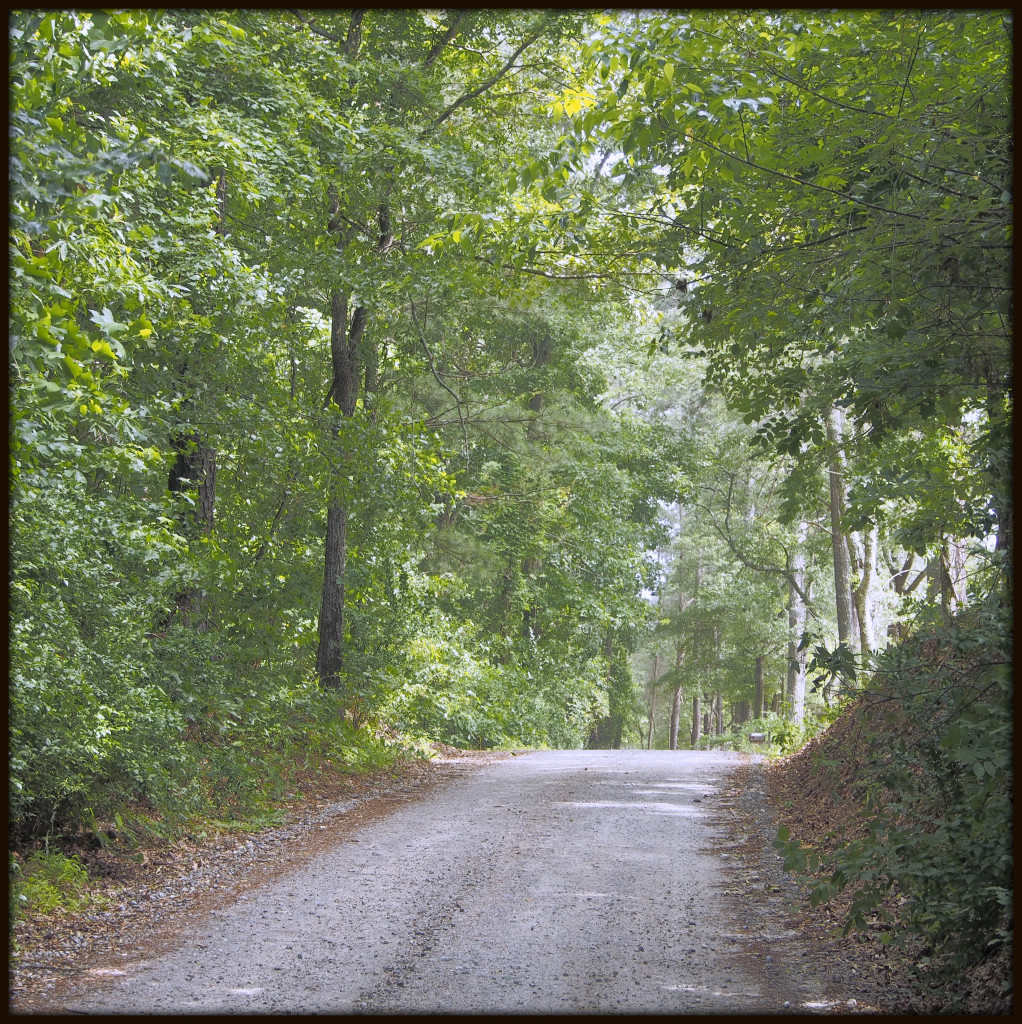
Below:   Piney Woods Church Road illumined during a sunshower, 10 June 2014.


The Road Goes Ever On and On

Jun 092014
 

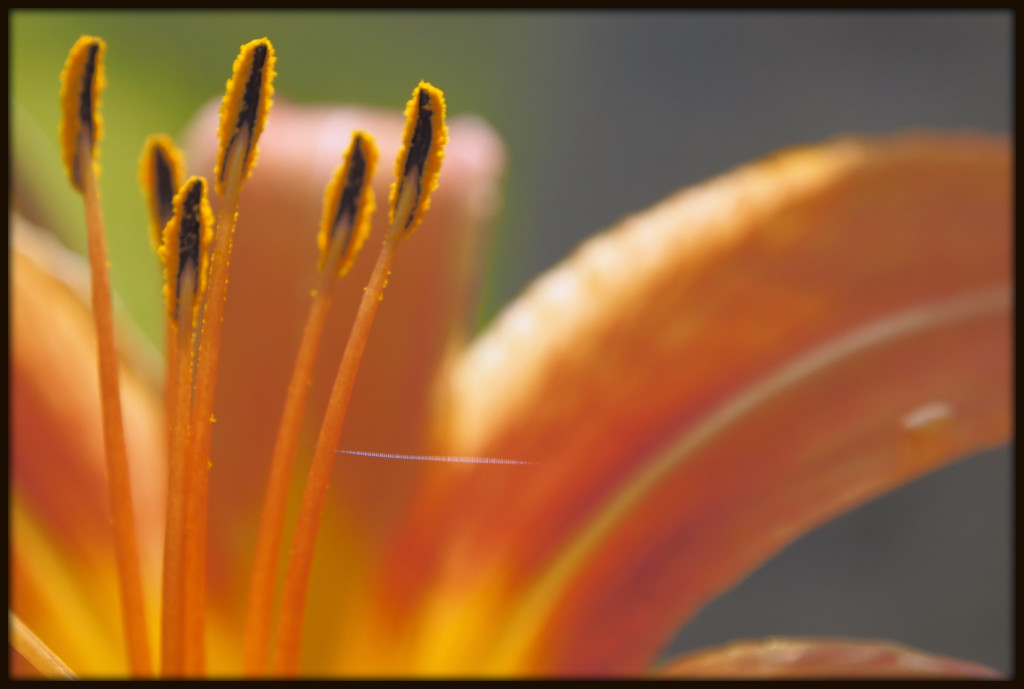
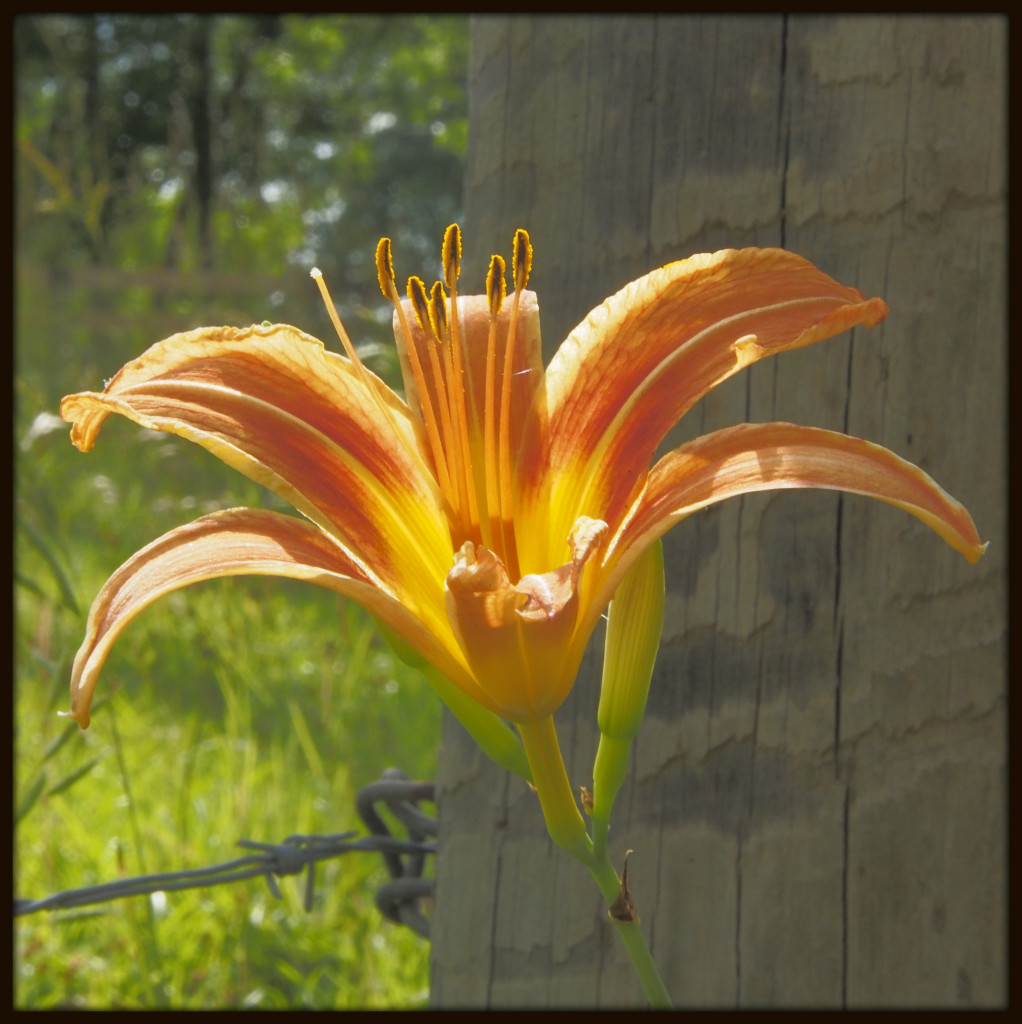
After several weeks of practically no flowers apart from the ubiquitous daisy fleabane (and a few out-of-season wisteria blossoms), imagine my delight to encounter a lone daylily (Hemerocallis sp.) blossom in brilliant orange, growing beside a cattle pasture fence post.  Originally native to Asia, daylilies have been widely cultivated throughout the United States; the escaped cultivars are a common sight along many roadsides this time of year.  The flower head is edible, tasting like slightly sweet lettuce, adding a splash of color to a salad.  Since there was only one blossom, though, I contented myself with taking a few photos, leaving it for the admiration of future passersby.


OLYMPUS DIGITAL CAMERA


OLYMPUS DIGITAL CAMERA


OLYMPUS DIGITAL CAMERA


OLYMPUS DIGITAL CAMERA

Jun 092014
 

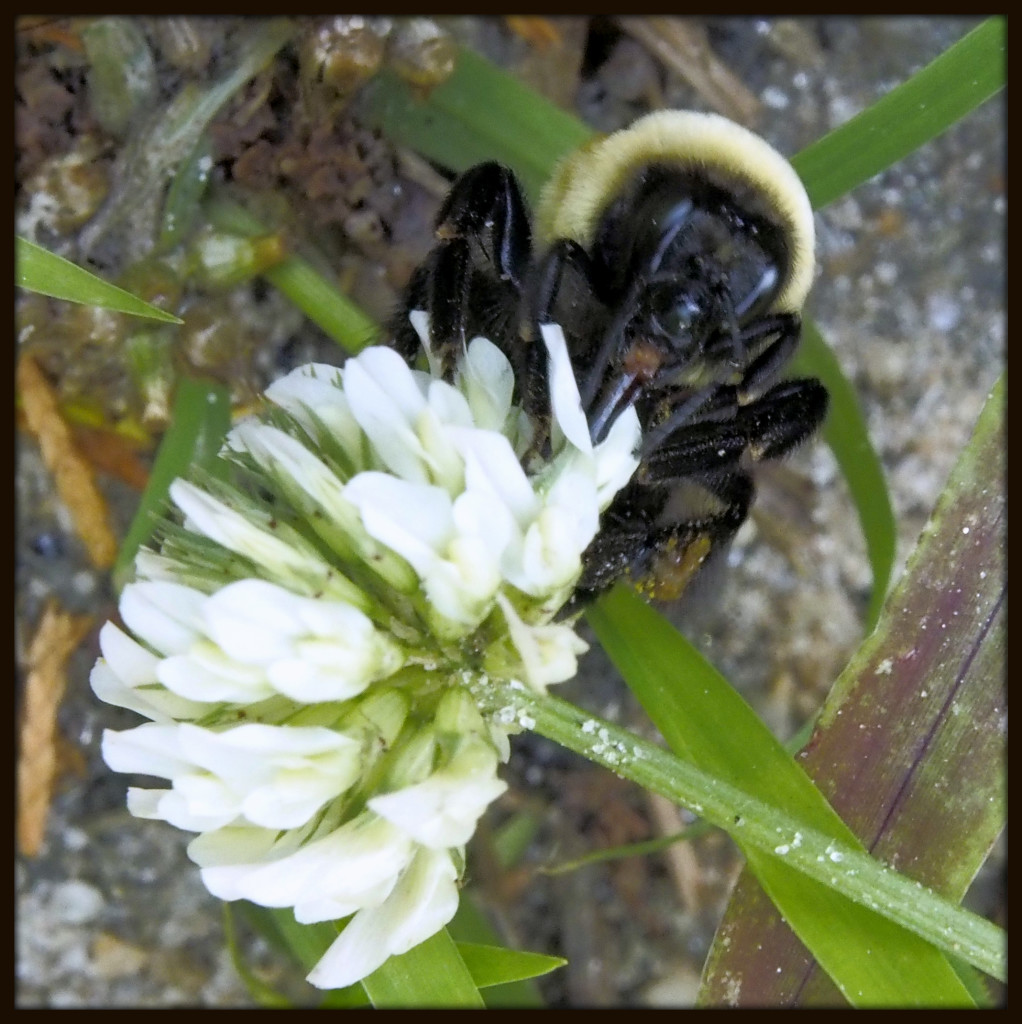
It was a lovely, somewhat steamy late-spring afternoon, and the bees were busily at work along Piney Woods Church Road, dashing from clover to clover.  I watched one highly enthusiastic bumblebee darting from one flower head to the next, with each new landing causing the blossom to flop over onto the ground.  I suppose, given the clover’s need to get pollinated, it was worth the weight.


Worth the Weight

Jun 082014
 

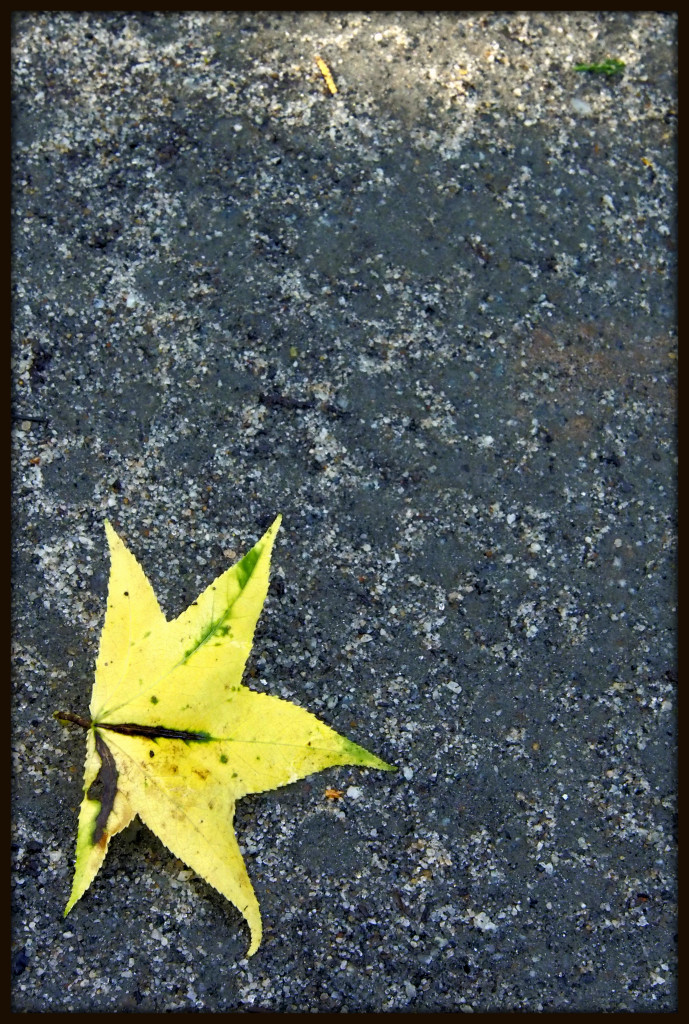
On my Sunday morning walk along Piney Woods Church Road, I kept noticing evidence of sweetgum (Liquidambar styraciflua).  Perhaps that was partly because it is so abundant.  Along with loblolly pines, sweetgums are the dominant trees in the the second, third, and fourth growth woodlands and woodlots of the Georgia Piedmont.  Not only do they grow everywhere from seed, but they also sprout from the roots of other trees, making lines of tiny saplings in my lawn.  Meanwhile, the deer that browse most undergrowth to brown nubs ignore the sweetgums altogether.

And they can be beautiful — particularly their five-pointed, star-shaped leaves.  Here are three photographs from my walk, fragments of an ongoing conversation between myself and the Piney Woods Church Road landscape.


OLYMPUS DIGITAL CAMERA


OLYMPUS DIGITAL CAMERA


OLYMPUS DIGITAL CAMERA

Jun 082014
 

The wood oats (Chasmanthium latifolium) whose tawny dry stalks I had photographed in January have re-emerged from the ground with broad green blades and seeds just beginning to develop.  Along a roadside rich in European “weeds”, wood oats are native to the Southeast, produce edible seeds, and have even been cultivated as a grain.


Wood Oats, Late Spring