Jan 042014
 

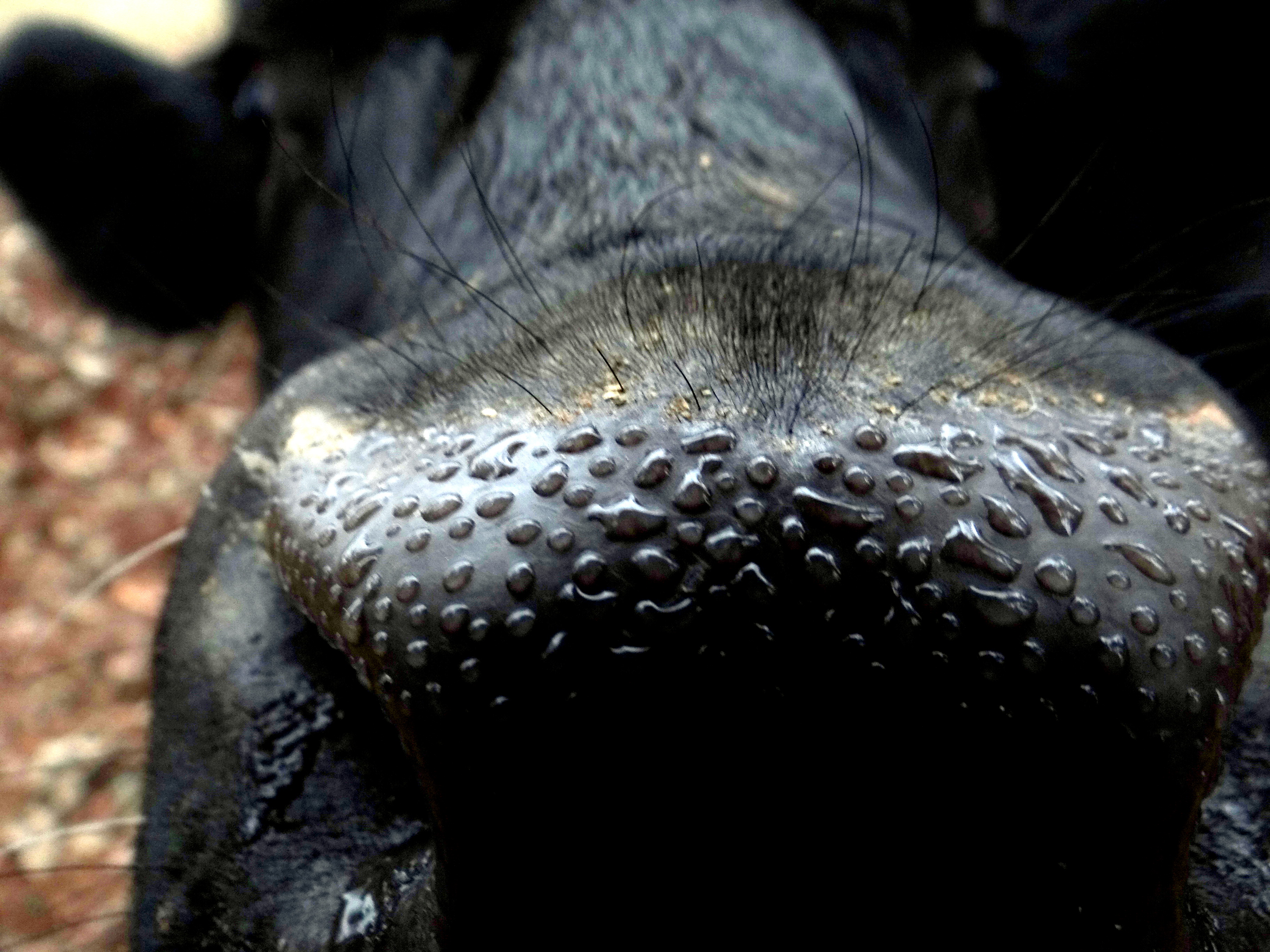
I set out under leaden skies to see what I could discover along Piney Woods Church Road.  The forecast promised 45 degrees, but I had to settle for 35 instead.  The light was muted, the sky almost oppressive; it truly felt like rain (or even snow) was on its way.   “No more cows,” I promised myself.  I had joked with my wife yesterday after posting my cow photograph that it might be possible to do 365 different cow photographs across a year.  I sincerely promise my readers that I won’t do that.  I took quite a few macro photographs of lichens, moss and leaves, and some intriguing abstract images through tangles of greenbrier.  Still, after wading through the over sixty photos I took today, the cow clearly topped the list.  I suppose one could say that he won by a nose.

Landscape with Cow Nose


Jan 032014
 

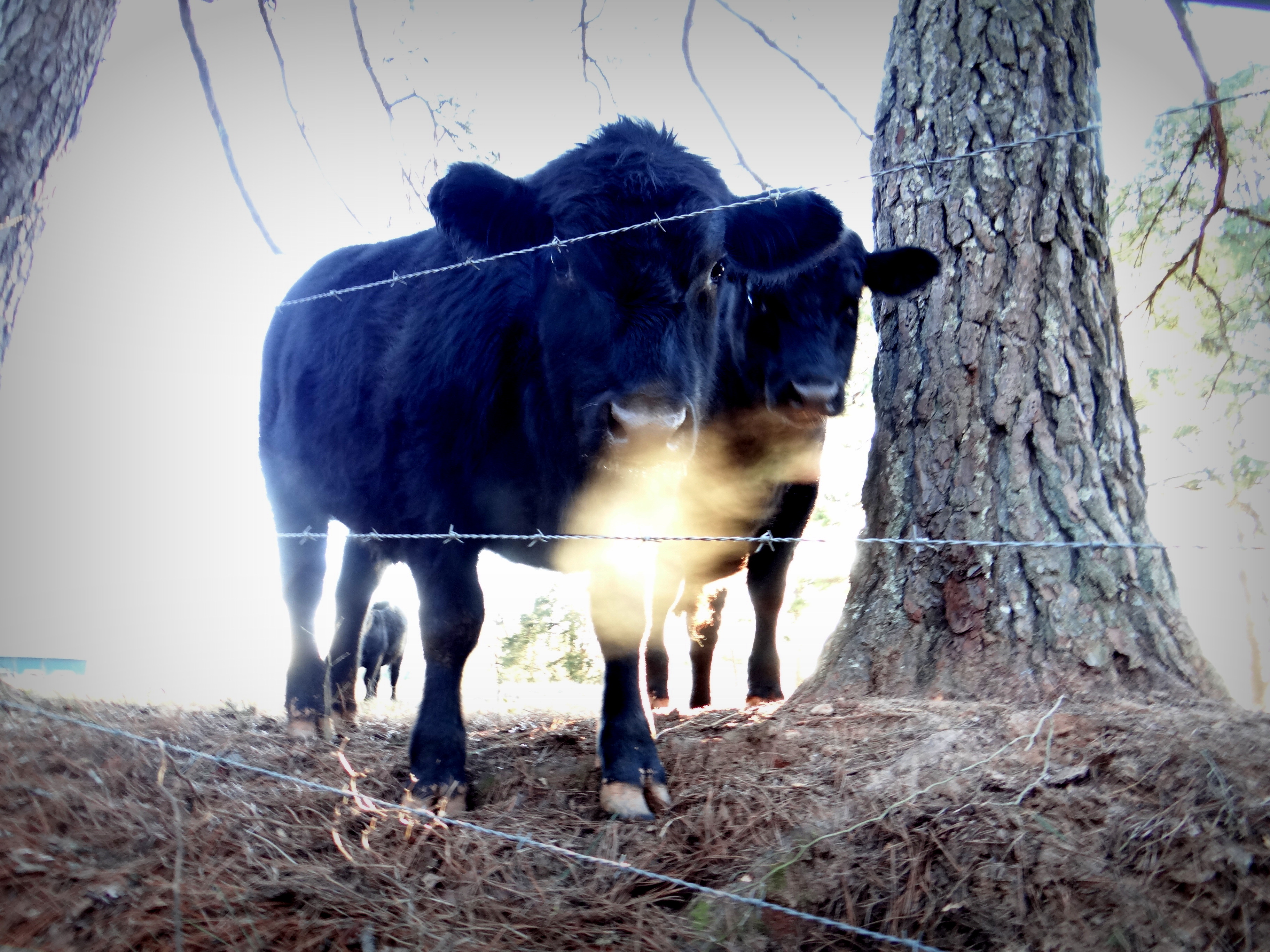
It was a cold day by Georgia standards, with the temperature just a couple degrees above freezing, though without the harsh wind of yesterday afternoon.  Ice had formed along the edges of the ditch beside Piney Church Road.  The sky was deep blue, the sunset less than spectacular, but a delight to see anyway, after so many cloudy days of late.  While waiting for the sunset, I hung out with some cows who were at least as curious about me as I was about them.  I could see their breath in the late afternoon air.

A Cold Day for Cows

Jan 022014
 

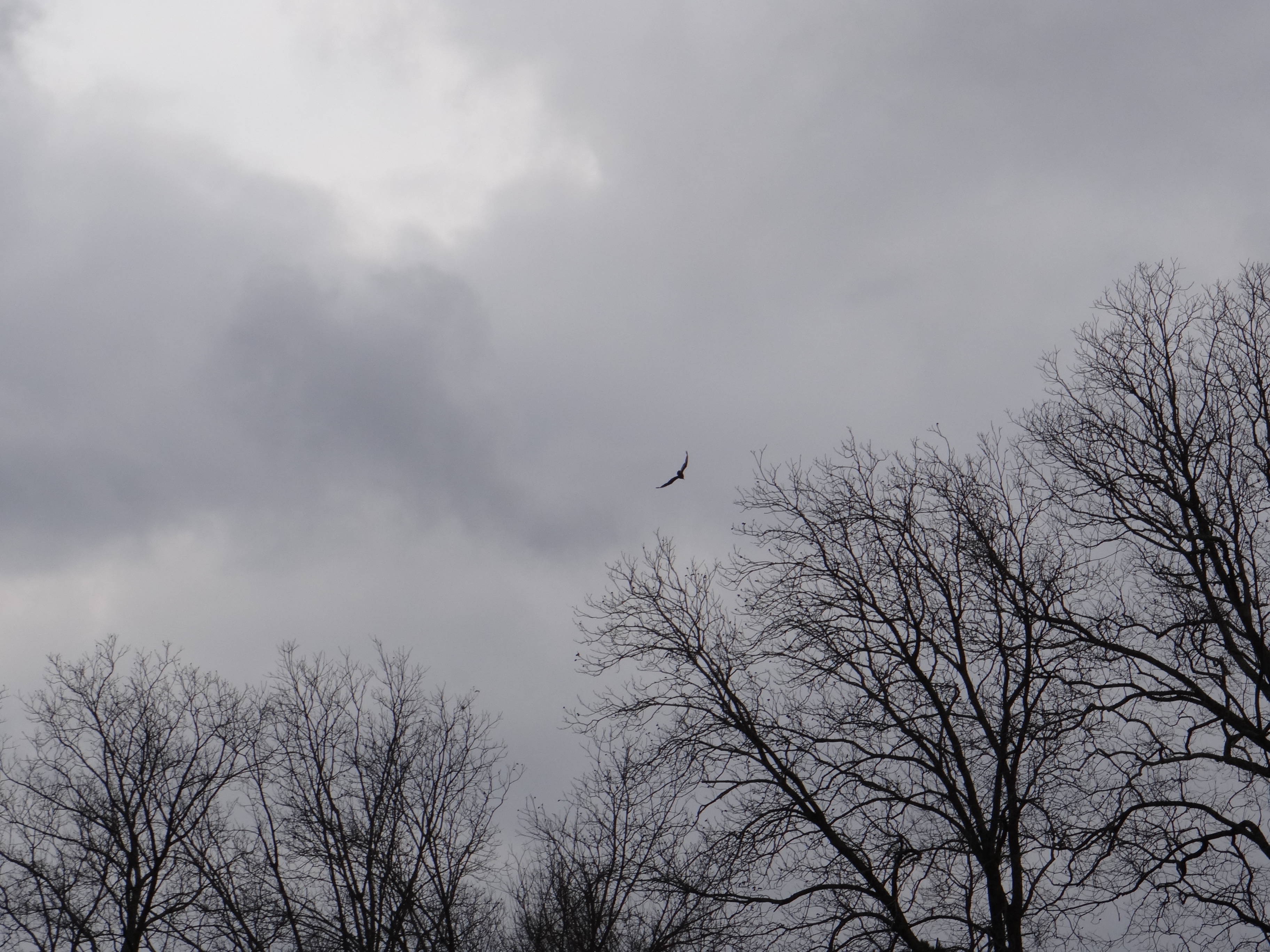
Wind Bird

Another cloudy day. The morning rain had passed, and with the cold front moving through the wind was picking up, the chill gusts numbing my fingertips and setting leaves and branches into motion. After several attempts to capture close-up images of mosses, lichens, and ferns, I decided to embrace the wind instead. Looking across an open pasture about two-thirds of the way from Rico Road to Hutcheson Ferry Road, I saw this turkey buzzard gliding on the wind currents. The same wind that made macro photographs well nigh impossible for me had granted this crow an opportunity to soar amid the breaking clouds.

Jan 012014
 

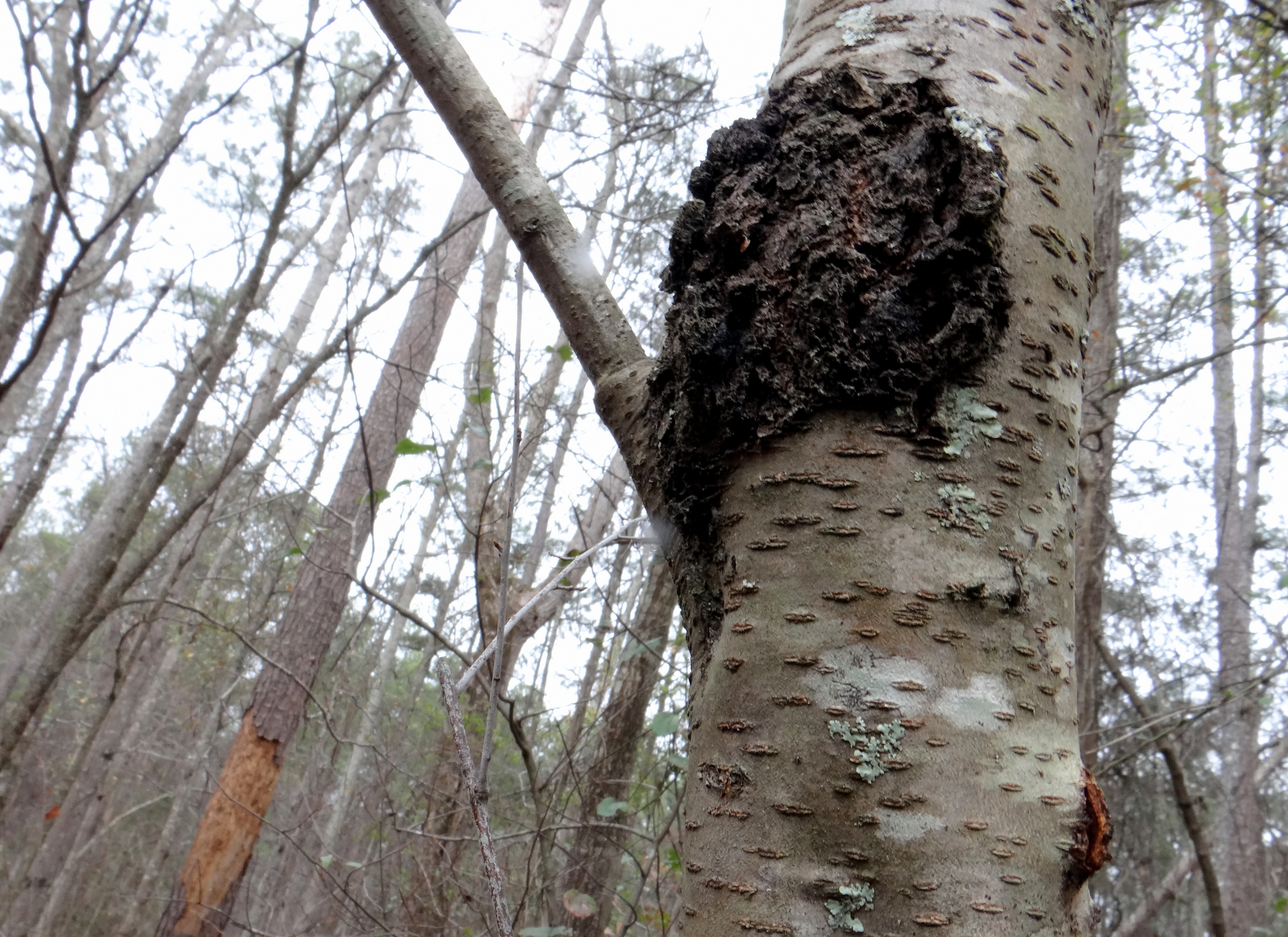
A grim, overcast day greeted me for the start of a new year and my new project documenting the Piney Woods Church Road landscape.  So much for plans to begin with a sunrise.  Instead, I leisurely made my way to the road late in the afternoon, an hour or so of what passed for sundown.  Glancing into a grove of trees between Piney Woods Church Road and Rico Road, my eye was caught by a loblolly pine (Pinus taeda) that has most likely been killed by the southern pine beetle (Dendroctonus frontalis), an insect measuring only 2 to 4 millimeters as an adult.  Closer at hand, a young pin cherry (Prunus pennsylvanica) growing beside the road has been disfigured by crown gall, a woody tumor caused by the bacterium, Agrobacterium tumefaciens.  All around me, tiny organisms were slowly devouring the forest.

Devouring Forest

Dec 292013
 

I would like to announce a new weekly blog feature:  posts from my years writing for The Examiner, in my role as the Atlanta Nature Examiner.  Now that The Examiner has made viewing its posts a bit like walking through a minefield (with not only pop-ups, but pop-unders, pop-overs, and blaring videos that begin unexpectedly), I am transferring my writings here, one at a time, every Sunday during 2014 (and perhaps beyond).  I hope that you enjoy them.  For those that are courageous enough to try to view them in their original location (along with all the others not yet transferred), they can be found here.

This article was originally published on April 20, 2010.
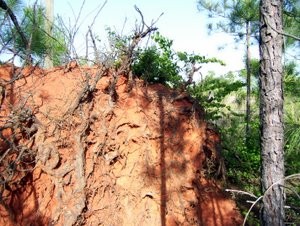
Georgia red clay covers the roots of a loblolly pine in Chattahoochee Hills, Georgia.

Georgia red clay covers the roots of a loblolly pine in Chattahoochee Hills, Georgia.

Once upon a time, the Piedmont of Georgia was blanketed in a rich, black topsoil, covering the rolling landscape to a depth of between four inches and a foot, and in places, even more. Rich in organic matter, this “A horizon” (as the upper layer of a soil profile is called) nourished a forest of predominantly oak, hickory, and pine.

Beneath the topsoil was a nearly infertile “B Horizon” of what is now called Georgia red clay. Leached of nutrients including calcium, magnesium, and potassium, the layer was stained red from iron oxide (rust). Because of this leached, clay-rich layer, the soil would have been classified as an ultisol, a soil type common in long-stable, humid temperate forests. The result of thousands of years of intense weathering, ultisols can be found throughout the Southeast.

But then the settlers came and cleared the land. Plantation owners and sharecroppers planted row crops, especially cotton. The result was dramatic soil erosion. Enormous gullies formed in abandoned fields, carrying the topsoil away into rivers like the Chattahoochee and the Oconee, and eventually into the Atlantic Ocean and Gulf of Mexico. The A horizon was lost across nearly every acre of the Georgia Piedmont.

Now all that remains is the Georgia red clay. Referred to as a “cultural icon” by a failed General Assembly bill in 2006 that would have designated it as the official soil of Georgia, it is a soil without a top layer, stripped of most of its nutrients. Nowadays, farmers apply hefty amendments of fertilizer before the soil will yield much. A local organic farm here in Chattahoochee Hills, where this author resides, trucked in large piles of compost in order to make the soil fertile enough to plant. Left alone, somehow the red clay is sufficient to grow a forest composed principally of sweet gum and loblolly pine.

The topsoil, meanwhile, has been lost, perhaps forever. Maybe, given a couple thousand years of careful stewardship of the land, it can be restored to the parts of the Piedmont not covered over with asphalt or buildings. Meanwhile, it seems fitting to offer at least a few humble words in its memory.
Dec 272013
 

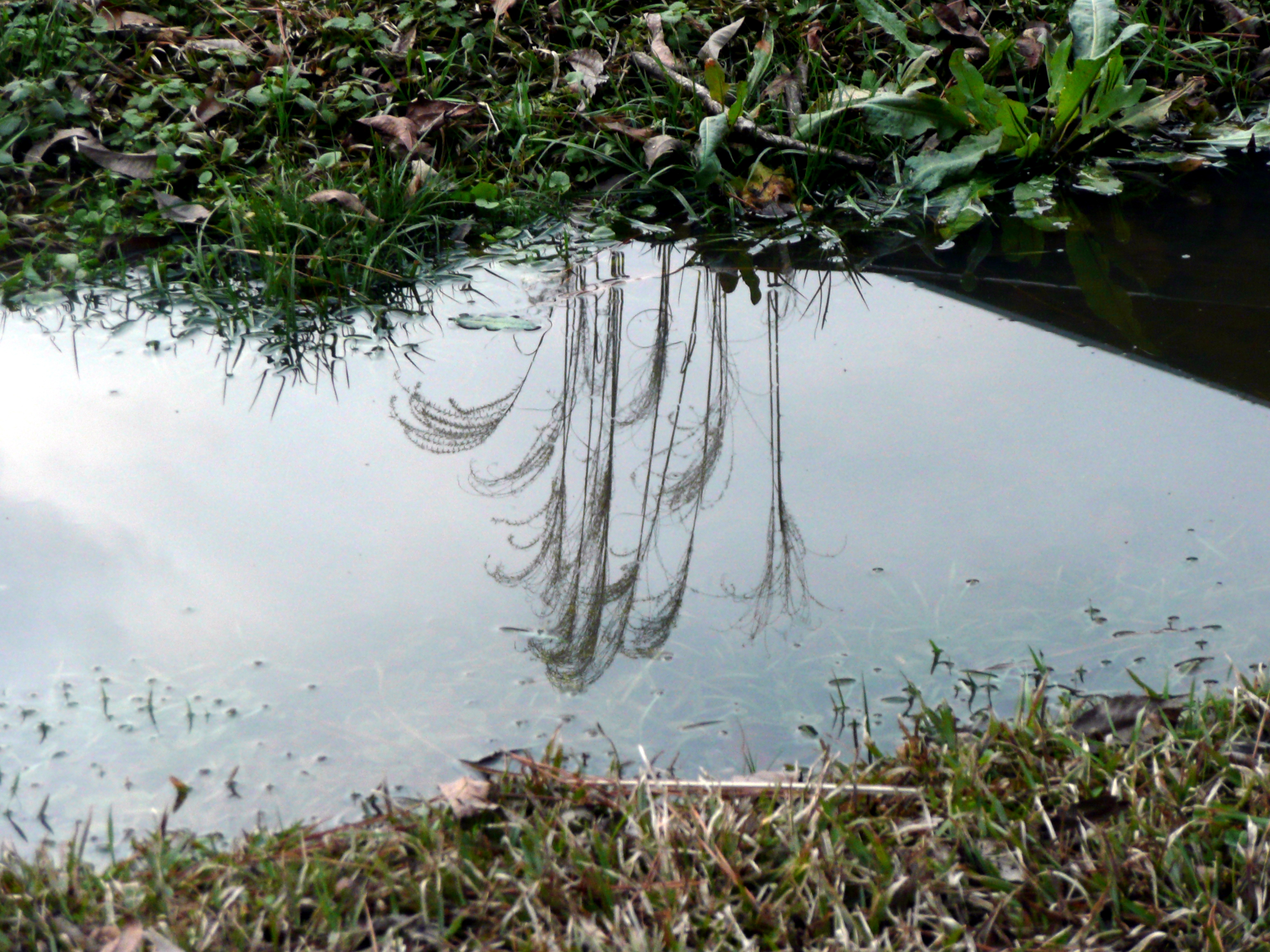
On my measuring walk the other day, I stopped midway to take this photograph of ornamental grasses reflected in a drainage ditch along the roadside. The pattern of stripes, along with the image of the reflected grasses in the middle, reminded me of a tri-color flag with emblem (such as a coat of arms) in the center. So I shall declare it, for now, the official flag of Piney Woods Church Road.

Ornamental grasses reflected in a drainage ditch, 25 December 2013.

Ornamental grasses reflected in roadside ditch, Piney Woods Church Road, 25 Dec. 2013.

Dec 262013
 
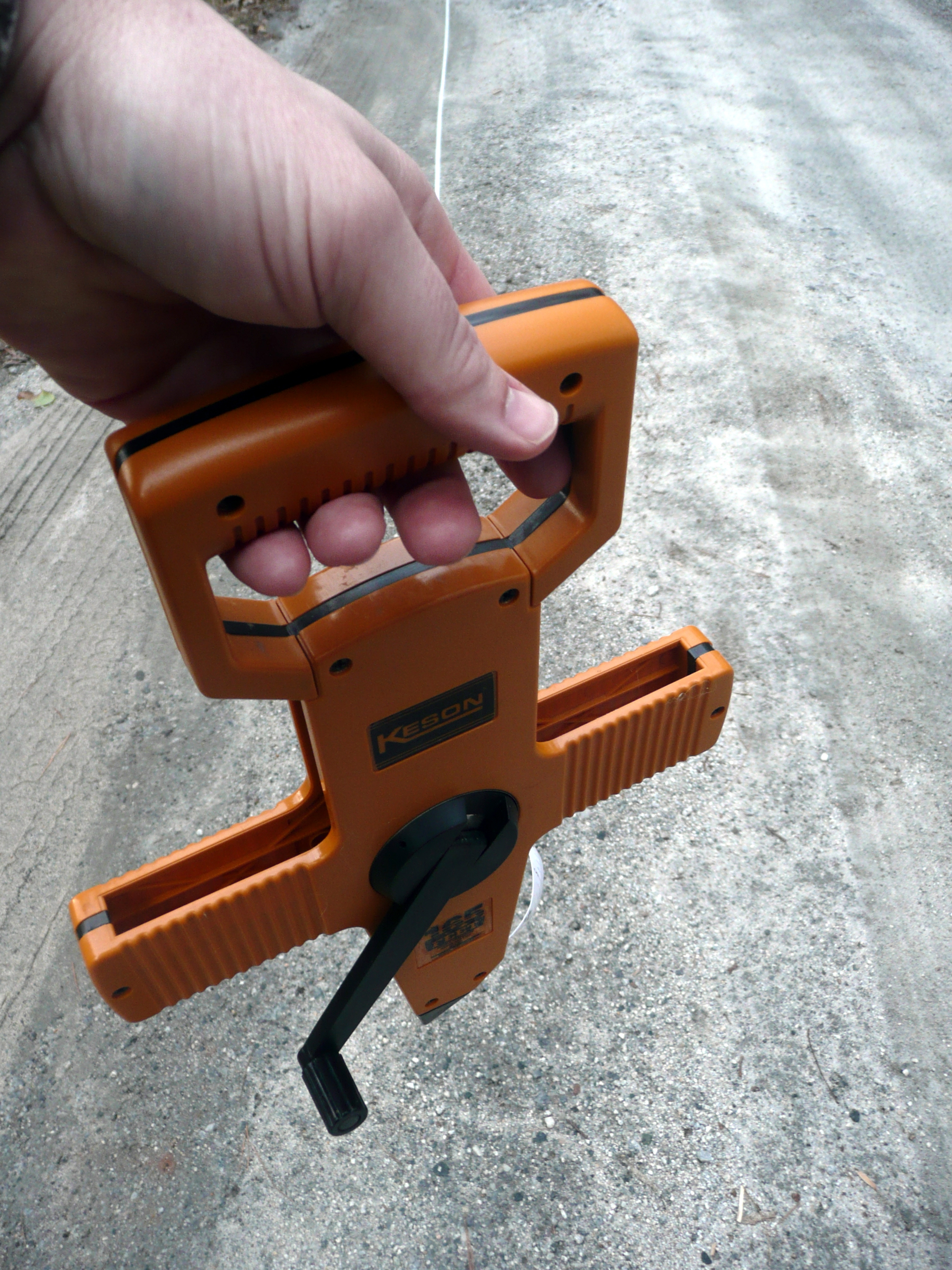
Measuring the length of Piney Woods Church Road, 26 December 2013.

Measuring Piney Woods Church Road, 25 December 2013.

Measuring Piney Woods Church Road, 25 December 2013.

Measuring Piney Woods Church Road, 25 December 2013.

“The journey of a thousand miles begins beneath one’s feet.”  — Lao Tzu

Where does the journey of 0.44195 miles begin?  Answer:  At Rico Road, or at Hutcheson Ferry Road, depending which way one is headed — southwest or northeast.

Yesterday, armed with a 165-foot measuring tape and aided by my wife as trusty field assistant. I ventured out to Piney Woods Church Road, to measure the extent of my daily journey in the year ahead.  I am not quite sure why I decided to measure the road’s distance.  It’s length has long been an object of mild curiosity to me, given that I have walked it with my wife and our various dogs over a thousand times in the past seven years.  But, as my GIS-trained wife wisely noted, I could obtain a fairly accurate measurement without leaving the computer, thanks to Google Earth.

Part of my inspiration came, as it so often does, from Henry David Thoreau.  In Walden, Thoreau explained his decision to sound the depths of Walden Pond.  “There have been many stories about the bottom, or rather no bottom, of this pond, which certainly had no foundation for themselves,” Thoreau observed. “It is remarkable how long men will believe in the bottomlessness of a pond without taking the trouble to sound it.”‘  And in a similar way, I have journeyed Piney Woods Church Road so many times, and never set out to find out its actual distance.

There is also a term in the remote sensing field, “ground truthing,” which refers to double-checking measurements and observations made from satellite images or aerial photographs by going into the field.  I am intrigued by the phrase, because it acknowledges (in this age of technological wonders) the benefit of walking the ground and measuring the road itself.

After the first couple of 165-foot increments (measured very slowly, unwinding the tape its full length, then winding it up again and moving on), we fell into a rhythm.  I held one end of the tape, my wife the other.  In turns, we would walk the full distance, pulling the unrolled tape behind us.  When it was my turn to stand and hold the tape still, I would listen to the shrill whistle of the fiberglass tape sliding along the gravel, breaking the stillness of the late afternoon air.

Our last measurement was only a partial one.  After traveling fourteen times the length of tape from where we began along Rico Road, the last tape length was only 23 1/2 feet, to the edge of Hutcheson Ferry Road, where the stop sign reminded us to go no further.  The total distance, in feet, was 2333 1/2.  Taken twice (out to Hutcheson Ferry Road and back to Rico again), my daily journey in 2014 will be 4667 feet, or 0.8839 miles.  There is an additional distance, of course, from my back door to where the road begins.  Perhaps I will measure that, too.  Someday….

Dec 252013
 

This post marks the beginning of a blog that I intend will span at least a year, time spent investigating the wonders of the everyday, developing a more nuanced appreciation of my home territory in Chattahoochee Hills, Georgia.  The intended centerpiece of this site will be a daily series of visits to a nearby gravel byway, Piney Woods Church Road, to take daily photographs over the course of the year 2014.  Additional posts will explore natural history in and around the Georgia Piedmont, along with musings about prehistory, landscape, and the meaning of place.

Having lived over seven years now on the same parcel of land in Georgia (longer than I have lived anywhere, apart from my formative years in Pennsylvania), I have been seized with wanderlust and thoughts of hitting the road in search of another place — Utah, Florida, elsewhere.  In this blog, I will indeed spend a year “on the road” — on the same road, the one that runs parallel to and a few hundred feet beyond the wooded back edge of my property, linking Rico Road (where I live) to Hutcheson Ferry Road.  It has become as commonplace as imaginable — the site of innumerable dog walks over our years living here.  I have walked it often enough that I have probably taken the equivalent of several hundred miles of footsteps along it.  Yet all my journeys, so far, have been about exercising the dogs, about performing a necessary act.  This year, I will indulge myself in the luxury of exploring the road for the sake of the adventures I might find, the wonders I might uncover.  It is a journey inspired in large part by Mark Hirsch, who spent over a year chronicling the life of a burr oak in southwestern Wisconsin in That Tree (a book, Facebook page, and calendar now).  He found that the experience transformed his life.  Is it too much to consider the possibilities of how such an exploration as this might touch my own?  Ultimately, the experiment (currently called the Piney Woods Church Road Project)  is as much personal as scientific.  What does it mean to devote a year to visiting the same place, a year dedicated to seeing it anew every time?