Apr 212014
 

I was feeling bereft today, walking down Piney Woods Church Road, still digesting the sad and unexpected news that my favorite local hangout, a charming old-time general store, will be closing next month.  For most of my walk, wherever I glanced, the magic seemed drained from the landscape.  The wisteria blooms had withered, and all the giant red thistles, just beginning to blossom, had been uprooted by a landowner (understandably — it is a pernicious weed) along the roadside.  Some of my favorite haunts to look for wildflowers had been mowed in the last day or two.  I wondered if I would find anything inviting.  That is when I saw the blooming heal-all (Prunella vulgaris), a common introduced lawn weed throughout North America.  The late-day sun, low on the horizon, offered intriguing photographic possibilities.  The result, after a few minutes of exploration, is this sunlight striking a heal-all flower.  There is a radiance in this image that gives me cause for hope, at such a dark time.  There is solace to be found in nature, if we pause long enough to let it find us.
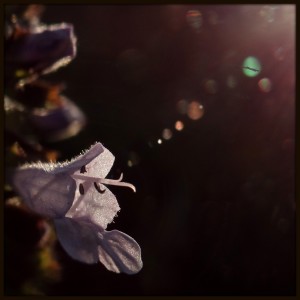
Healing Light

Addendum, May 22, 2014:  Here is another photograph of the self-heal from the same day’s images. I like it so much that I recently had it printed and mounted on bamboo by Plywerk, Inc. of Portland, Oregon.
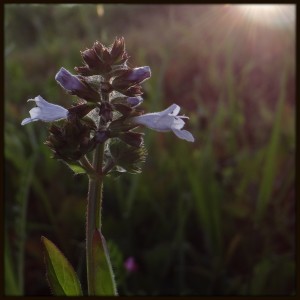
Self-Heal

Apr 202014
 

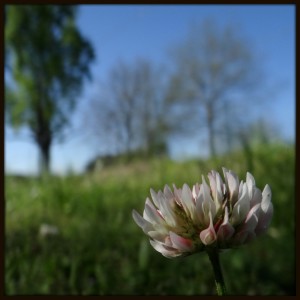
For several days, I have been trying, without success, to capture an interesting image of the white clover (Trifolium repens) now blooming along the edge of a field along Piney Woods Church Road.  Introduced from Europe, this member of the pea family is now common across North America.  So easily overlooked, in this photo white clover shines as the star of the rural landscape.

Field Clover

Apr 202014
 

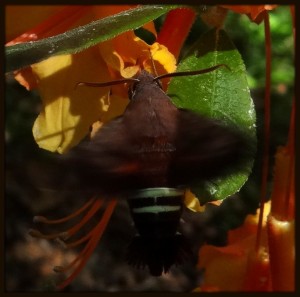
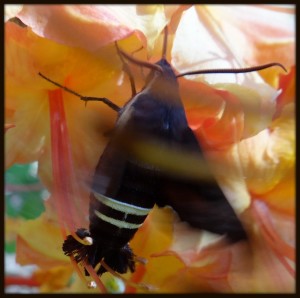
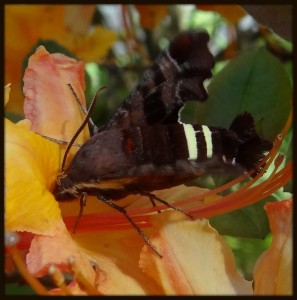
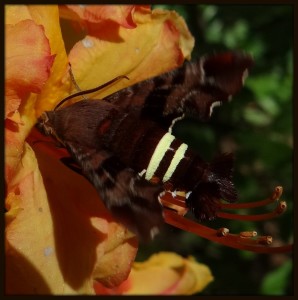
On my way back down Piney Woods Church Road toward home today, I stopped to visit with a neighbor and dear friend.  He showed me his native azalea, in full bloom along the side of his house.  As we stood there admiring its showy, brilliant orange blossoms and delicate, honeysuckle-like scent, a large moth appeared.  I had never seen its kind before; it had brilliant black and yellow banding on its abdomen.  Several field guides and a Google search later, I determined that it was a Nessus Sphinx moth (Amphion floridensis).  Common throughout the eastern United States, this moth is fairly unusual for being active during the daylight hours, feeding on the nectar of various plants.  The caterpillar larva’s host plants include amplelopsis, cayenne pepper, and grapevines.  Considering the local habitat offerings, I suspect that it fed on wild grape leaves.

1-DSC09294

1-DSC09297

1-DSC09298-001

1-DSC09299

Apr 192014
 

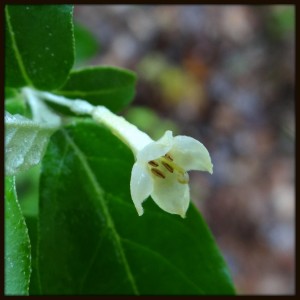
At last, after numerous attempts and almost as an afterthought, I managed to capture a privet blossom today along Piney Woods Church Road.  The flowers are simple yet almost elegant.  Like wisteria, I think they are more attractive solitary than in the clusters where they are typically found (in the case of privet, perhaps four or five blooms all crammed together on a stem).  Perhaps that is because both plants are so highly invasive.  All the privet flowers (happily visited by buzzing bumblebees on sunny days) will become privet seeds, and  privet’s conquest of the Georgia Piedmont will continue.

1-DSC09180

Apr 192014
 

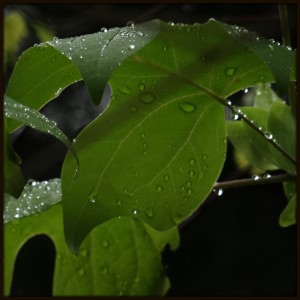
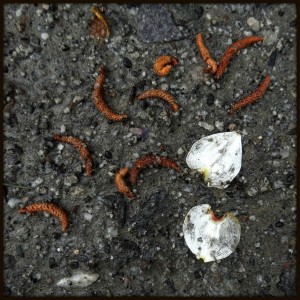
A moderate breeze was blowing through the tulip poplar saplings on the morning after a long rainfall.  I took this picture while the leaves swayed in the wind, water droplets clinging to their stems and upper surfaces.  As proof that yesterday’s rain was quite intense, I include the bottom photograph:  evidence that it did, in fact, rain dogwoods and catkins.

1-DSC09157-001

1-DSC09182

Apr 192014
 

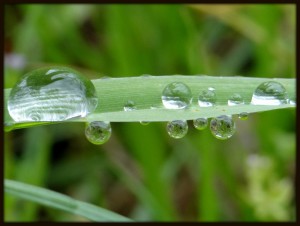
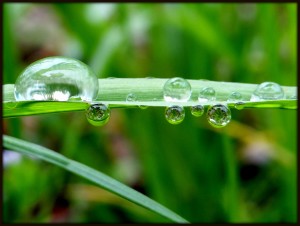
I was drawn to take this photograph by the line of tiny water droplets, like miniature glass marbles, cradled atop a blade of grass.  While taking the photograph, I noticed that there also seemed to be water droplets along the underside of the grass blade.  At home, viewing the image in Picassa, I was surprised to see these globes of water hanging so delicately, like suspended worlds.  I included two near-identical pictures below because the second one includes an image of the photographer (the first one includes part of the photographer’s hand, but not his distinctive hat).  Can you spot this unintended “selfie”?

1-DSC09190


1-DSC09193

Apr 192014
 

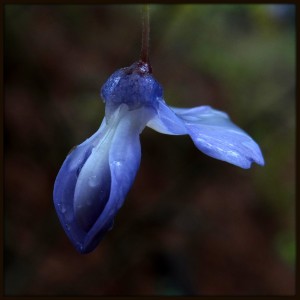
A long day and night of rain had finally ended, and in the cloud-light of late morning, the Piney Woods Church Road landscape felt saturated with rich colors — mostly shades of green, but occasional patches of bluish-purple where the wisteria blossoms hung.  On my way back down the road — typically a time in which I take few photos, relishing the things I had already encountered — I was drawn to this lone wisteria blossom.  Most of the wisteria flowers bloom in long, dense clusters; this one was a single bloom, by itself.  I felt compelled to photograph it, even though I had already dismissed wisteria as “adequately photographed”.  The result is somehow entrancing, like a suspended dance of color and form….

One


Apr 182014
 

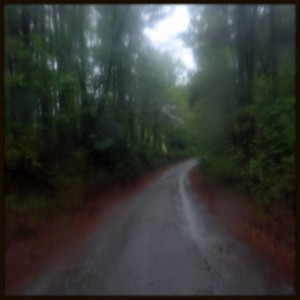
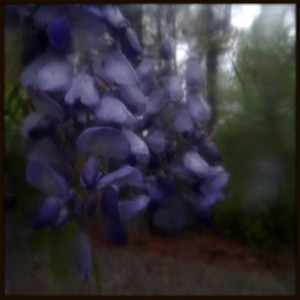
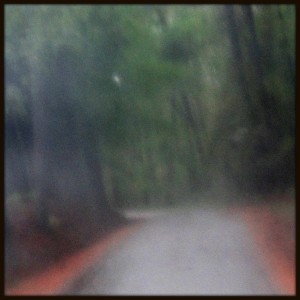
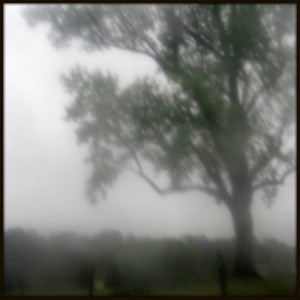
It was raining much harder than I expected, and hoped, when I left my house for Piney Woods Church Road.  My Sony CyberShot camera is equipped with a microphone on its upper surface, conveniently located for catching rainwater.  I tried a few photographs of raindrops on leaves; as long as I kept the camera lens pointed horizontally or even downward, I managed to avoid having to wipe the lens after each photograph.  Fortunately, I had brought along a gallon Ziploc™ freezer bag to hold the camera in-between shots.  Soon, the inevitable happened.  I decided to see what the world would look like through a Ziploc™ lens.  The resulting images are dreamy, verging on watercolor, and sometimes even haunting.  Here are a few photos from the day’s experiment.

1-DSC09106

1-DSC09110

1-DSC09115

1-DSC09124

1-DSC09126

1-DSC09131

1-DSC09134-001

1-DSC09137

Apr 182014
 

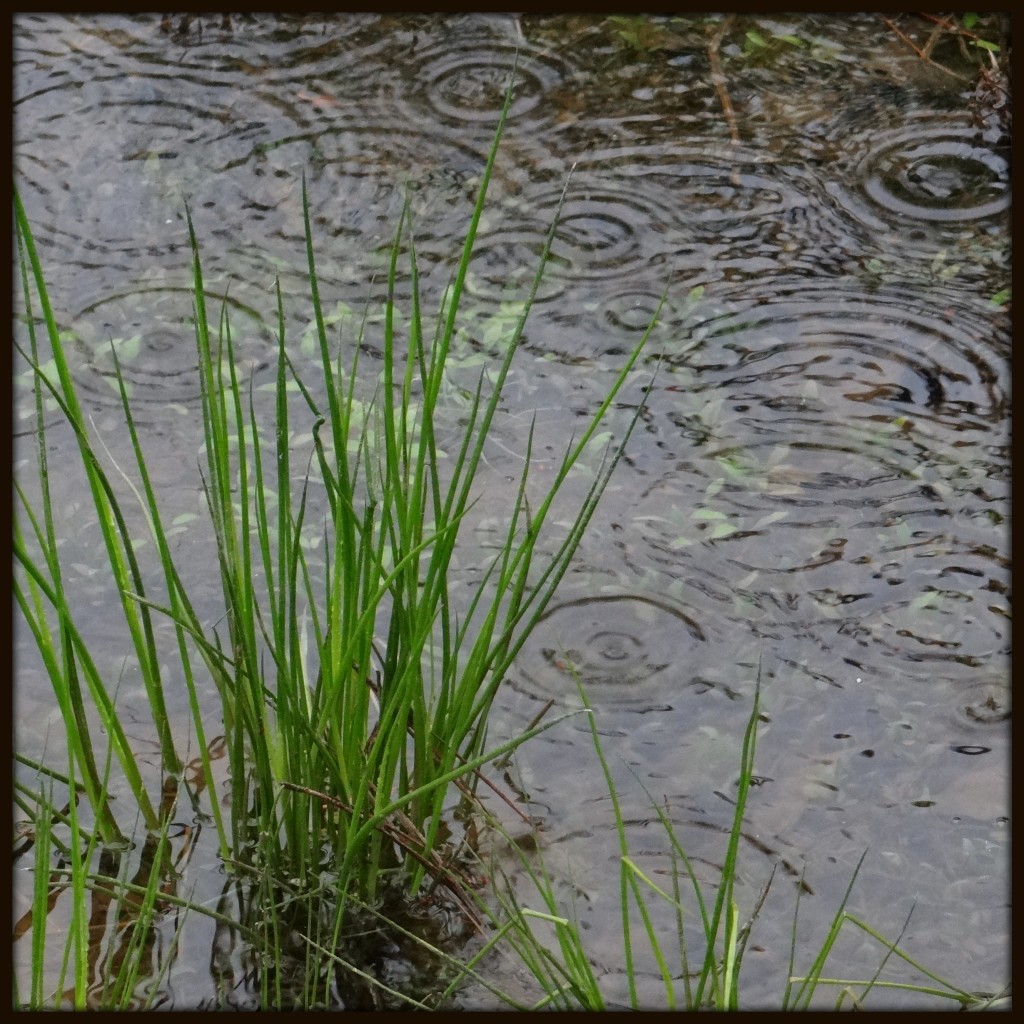
What a cold, rainy day it was — more suggestive of March in Georgia than the second half of April.  During most of my walk, I kept my camera ensconced in a plastic Ziploc™ bag, which led to some intriguing, dreamy images that I will post separately.  On my way back home, I stopped at a drainage ditch to catch this photograph of grasses and raindrop circles.

Raincircles