Apr 022014
 

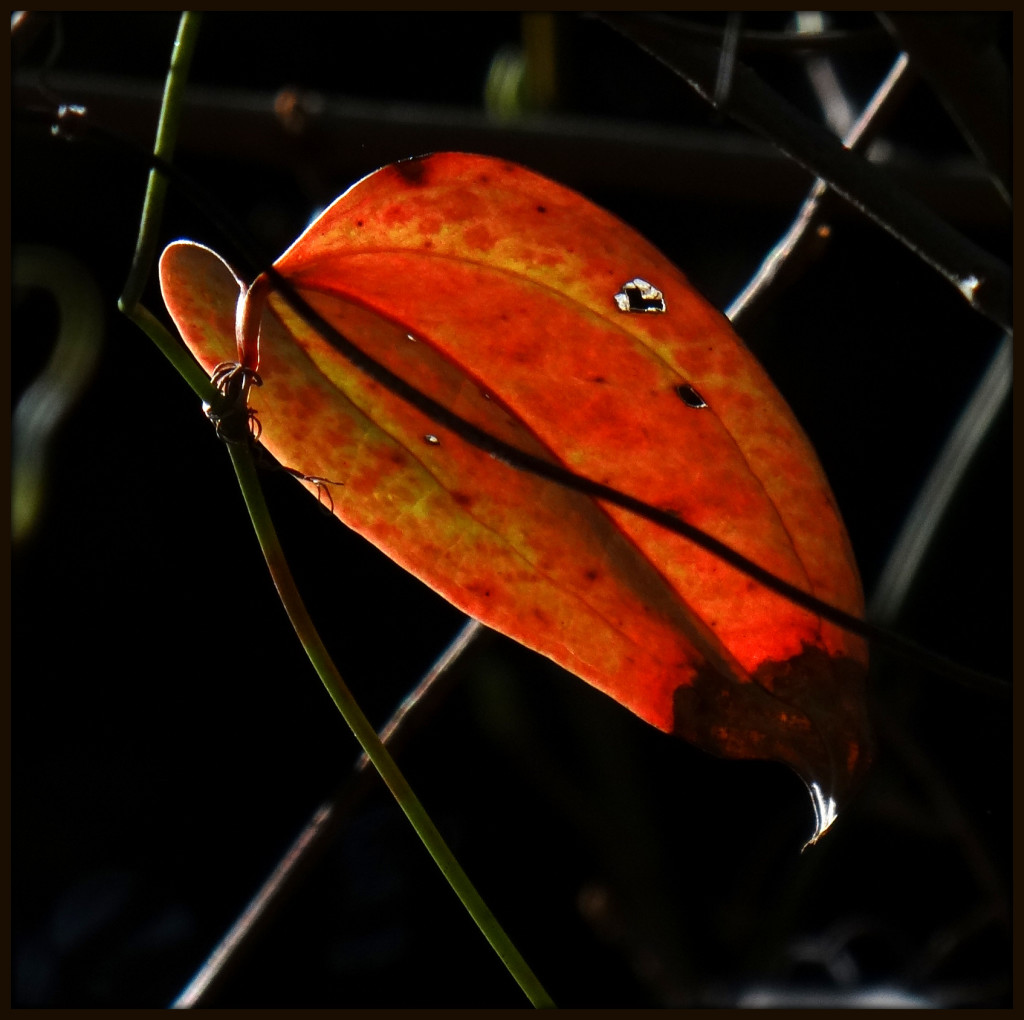
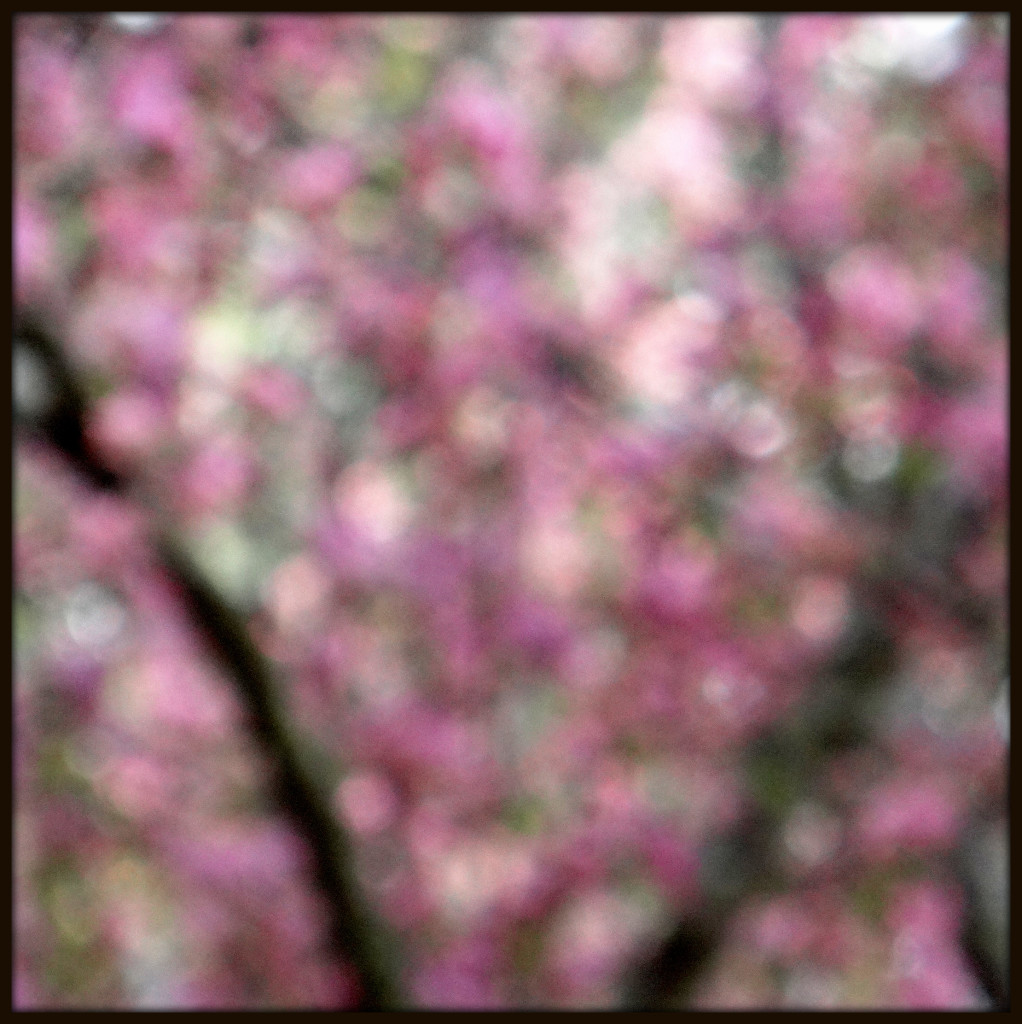
I ventured out to Piney Woods Church Road today shortly after discovering that one of our cats, an orange and white adolescent Manx cat shaped rather like a bowling pin, had sneaked outside last night and was missing.  My walk was necessarily distracted, as I paused every few steps either to take a photograph, call out the cat’s name, or a combination of the two.  Early on my walk, I glimpsed a pink tree blooming in a backyard beside the road — crabapple, I think.  Here is my impression of the tree — a bit unfocused, like myself at the time.

Just as I began writing this post, the prodigal kitten returned, none the worse for wear, but rather hungry.
Spring Impression

Apr 012014
 

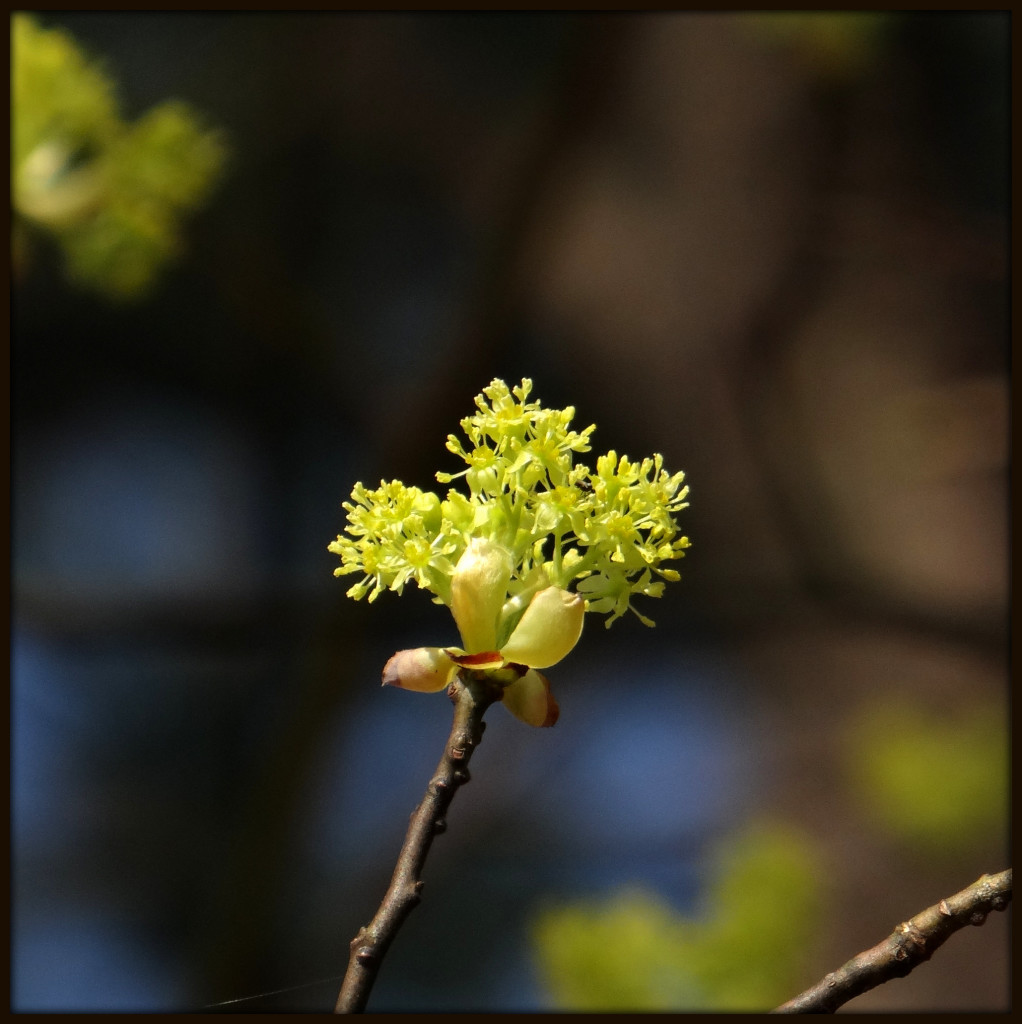
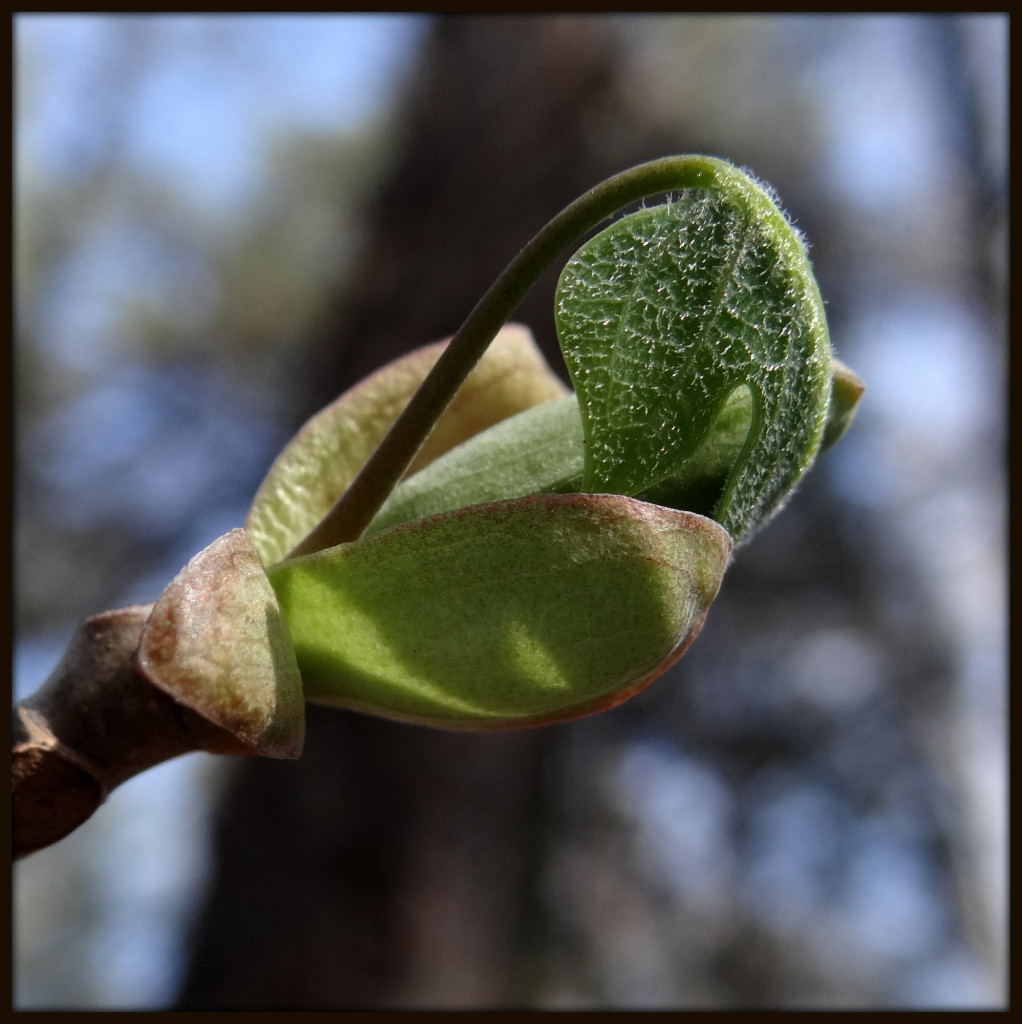
I am embarrassed — quite literally — by the riches of this springtime.  Again and again, I find myself at a loss as to what a blooming roadside weed, shrub, or even tree might be.  Today, along Piney Woods Church Road, I encountered a tree, still devoid of leaves, holding clusters of brightly glowing tiny yellow blooms.  I scanned my tree field guides and hundreds of images on the Internet in vain.  I suspect it is a tree of which I am quite familiar, but one that I have never noticed in blossom before.  Over the years, I have spent many spring days in search of woodland wildflowers, learning their forms and habits.  Yet I have never bothered to learned to identify trees by their blooms.  I suppose I will have to wait for the leaves…..

Addendum:  On April 3rd, I finally figured out what these blossoms are:  sassafras (Sassafras albidum).  Compare the image below to this one.

Waiting for the Leaves


Mar 312014
 

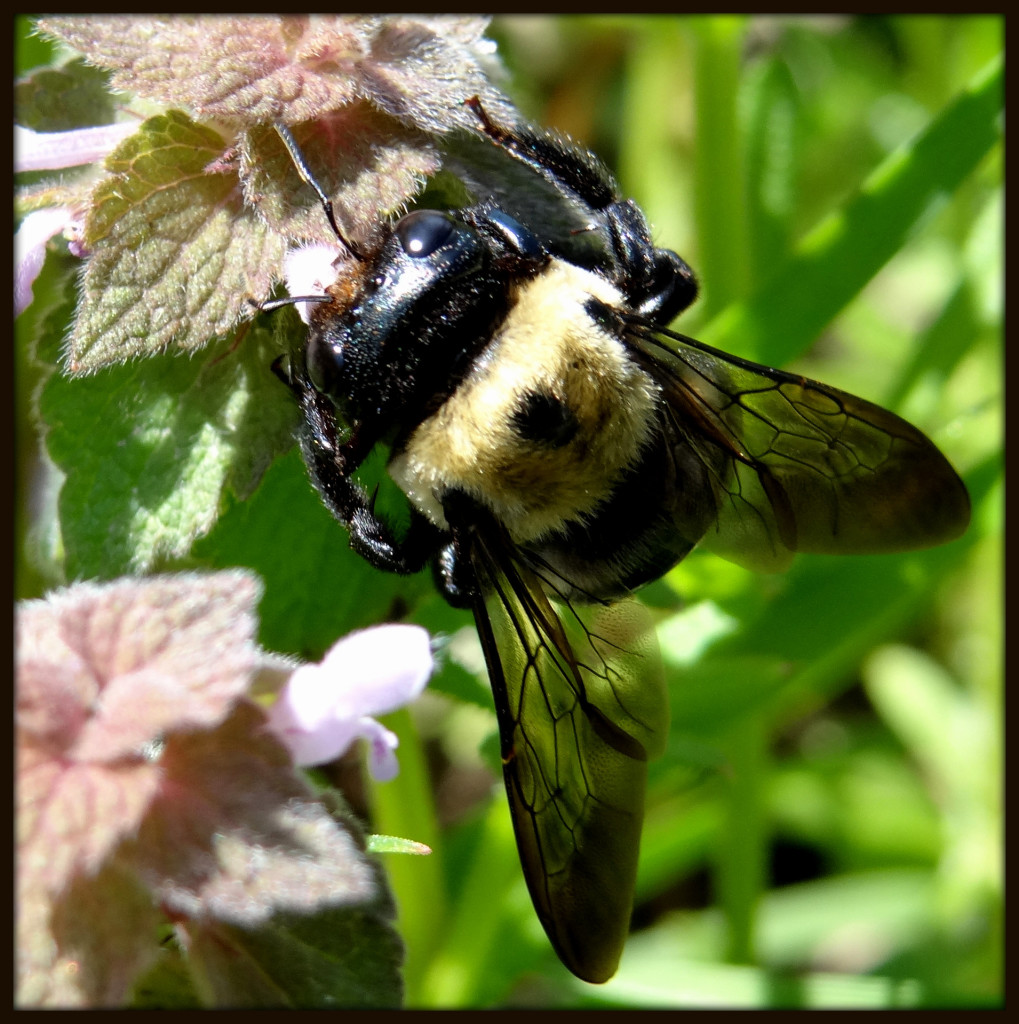
I have always been fond of bumblebees.  They have a charming furriness about them, and they are not very aggressive toward humans — certainly compared with paper wasps and yellowjackets.  They have such charming alternative early English names, too — the drumbledrane, the dumbledore, or, the one which Charles Darwin knew them by, the humblebee.  I photographed this one ambling from one henbit bloom to another on a delightfully mild spring afternoon.

Humblebee

Mar 302014
 

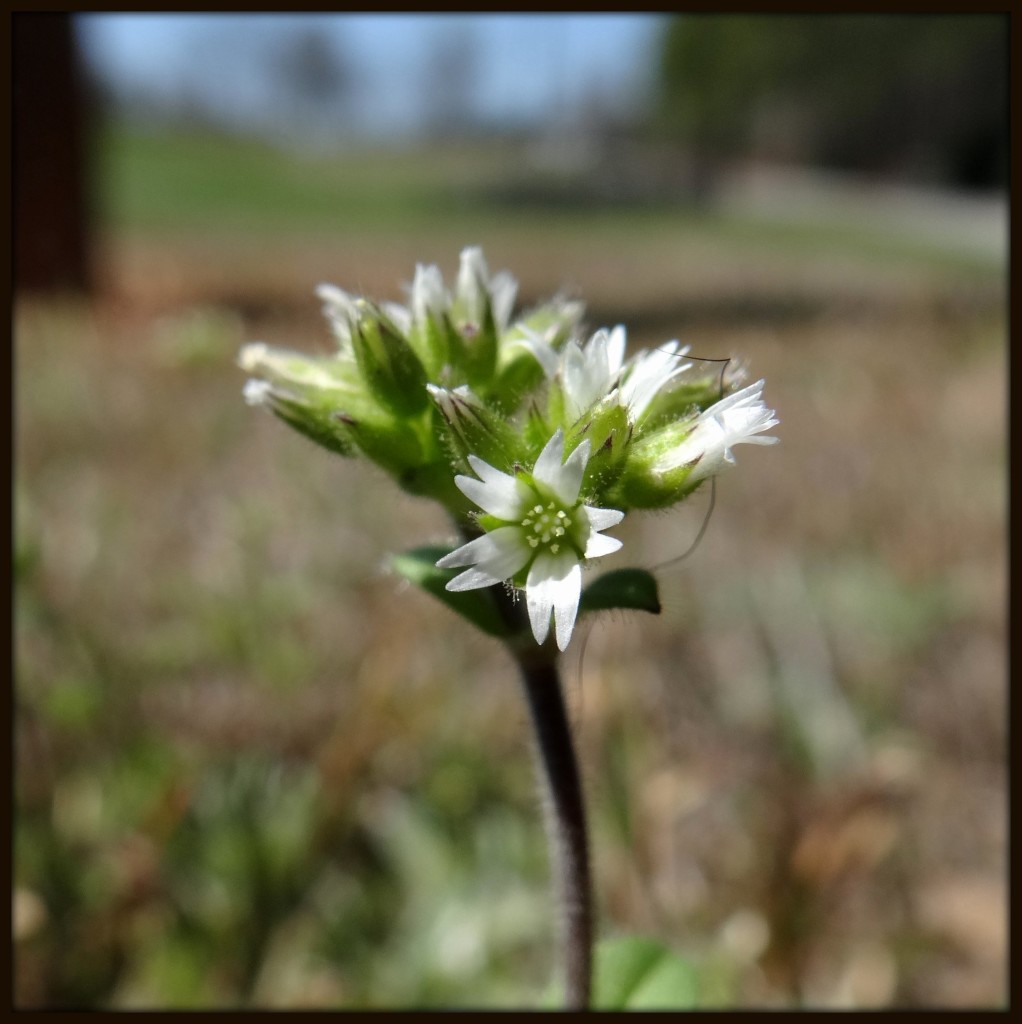
I own half a dozen field guides to flowers.  Yet not one of them includes sticky mouse-ear chickweed (Cerastium glomeratum), originally native to Eurasia.  Most of my guides begrudgingly include a few of the ten chickweed species found in Eastern North America, such as common chickweed (no surprise there).  Newcomb’s Wildflower Guide includes eight species, but goes out of its way to put chickweeds in their place, describing them as “often weedy and insignificant.”  Admittedly, the flowers are minute, and easily missed.  But is it fair to ignore such a common flower as this one, considering how many of us might encounter it in our own backyards?  I am still greatly enamored of native woodland wildflowers, like bloodroot and hepatica, trillium and trout lily.  But none of these grows on my property, or even in the adjacent woodlots, while chickweed is everywhere.  Apparently it is possible for a flower to be so common that it is overlooked.   

But not today.  Here is a photograph of the sticky mouse-ear chickweed, in all its glory, just coming into bloom along Piney Woods Church Road.

Sticky Mouse-Ear Chickweed

Mar 302014
 

I have been reading lately about the Miksang way of photography, also known as contemplative photography — an approach inspired by Tibetan Buddhism.  The central premise of Miksang (which means “good eye” in Tibetan) is that photography can emerge out of flashes of pure perception — sudden moments when some aspect of the world around us impinges upon our consciousness in a powerful and immediate way.  When we train ourselves to tune into those experiences, we can use a camera as a way of creating equivalents — visual representations of them.

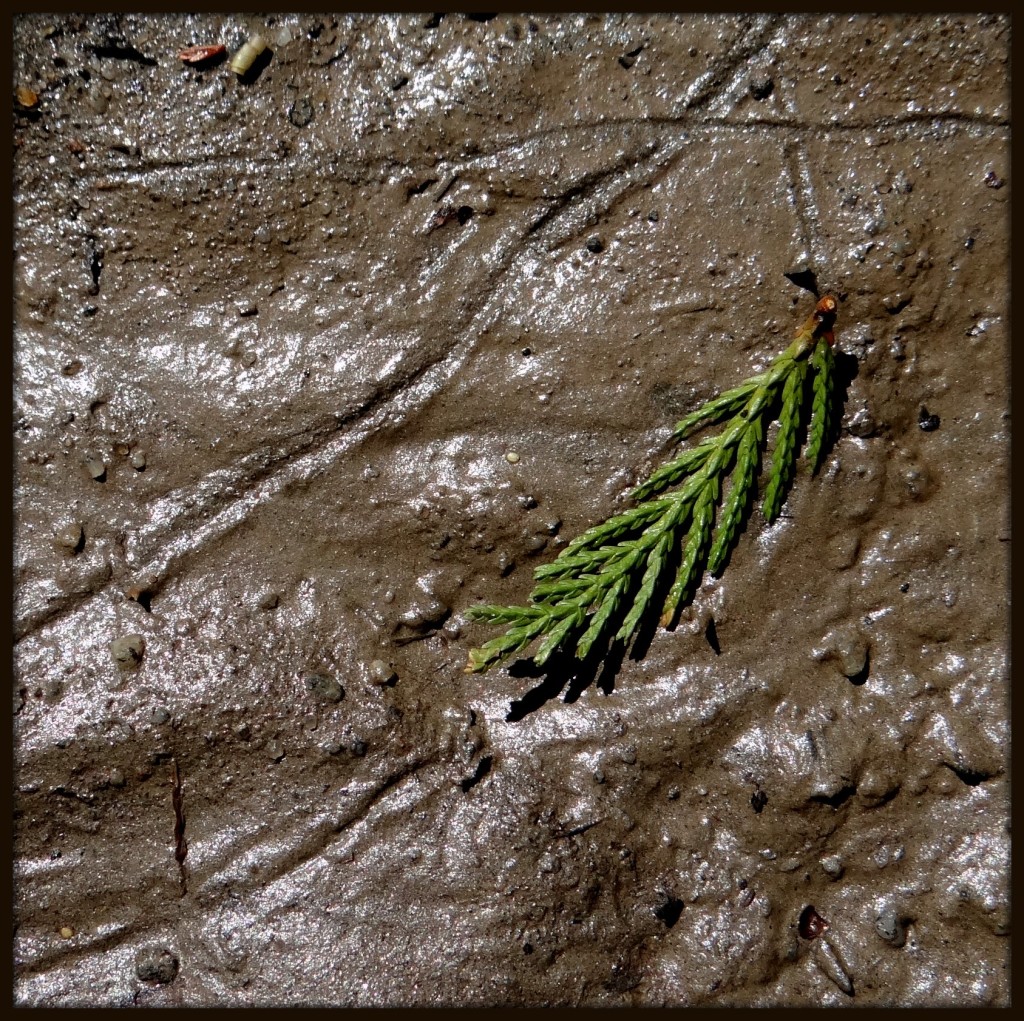
This is all a long-winded explanation for why I ended up taking this photograph of a single branch of cedar lying in a mud rut along Piney Woods Church Road today.

Fallen Cedar


Mar 292014
 

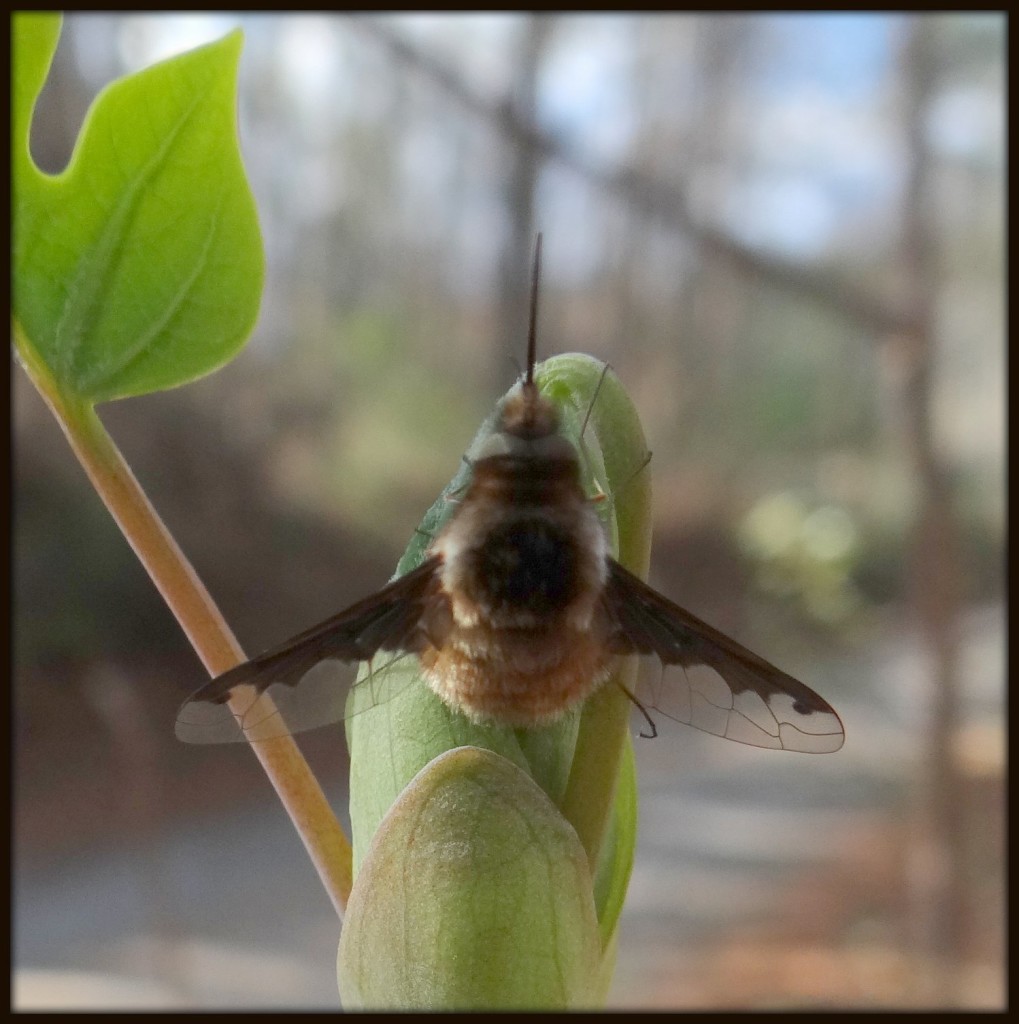
It’s a moth….  It’s a bee….  It’s a fly….

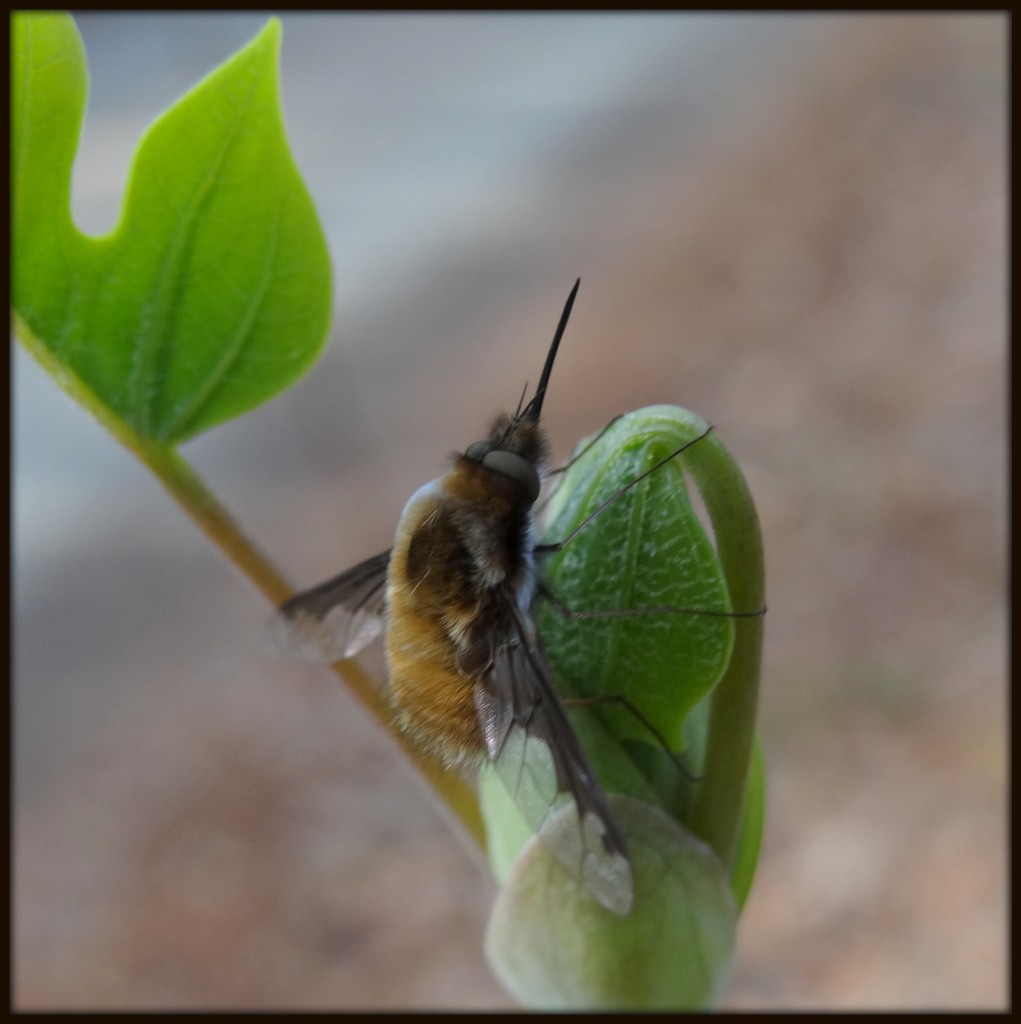
I have to admit that, as flies go, the black-tailed bee fly (Bombylius major) is quite attractive — a hedgehog with wings.  Admittedly, one has to get past its rather long and pointy proboscis.  But that is a tool for sipping nectar, not causing harm.  The flies hover like hummingbirds over flowers, their beating wings generating a high-pitched whining sound.  Bee fly larvae parasitize the larvae of solitary bees and consume their food stores.  The adult bee flies supposedly emerge from their underground bee burrows in early summer; this particular one seems to be a couple of months early.

Bee Fly One

Bee Fly Two

Mar 282014
 

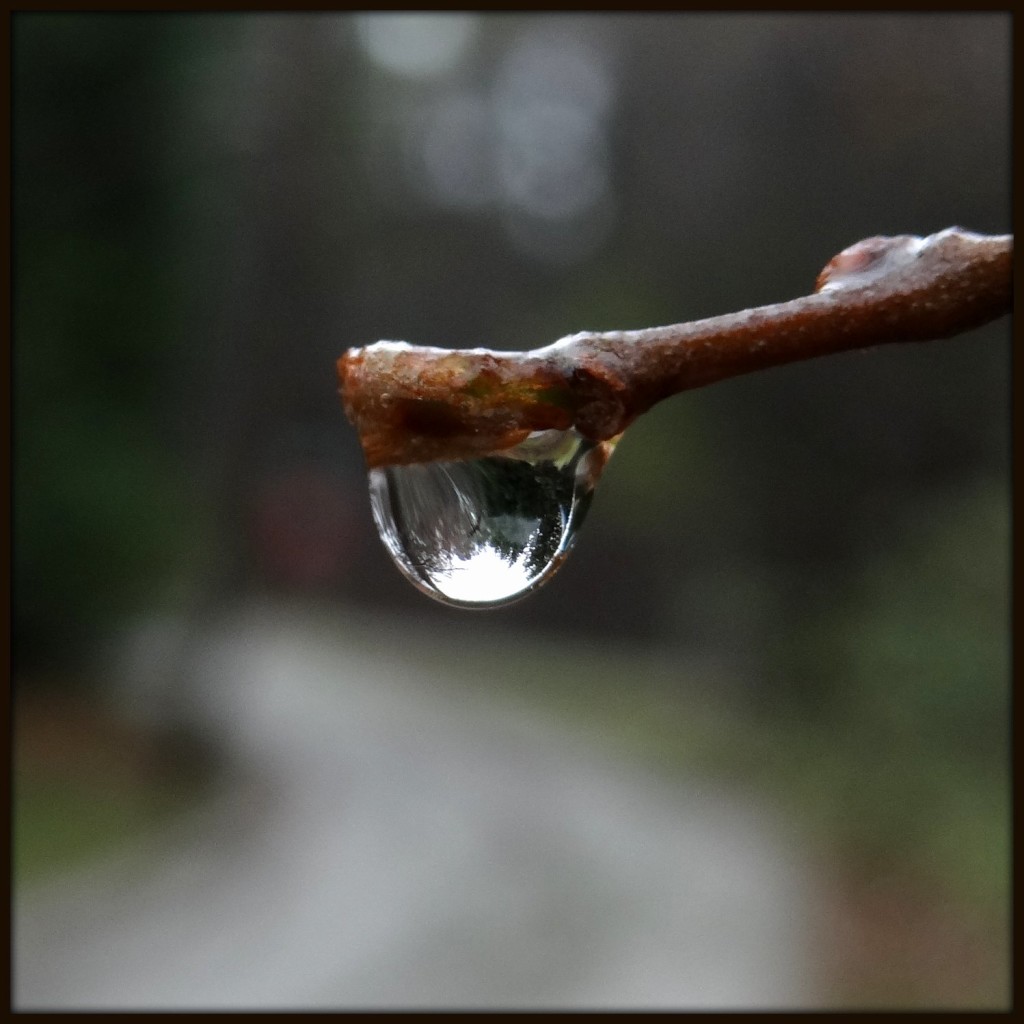
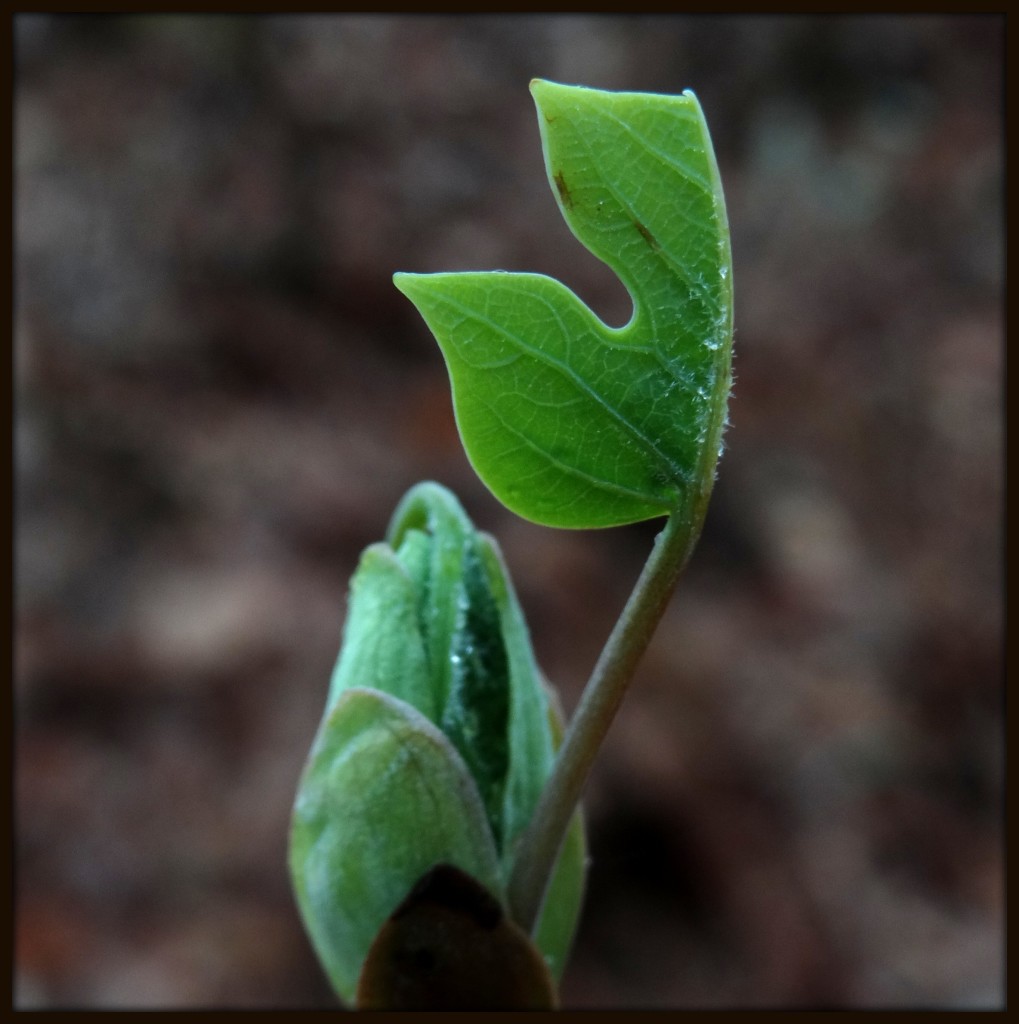
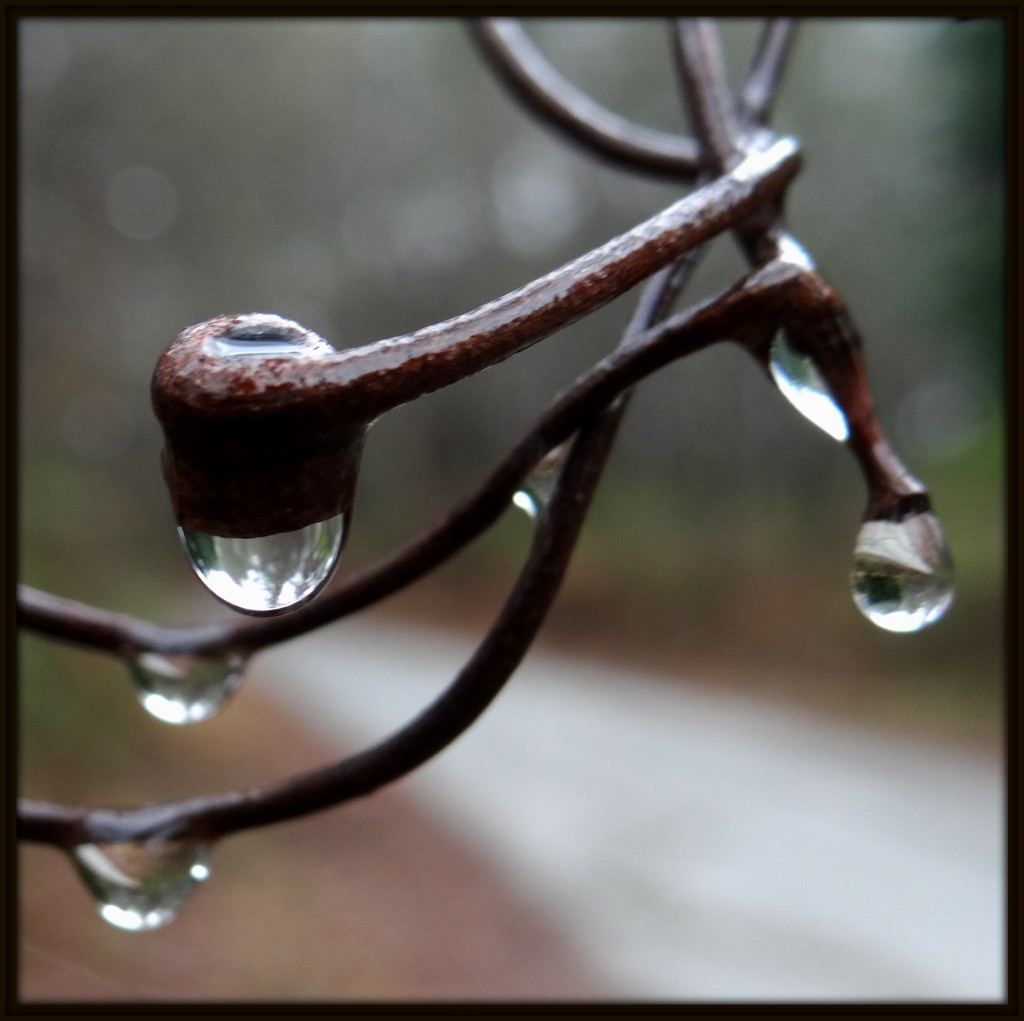
Here are two more photographs from a rainy day walk along Piney Woods Church Road.  The first is another water droplet beside the road; the second is yet another image of tulip poplar leaves opening.  I can imagine an entire gallery space filled solely with images of tulip poplar buds and leaves in early springtime….

1-DSC08595

Another Tulip Poplar