May 302014
 

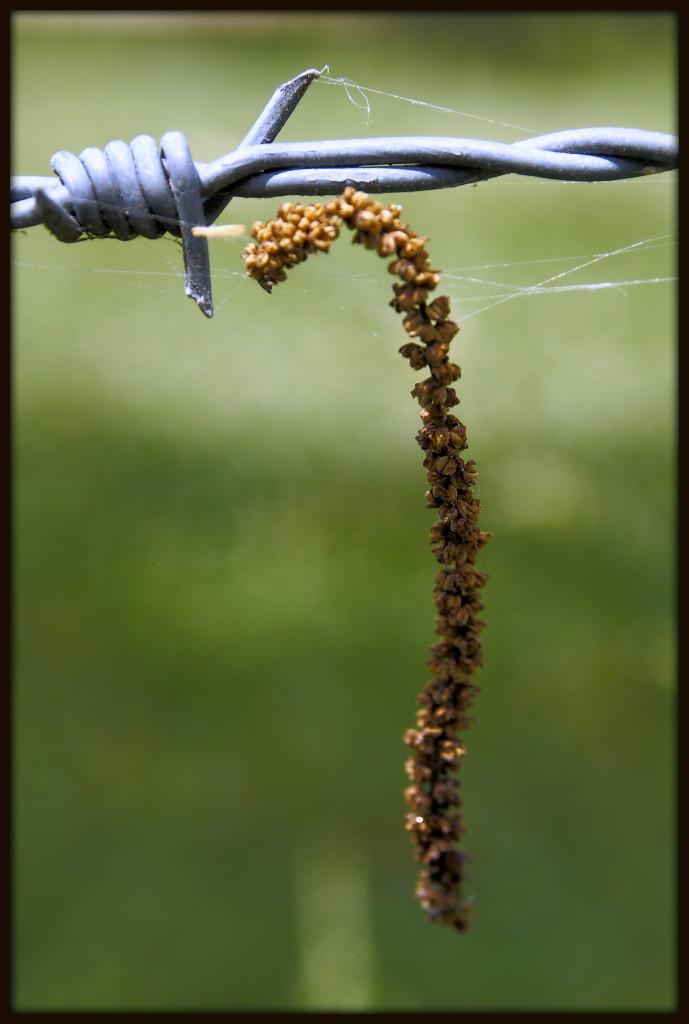
In this humble photograph, a lone tree catkin dangles from a barbed wire fence by silken threads.  It is Day 150, and there is so much more of the commonplace yet to be encountered — things like this catkin that I continue to pass over every day, until one day I will glimpse them, as if for the first time.


Catkin

May 292014
 

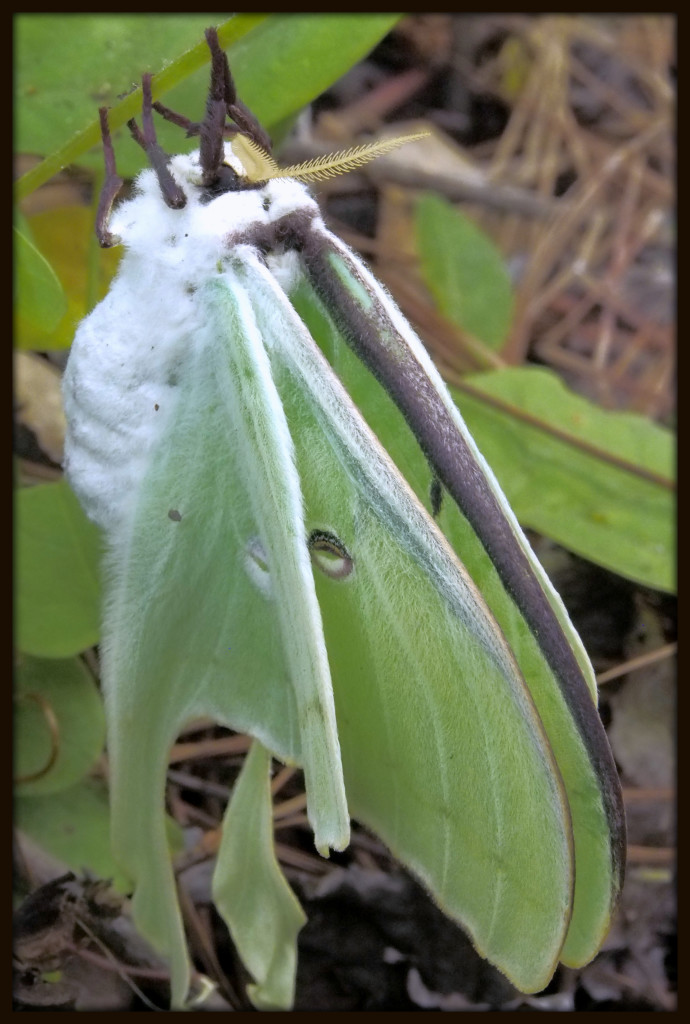
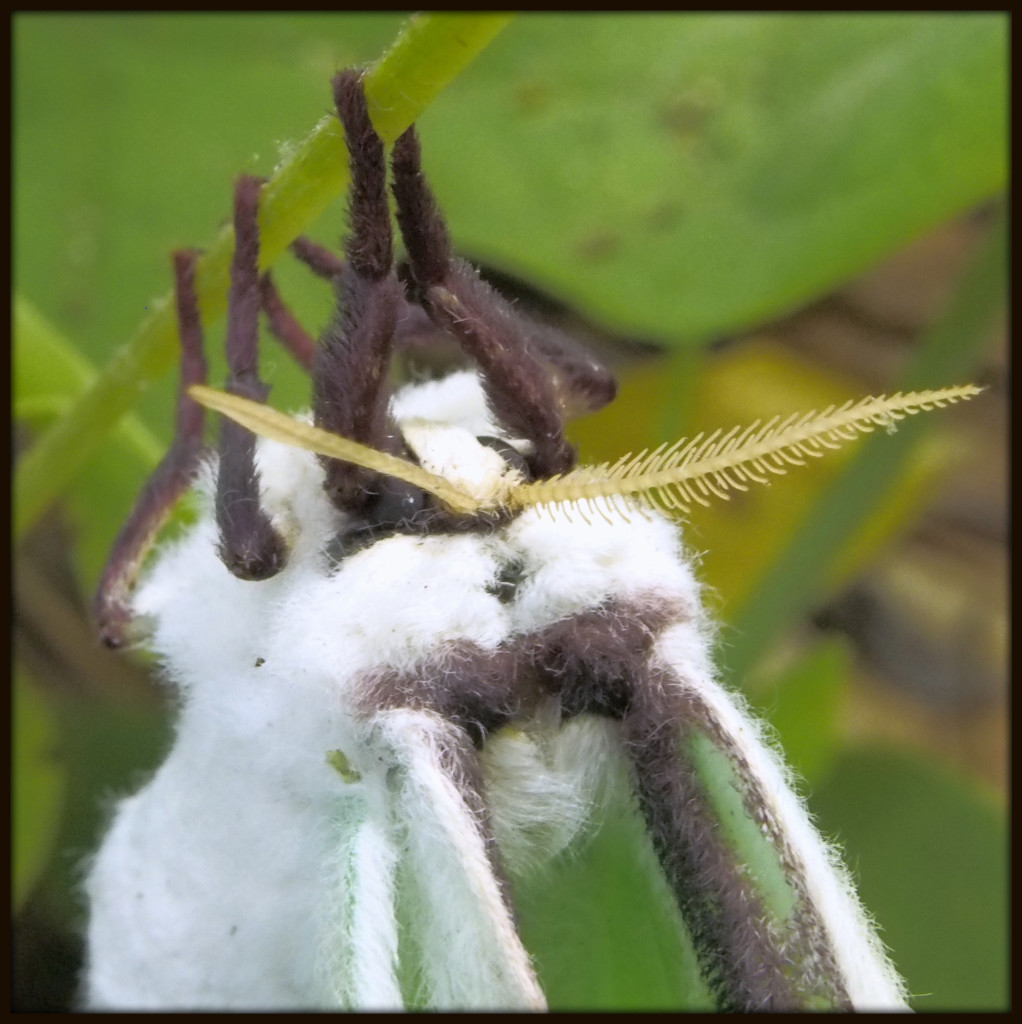
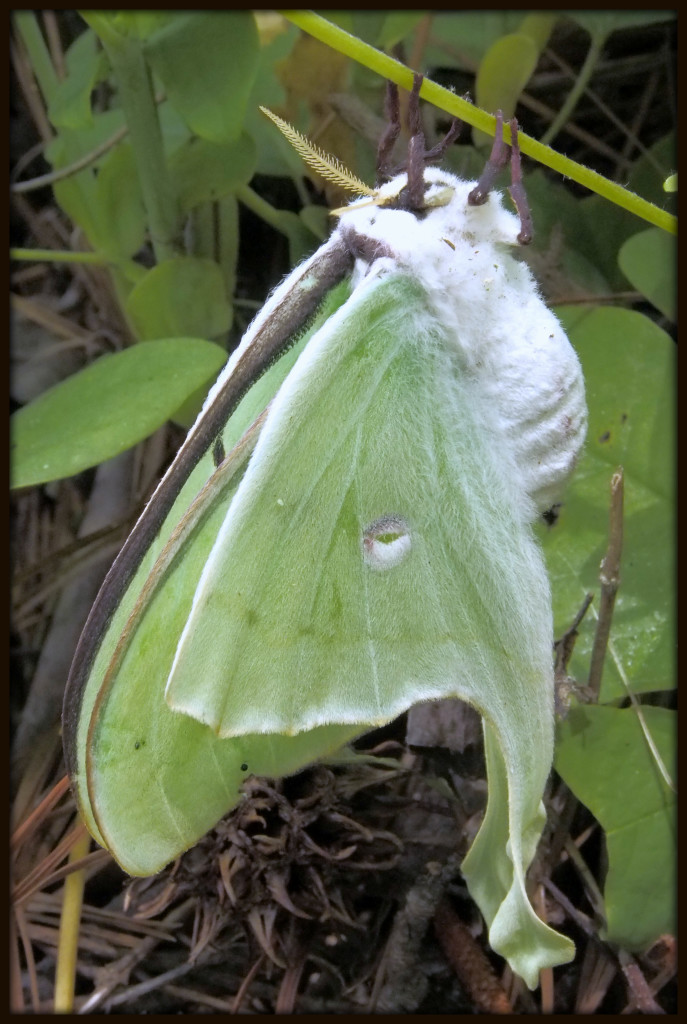
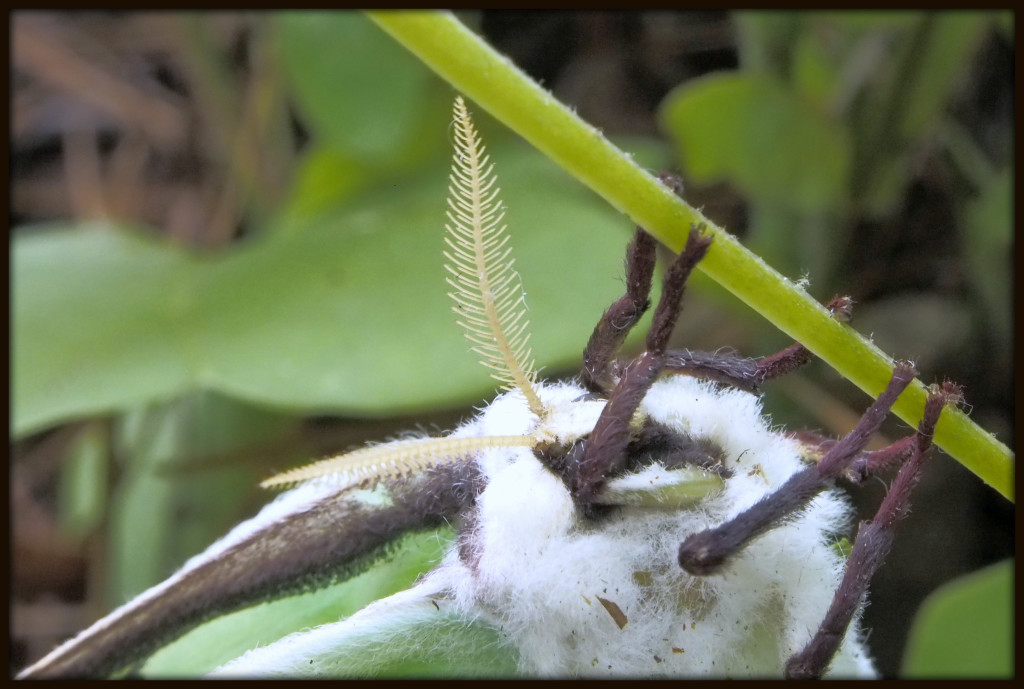
A neighbor and good friend who lives along Piney Woods Church Road emailed me today with exciting news.  While clearing out part of his property for eventual use as horse pasture, he discovered a Luna Moth (Actias luna), probably female, that had just emerged from its cocoon.  By the time I arrived with my camera, it had already puffed out its wings and hung nearly motionless, apart from twitching one of its antennae (which remind me of fern fronds) every couple of seconds.  I took quite a few photographs, entranced by its alien beauty, unlike any other moth native to this region.    Tonight it will take wing, find a mate, lay eggs…and die only a few days afterward.  Luna Moths lack mouth parts; their only tasks are to mate and make the way for the next generation.
 

OLYMPUS DIGITAL CAMERA


OLYMPUS DIGITAL CAMERA


OLYMPUS DIGITAL CAMERA


OLYMPUS DIGITAL CAMERA

May 292014
 

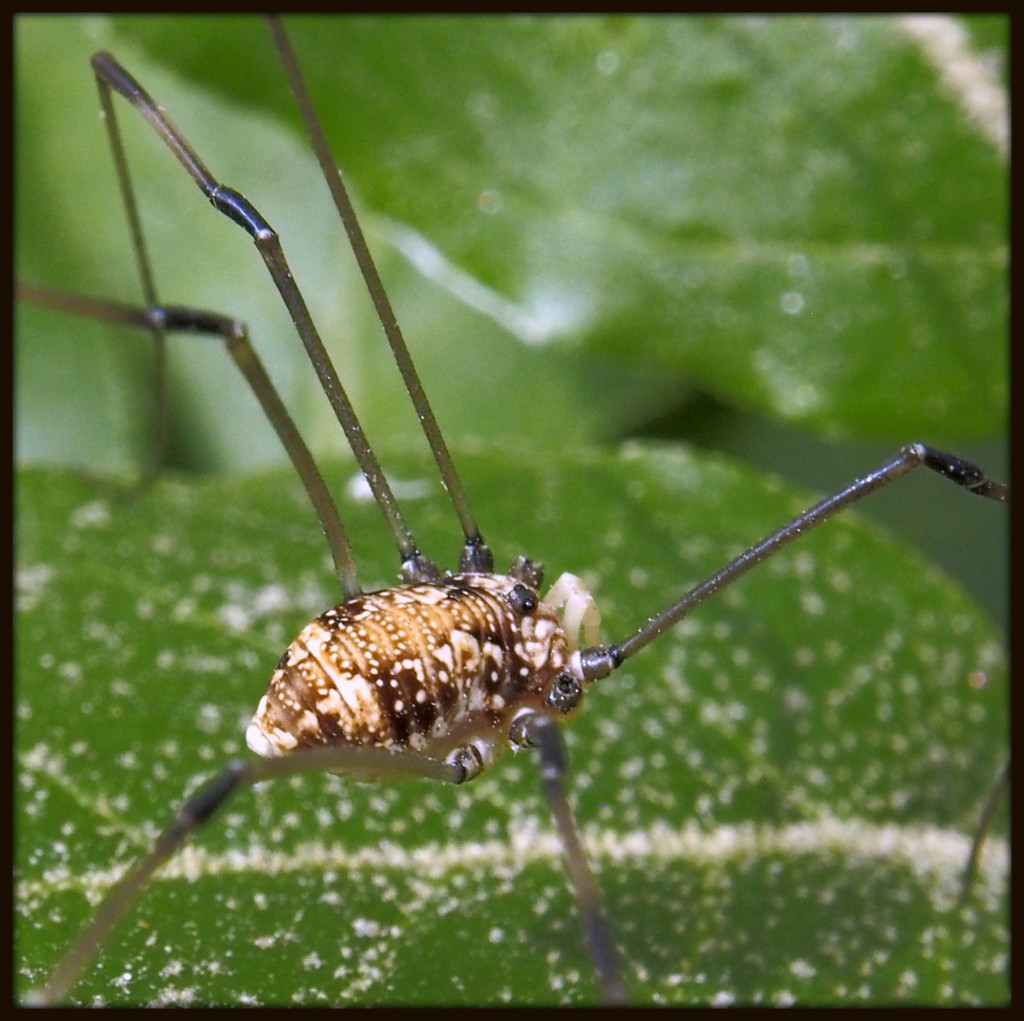
This Eastern-Daddy-Longlegs (Leiobunum spp.) is quite the grizzled veteran, having lost two of its eight legs.  Daddy-longlegs (also known as harvestmen) lack venom and are harmless to humans.  Although often grouped with spiders, they belong to a separate order of organisms, Order Opiliones, one with a lineage reaching back 400 million years.


Grizzled Veteran

May 292014
 

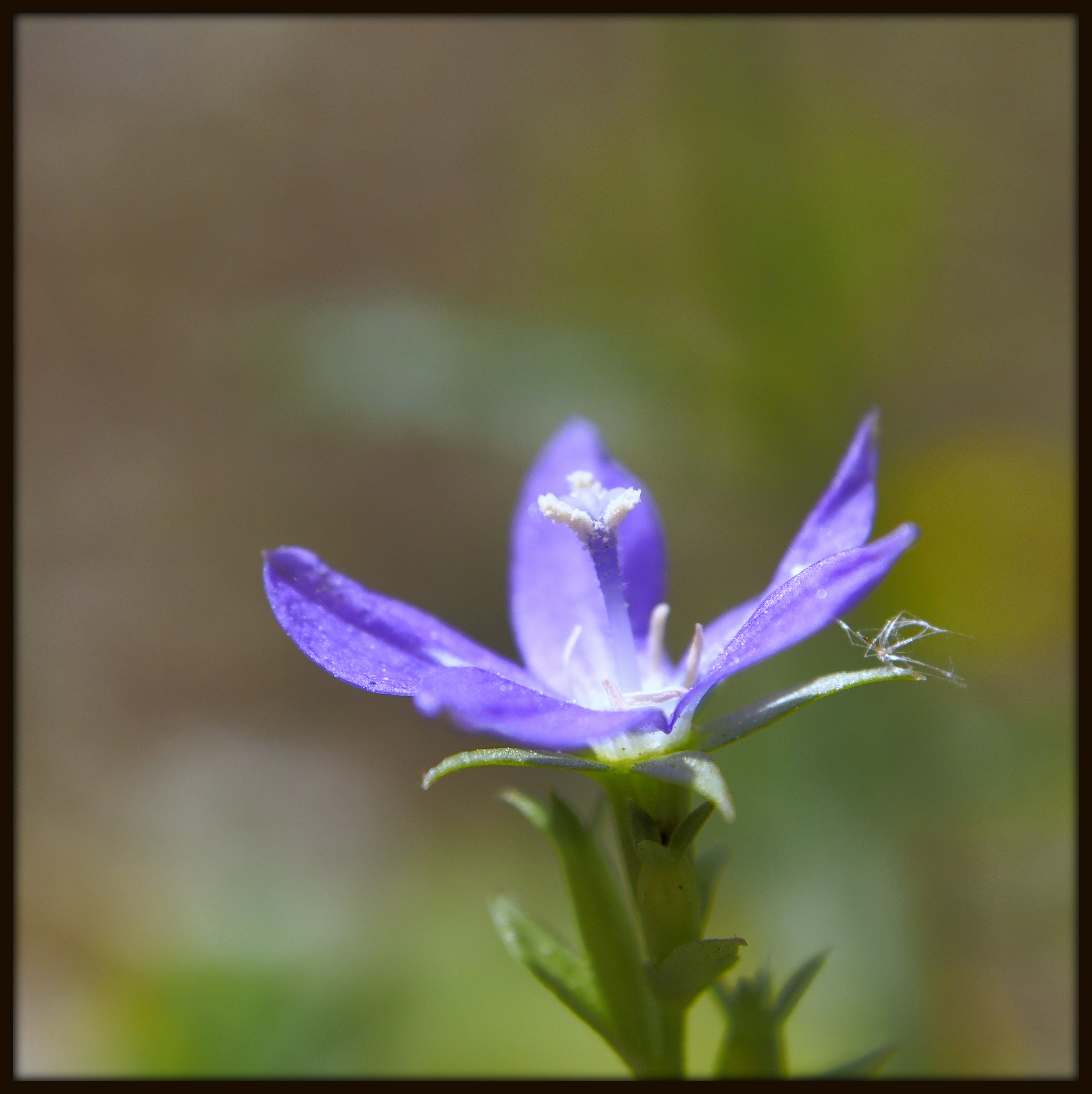
This tiny, rather nondescript purple flower carries a grand name indeed — Clasping Venus’s Looking Glass (Triodanis perfoliata).  It is an annual herb, native to most of the eastern North America.  I recently glimpsed a couple of isolated individuals, each bearing aloft a single five-petaled flower about half an inch across, near the Piney Woods Church Road intersection with Rico Road.  They offer practically the only patch of purple along the road right now, surrounded by a sea of green leaves.  Scotts Lawn Service offers to “fight” this plant with “systemic weed control,” “killing it completely, root and all.”  Am I the only one that is baffled by this assertion?  There are so many battles we need to engage in throughout our lives — fighting against injustice, poverty, industrial air pollution — but is this really one of them?


Clasping Venus's Looking Glass


May 282014
 

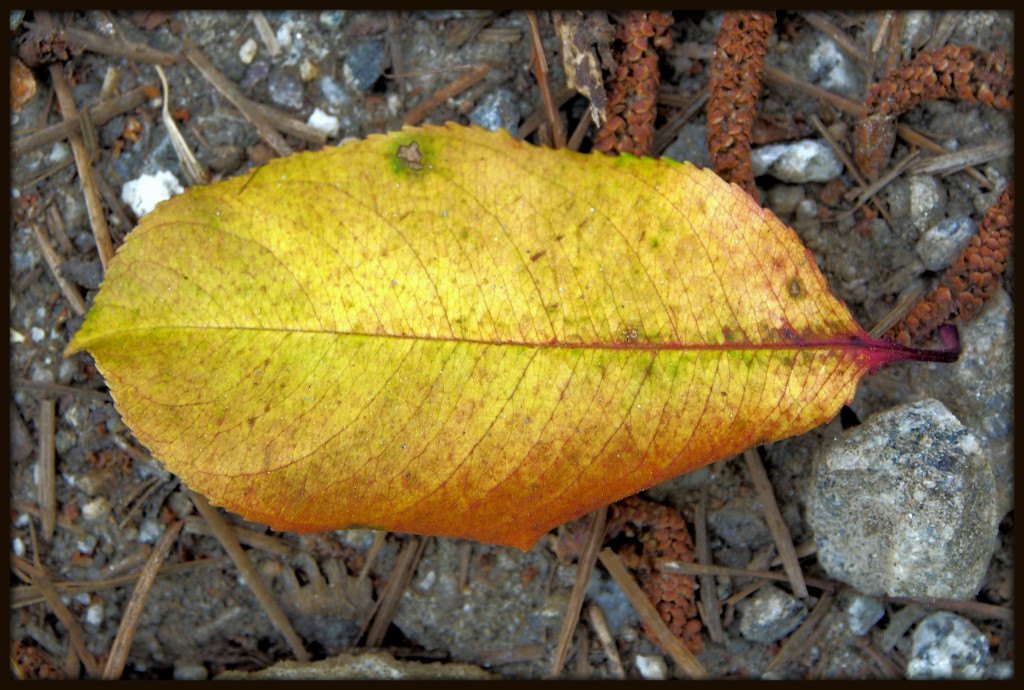
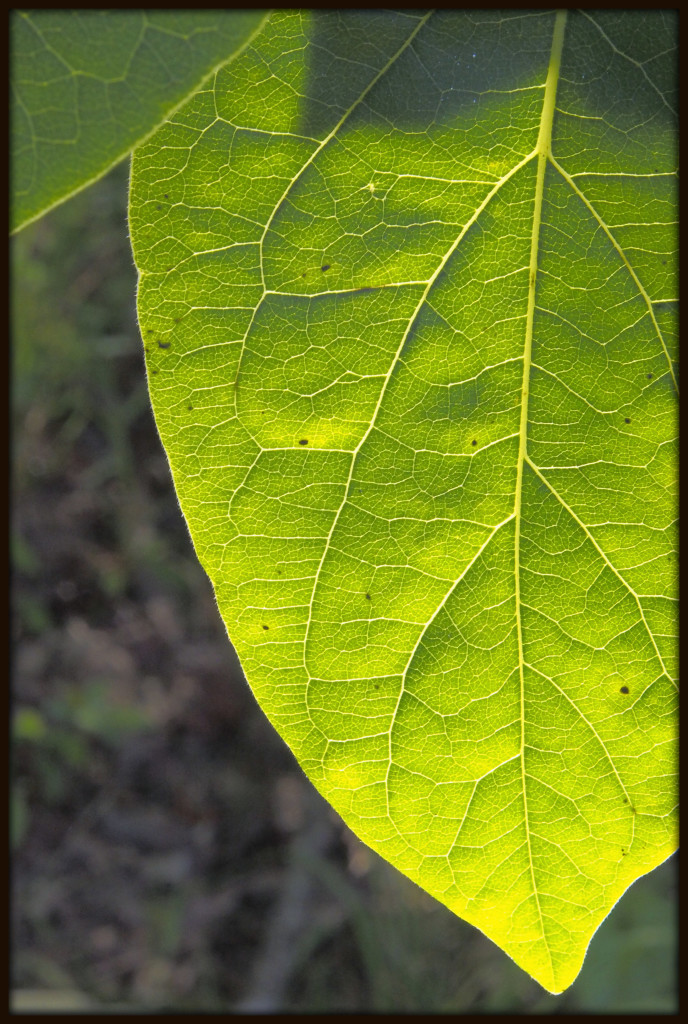
On Day 148, I set out shortly after 9 am in search of something new and intriguing.  A new horse fence is being installed along Piney Woods Church Road, and I was also distracted by various frustrations, so I found it more difficult than usual to focus on all the beauty around me.  Still, I found this lovely common persimmon (Diospyros virginiana) leaf, glowing with the morning sunlight.  It is quite sufficient for the day.


Persimmon Shading

May 272014
 

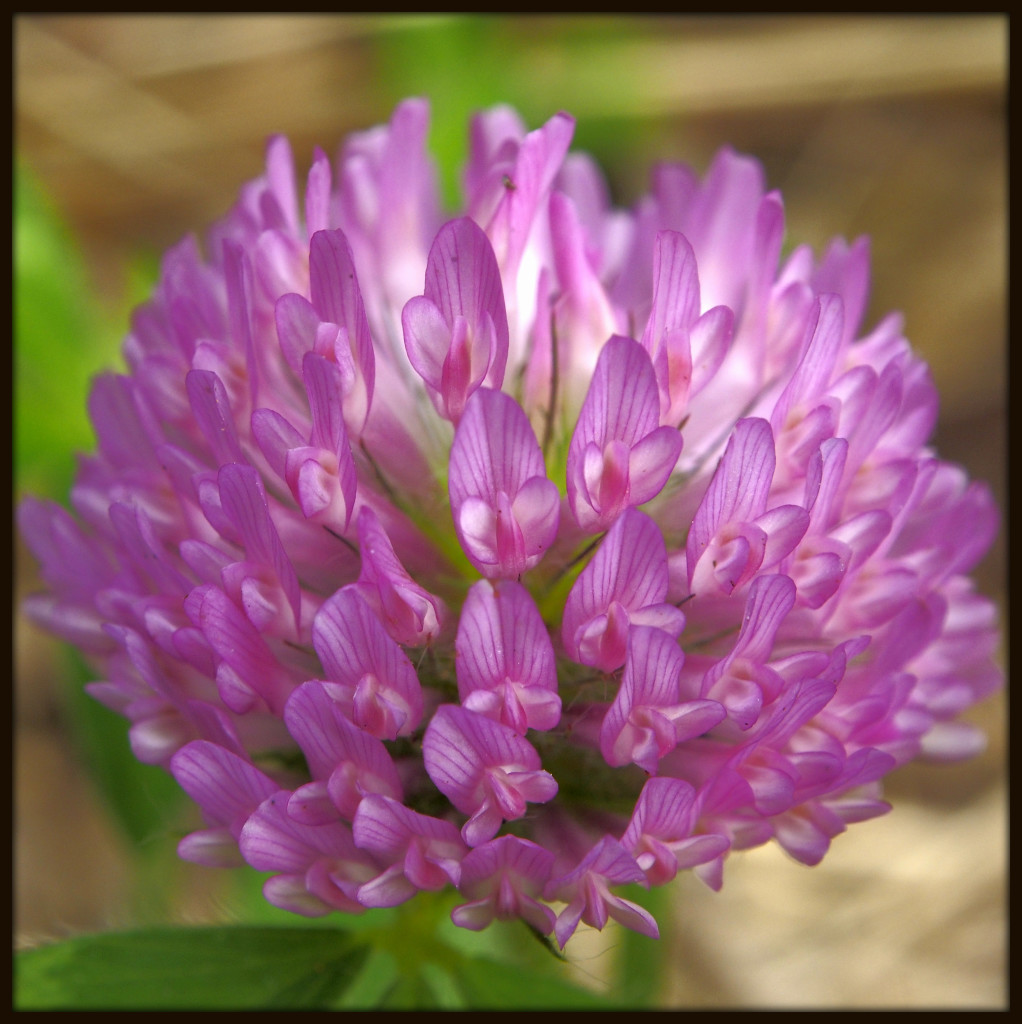
Red clover (Trifolium pratense) may be a widespread European immigrant, but I am confident it is of noble stock.  It is a flower worthy of kings and queens, now gracing pastures and lawns across North America.  This photograph was taken along Rico Road, on my way to Piney Woods Church Road this morning.


Red Clover

May 272014
 

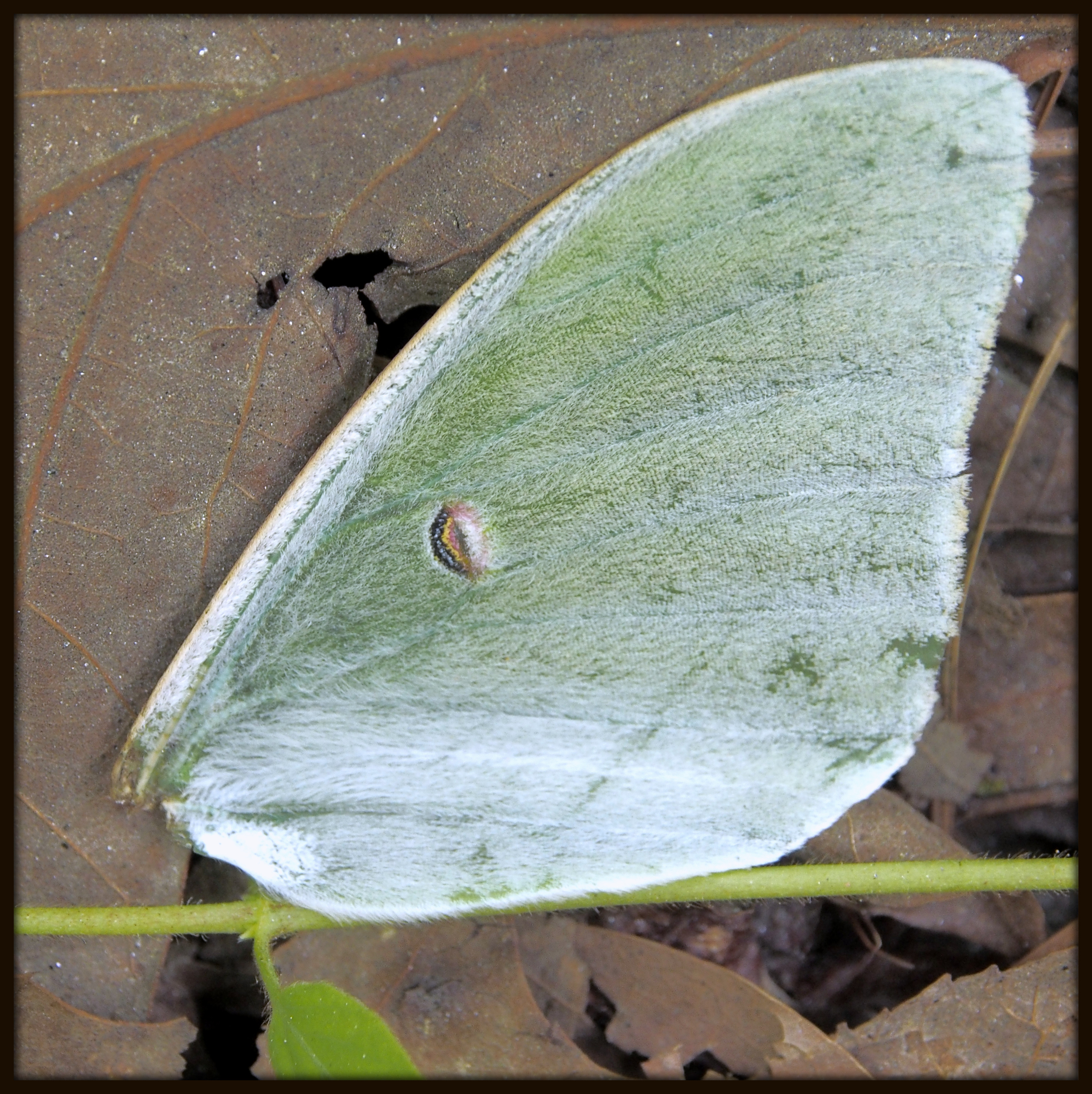
On my walk today I glanced down onto the ground beside the roadway and saw this forewing of a Luna Moth (Actias luna) — a memento mori, a reminder of how fleeting nature’s beauty can sometimes be.  It makes me realize that my single walk down Piney Woods Church Road each day isn’t nearly enough to take it all in — I am missing so much that happens during the many hours that I am not there.


Luna Moth Forewing

May 272014
 

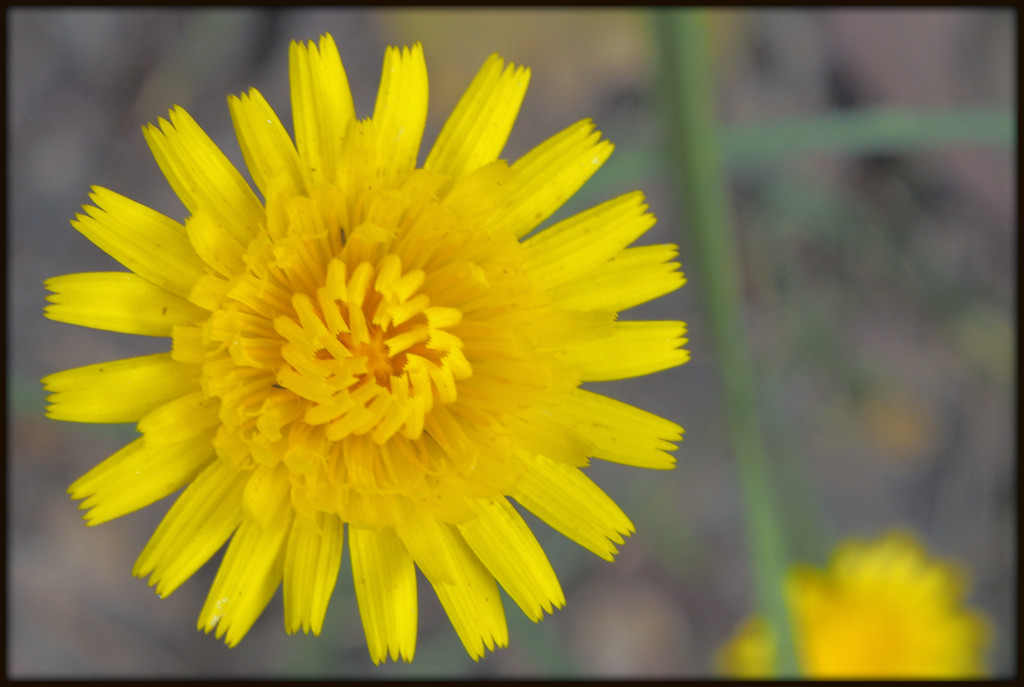
Today I stopped to photograph a fairly ubiquitous yellow flower, very dandelion-like but much taller, with a slender green stem.  The flower is almost certainly Two-flowered Cynthia (Krigia biflora), a wildflower in the Aster family native to most of the Eastern US and north into Canada.  The flower head is quite lovely when viewed-close up — not as similar in form to a dandelion as I had assumed at first glance.


Two-flowered Cynthia