Guess who was hiding among the branches of a black cherry tree along Piney Woods Church Road today, calling insistently to passersby? I still haven’t managed to get a crisp image of this brightly-adorned street musician….
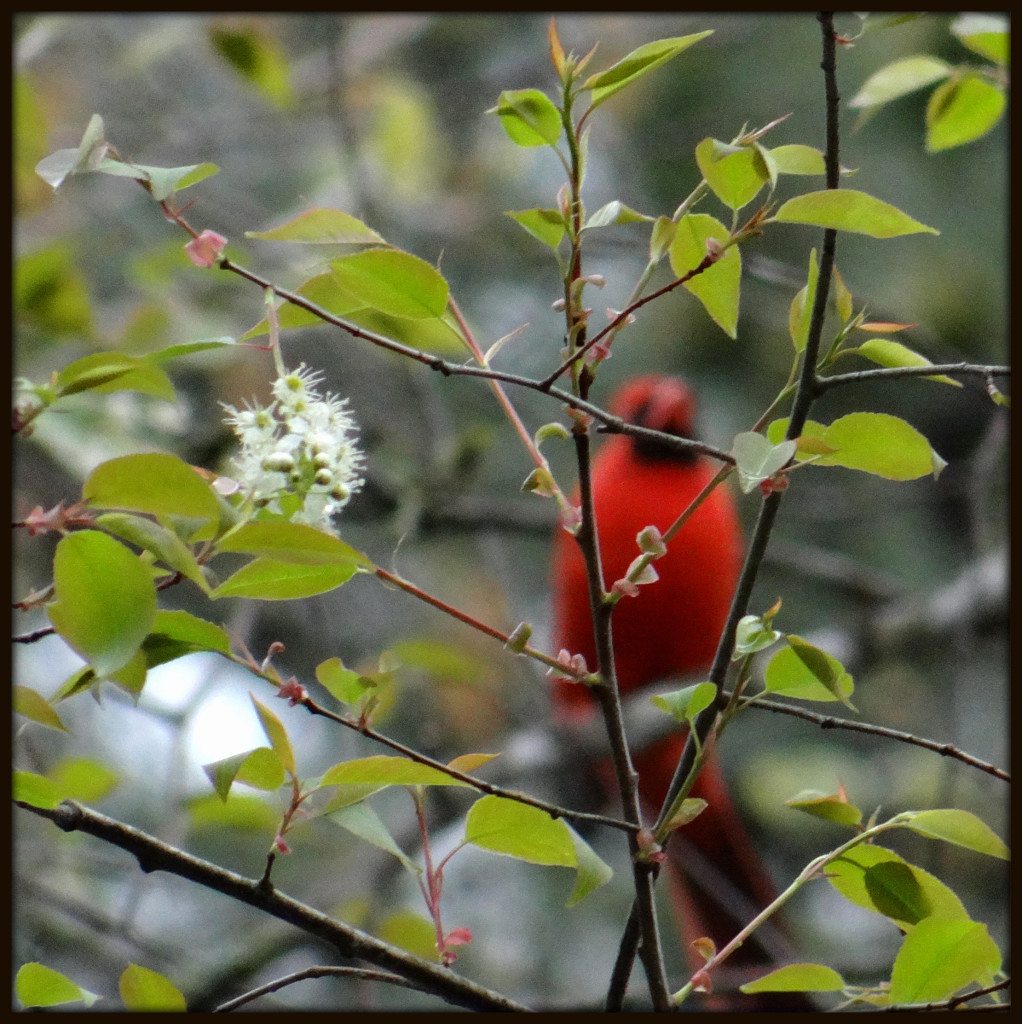
Guess who was hiding among the branches of a black cherry tree along Piney Woods Church Road today, calling insistently to passersby? I still haven’t managed to get a crisp image of this brightly-adorned street musician….
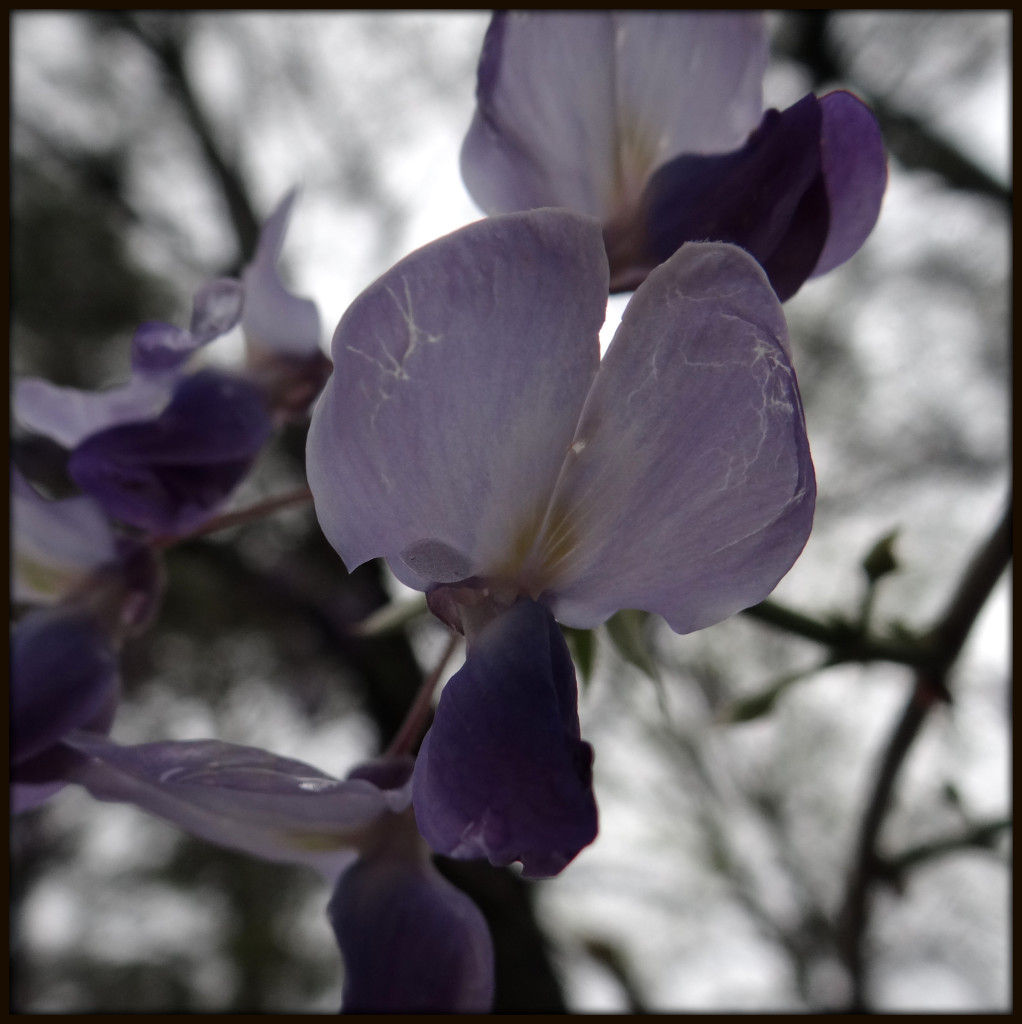
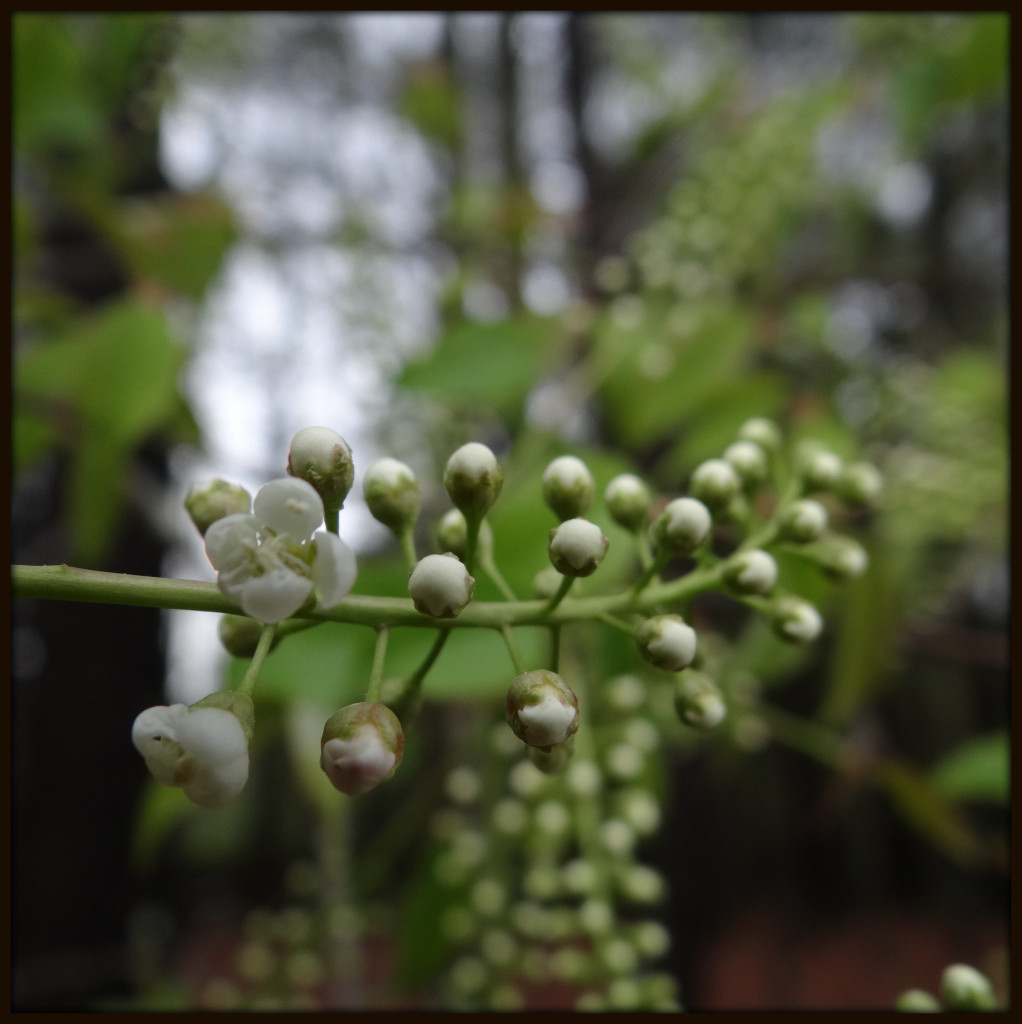
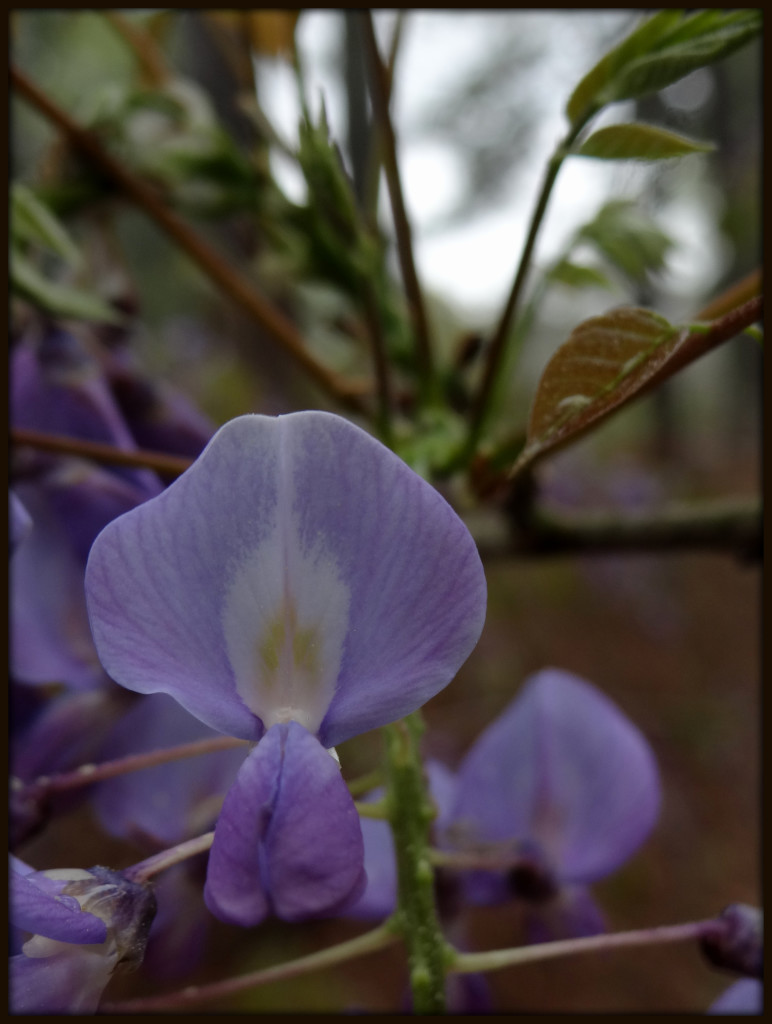
Below are two more photographs I took after the rains ended today: Chinese wisteria and black cherry.
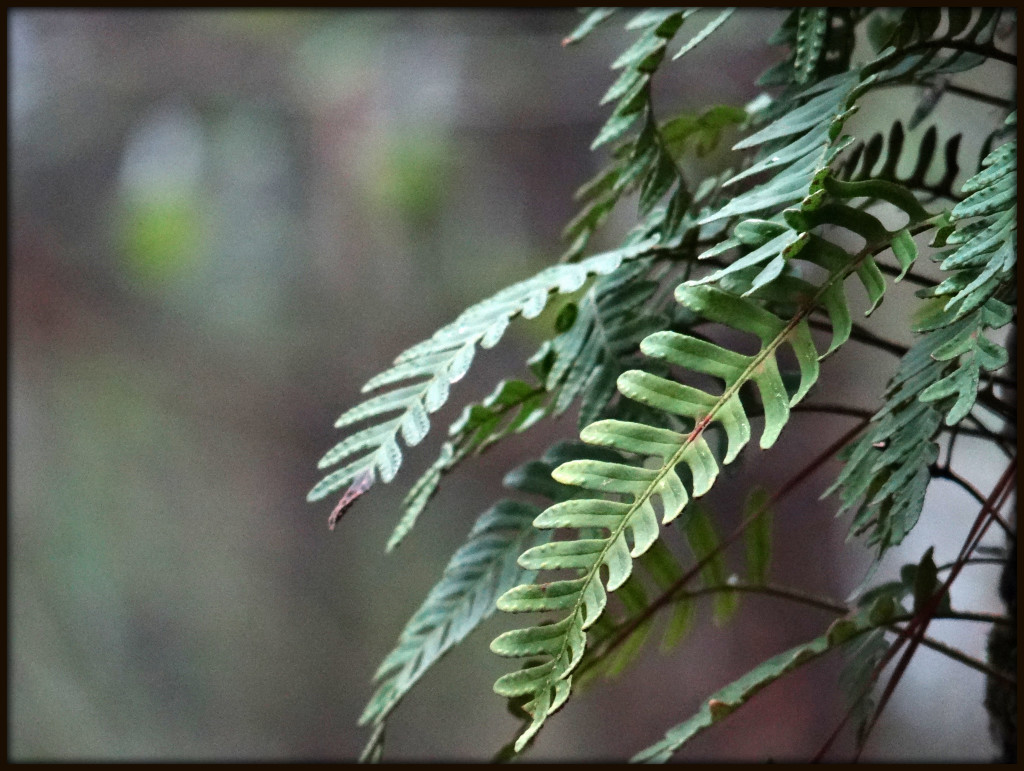
As I like to tell everyone, I am very frond of ferns. Venturing out after a deluge (complete with flash flood watches and warnings), I was delighted to see all the resurrection ferns green and vibrant along Piney Woods Church Road. I am amazed by how these same ferns appear brown, shriveled, and dead most of the time, yet turn a brilliant green overnight after a considerable spate of rainfall.
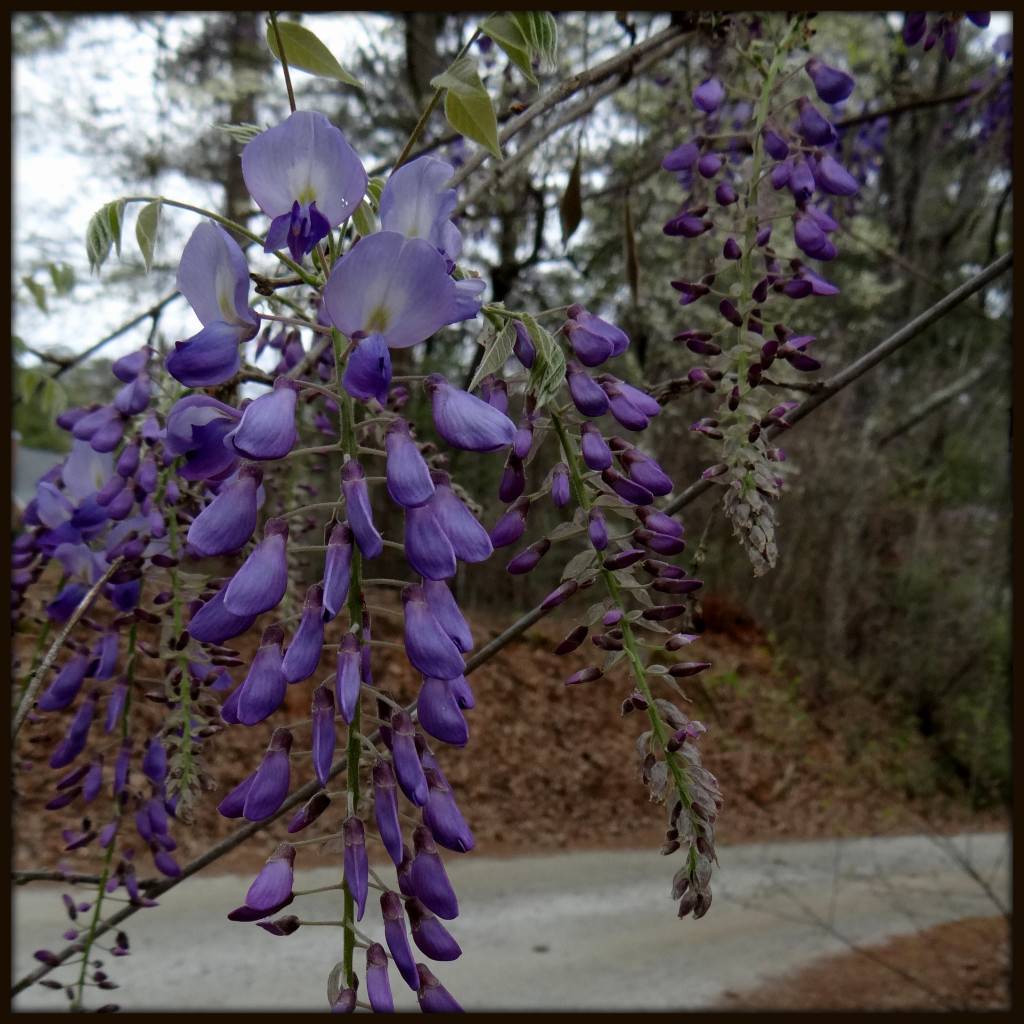
There is no question that the Southeastern United States has been plagued by invasive wisteria. A walk down a country road in Georgia this time of year will likely lead to encounters with curtains of blue-violet and white blossoms, suspended from vines in the treetops overhead. But is the invader Japanse wisteria (Wisteria floribunda) or Chinese wisteria (Wisteria sinense)? At the root of this question lies an explanation for why invasive plants succeed in taking over large areas in the wild, choking out other vegetation and reducing biodiversity to nearly nil. And the frightening answer is this: neither, and both.
Scientists roaming the Southeast recently made twenty-five collections of invasive wisteria for genetic analysis. In their report, available here, twenty-four out of twenty-five of their collections turned out to be hybrids, blends of both Japanese and Chinese species. As hybrids, the plants are able to be more successful than either species alone would be, because they have the traits of both parent species. With greater genetic variability, they can tolerate a wider range of ecological conditions, such as degree of shading, soil type, etc. Hybrids also tend to be more hardy, and more resistant to insect pests and diseases. These wisteria hybrids are, effectively, “super plants” — more able to spread and more difficult to erradicate.
What, then, to make of a second myth about wisteria, concerning how to tell the Japanese and Chinese varieties apart? According to several online sources, including an article on controlling wisteria with herbicides located here, the two wisterias actually twine in different directions. The Chinese wisteria supposedly twines counterclockwise up a tree trunk, while the Japanese wisteria wends its way up a trunk clockwise. Furthermore, several sources add, the reason for the difference is that vines in the Northern Hemisphere all bend counterclockwise (the same direction water supposedly empties out of a bathtub), while vines in the Southern Hemisphere bend in the opposite direction. The Japanese species behaves the way it does, according to this explanation, because it evolved in the Southern Hemisphere, before plate tectonic forces brought Japan to its present position in the Northern Hemisphere.
Another scientific study recently debunked this myth, by showing that counterclockwise vine growth is much more common than was previously thought. In a multi-year survey of vines all around the world (and on both sides of the Equator), abstracted here, ninety-two percent of the vines were found to twine counter-clockwise, and only eight percent grew in the opposite direction. What is more, vines in the Southern Hemisphere were no more likely to twine clockwise than vines in the Northern Hemisphere. Alas, too, the geological explanation behind the twining behavior of Japanese Wisteria, while fascinating, is wrong. Most flowering plants evolved after the dinosaurs went extinct 65 million years ago. By that time, Japan was north of the Equator, as can be seen here.
Questions on vine twining certainly remain, though. Why do most vines twine counterclockwise? Geographical location has been ruled out. What is left? One possibility is that plant vine behavior has something to do with the internal structure of plant cells — specifically, with how microtubules, hollow cylinders in each plant cell, are oriented. But this hypothesis has not yet been tested. It is amazing, really, that something so commonplace as the question of why vines twine about a tree in the directions that they do has remained so mysterious for so long.
This article was originally published on April 14, 2010. A new photograph from Piney Woods Church Road accompanies the text.
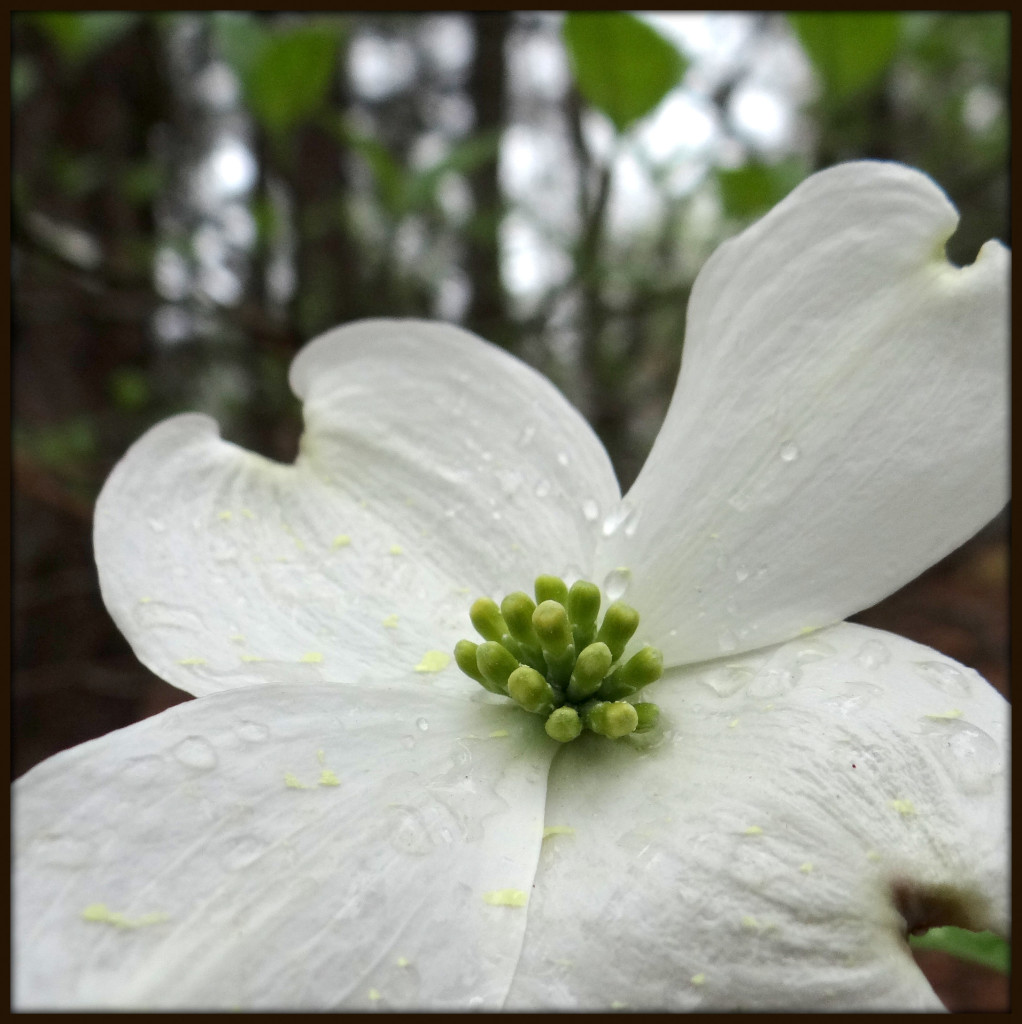
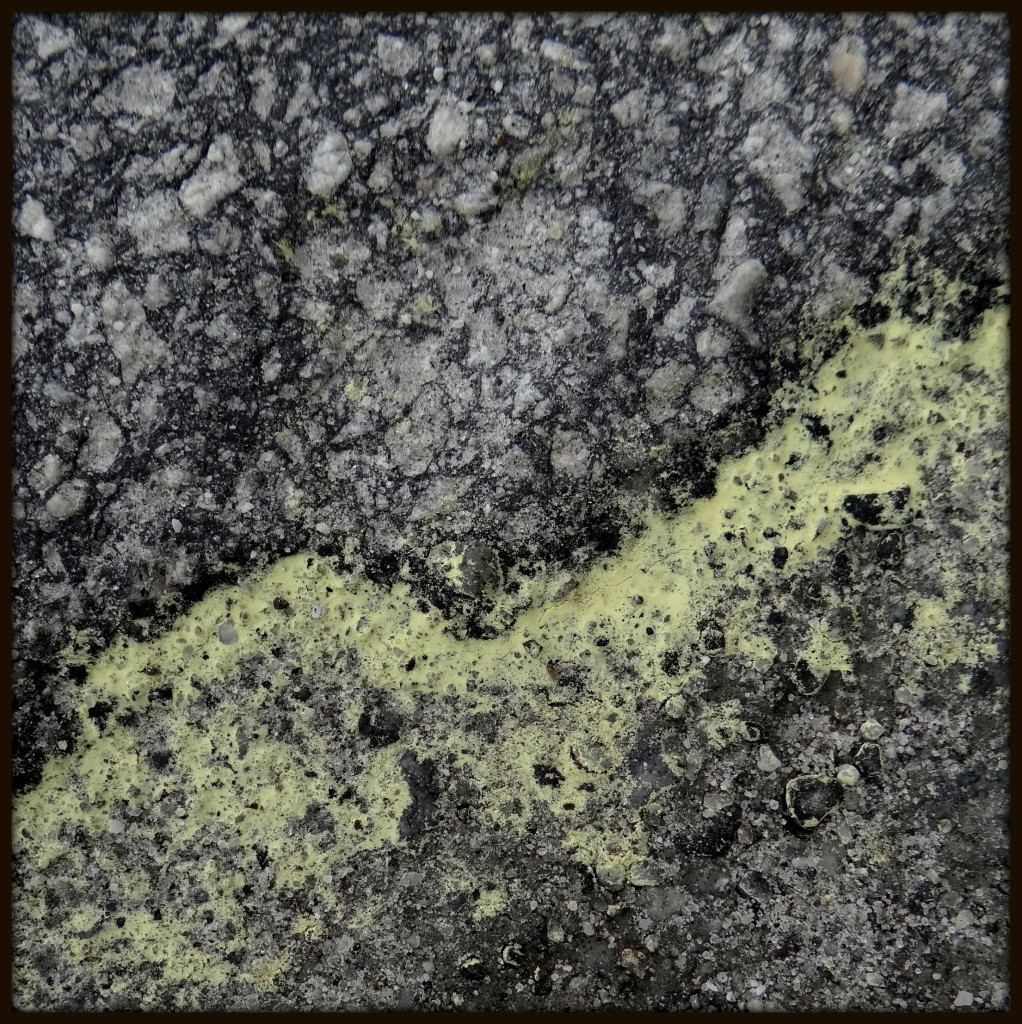
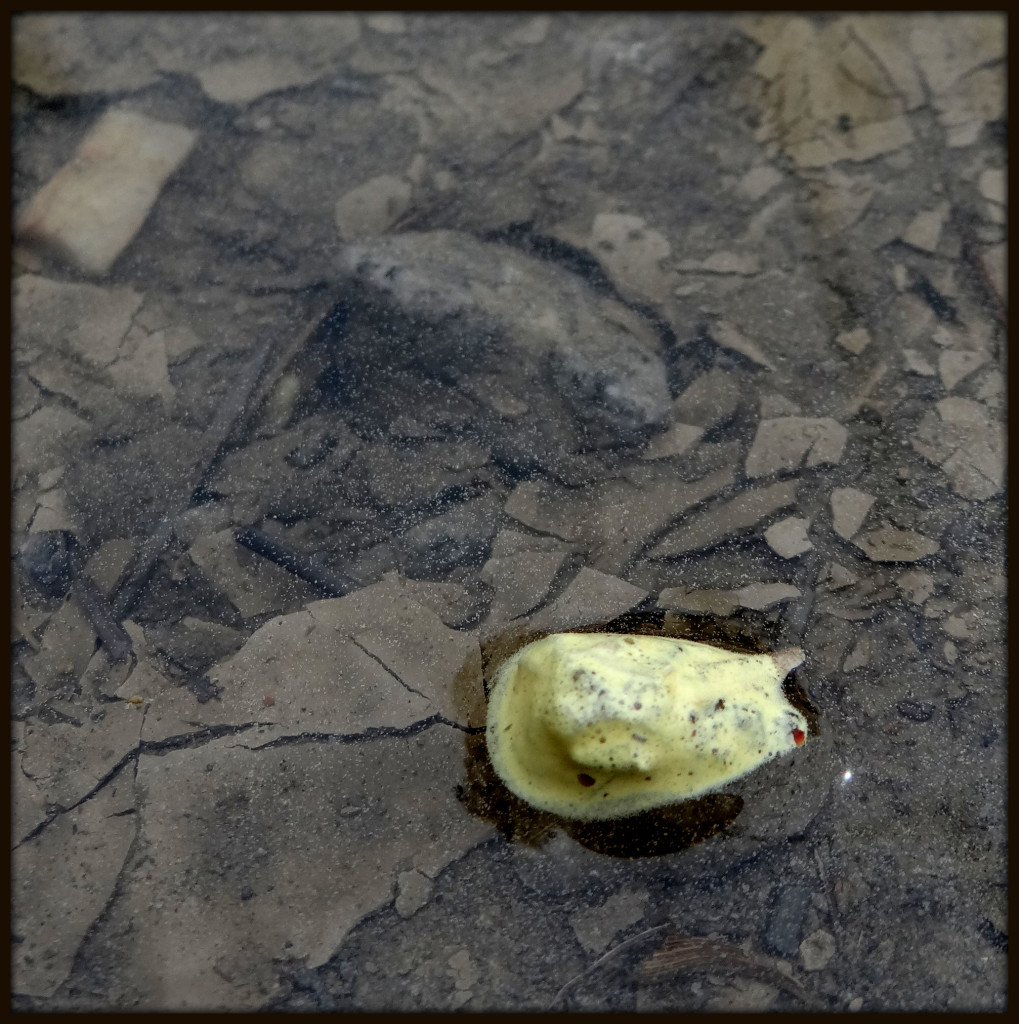
Loblolly pine pollen season has arrived here in the Georgia Piedmont. After today’s rain, I wandered Piney Woods Church Road, encountering powdery yellow flecks everywhere I looked: on the petals of a dogwood blossom, on a break in layers of pavement at the intersection with Hutcheson Ferry Road, and coating individual pebbles in a pothole beside Rico Road….
The title of today’s image is in homage to the intriguing beauty of the Chinese wisteria, just coming into bloom along Piney Woods Church Road. For the next week or more, the forest will be draped with purple curtains of blossoms, and the air nearly intoxicating with the wisteria’s sweet scent. In another post today (from the Examiner archives), I will speak at length of its aggressive, highly invasive habits. But for a moment, I will pause and appreciate its gift to my daily walk.
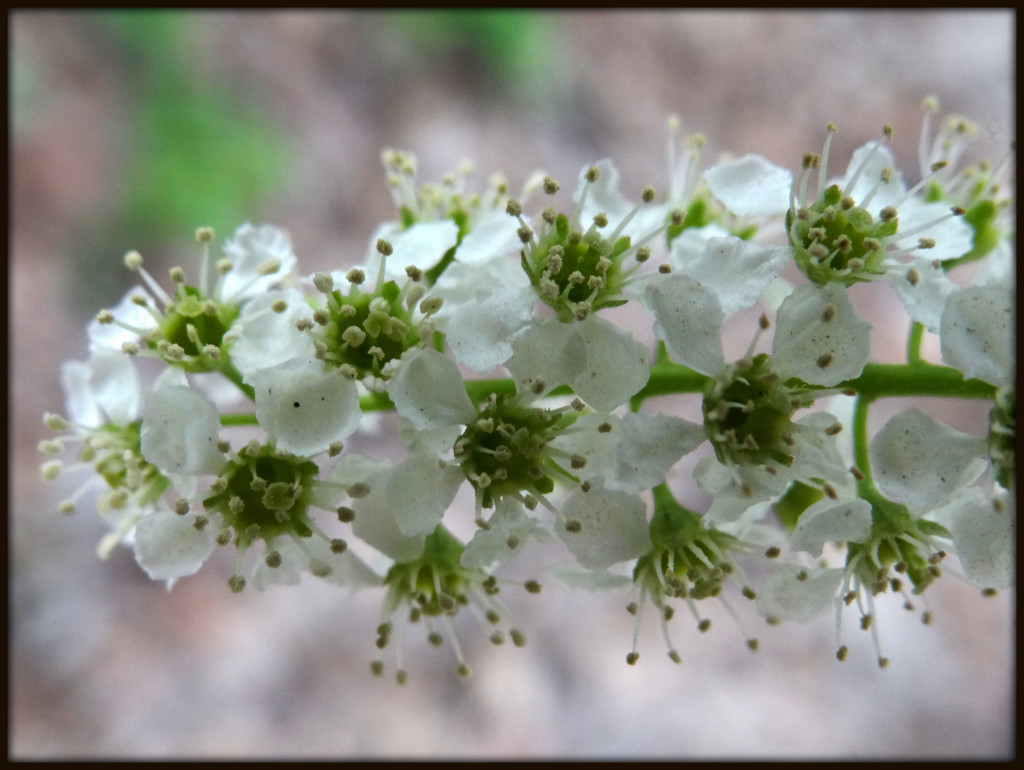
Now the black cherries are blooming along Piney Woods Church Road. There is so much happening now that it is difficult to keep up with it all!
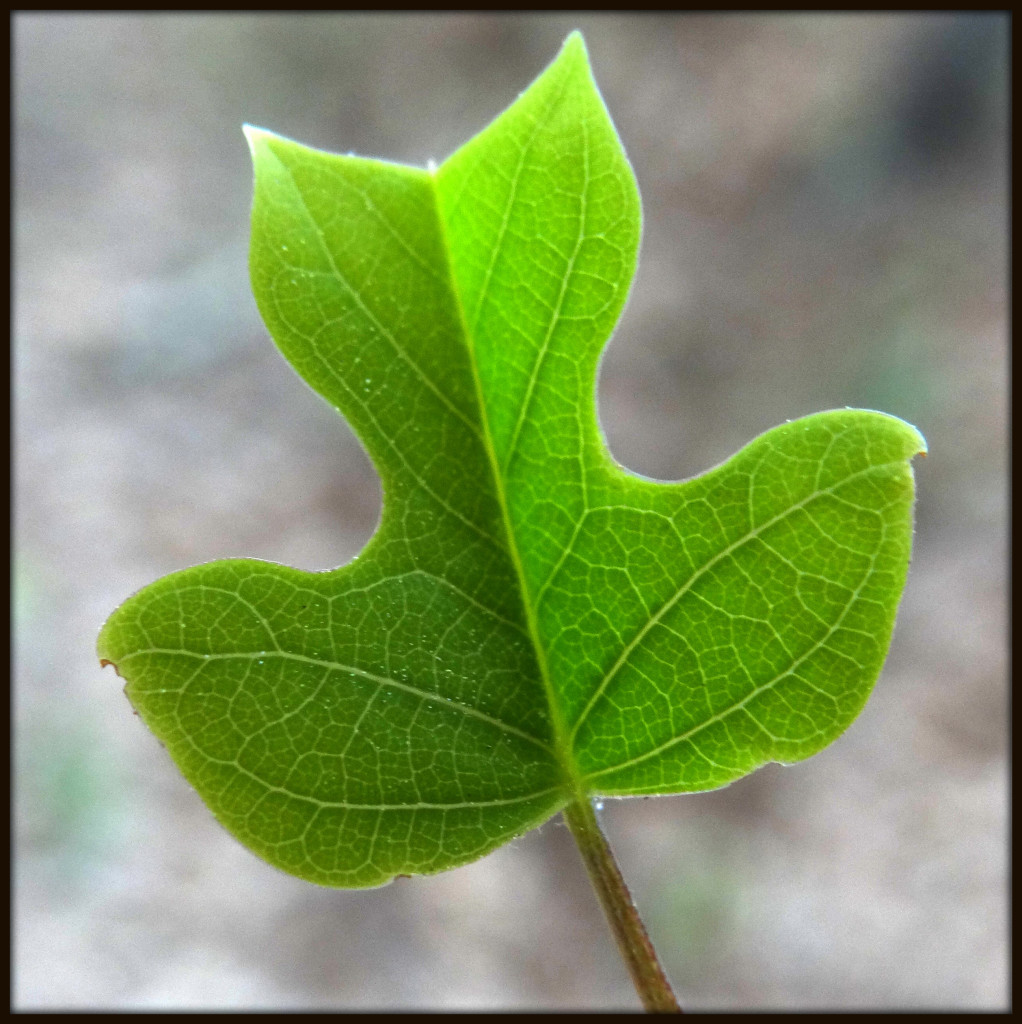
After a series of photographs of tulip poplar buds, here is an image of a single leaf, newly unfolded.
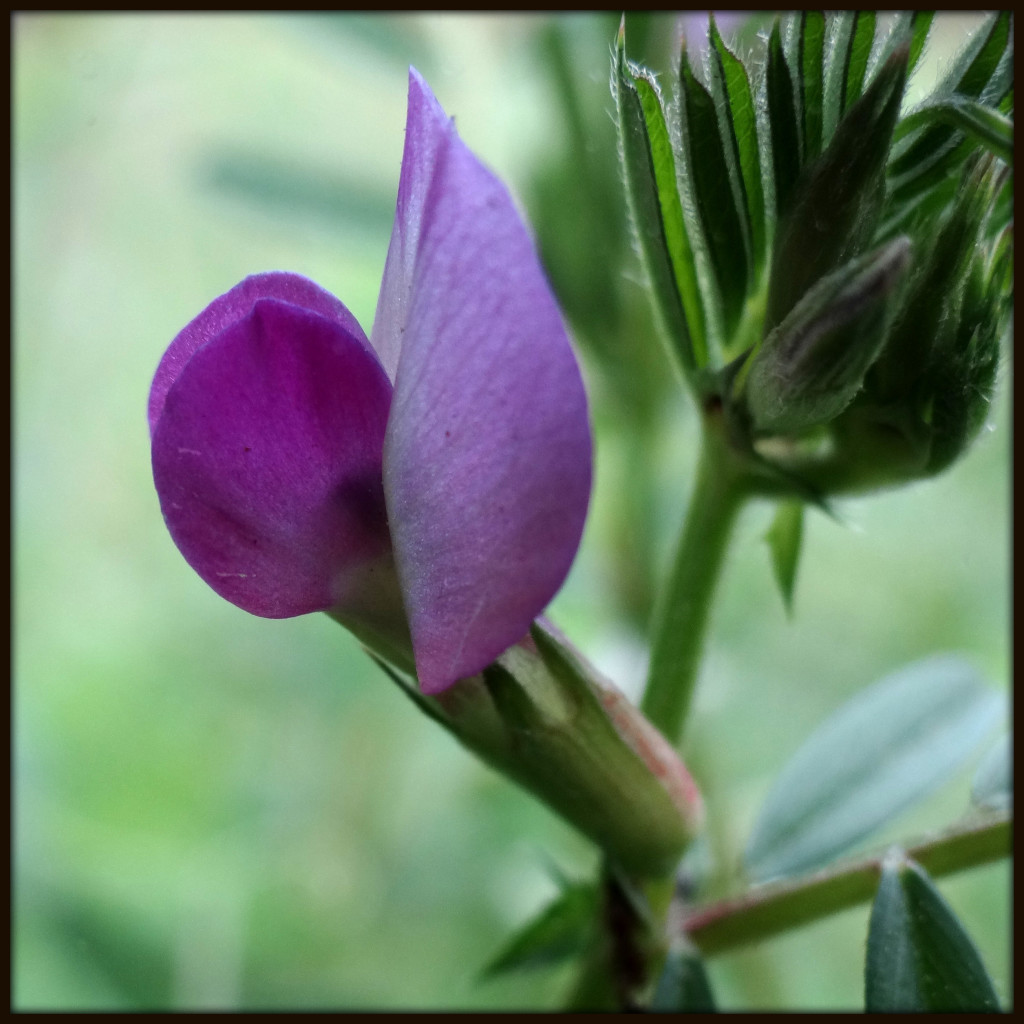
Along the edge of Piney Woods Church Road at the junction with Rico Road, I glimpsed some of the earliest blooms of everlasting pea (Lathyrus latifolius) today. This photograph makes this small flower look almost glamorous. An immigrant from southern Europe that commonly frequents waste places (such as roadsides), everlasting pea arrived in the New World around 1720. Despite the flower’s unassuming, pea-like appearance, Thomas Jefferson judged it worthy of a place in his Monticello garden, so it certainly merits inclusion here.
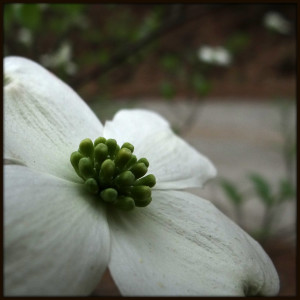
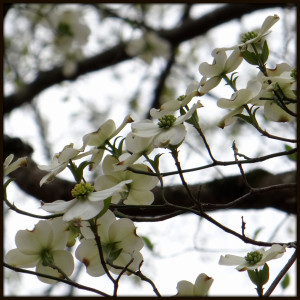
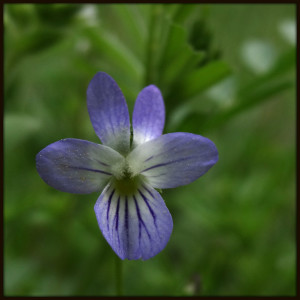
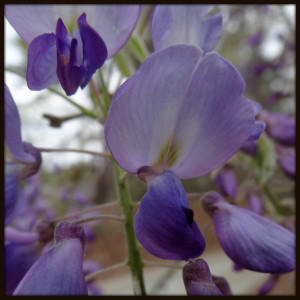
Everywhere I glance down Piney Woods Church Road (or, at least, everywhere that is fairly wild and was not recently mowed), I see flower buds and blossoms. Here are four images from my walk today: flowering dogwood (Cornus florida), a lovely pale purple violet, and the much loved and hated Chinese wisteria (Wisteria sinensis). The wisteria is just coming into bloom; soon, much of the roadway will be lined with curtains of pale purple flowers, exuding a heady, almost sickly-sweet scent. There will be more about Chinese wisteria in future posts.