Mar 152014
 

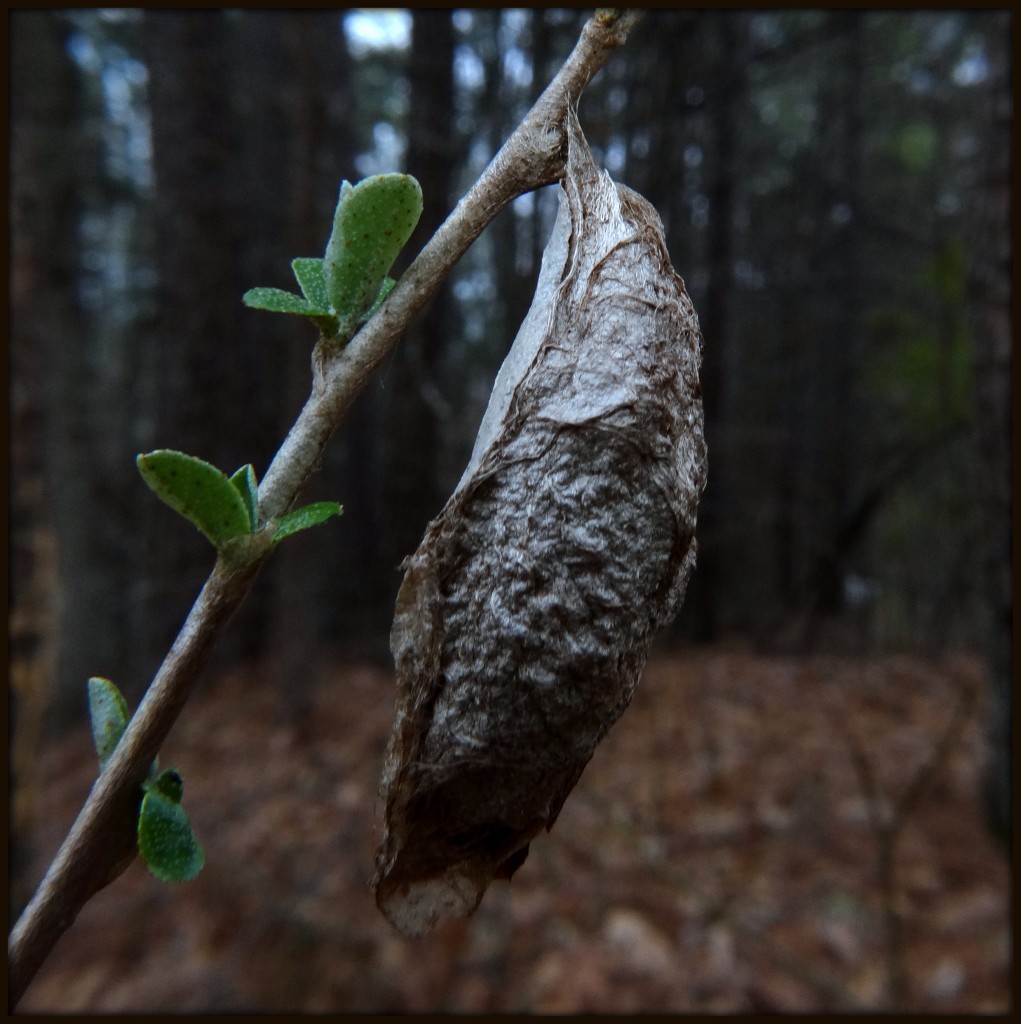
On my late afternoon walk, I discovered the cocoon of a promethea moth (Callosamia promethea), partially encased in a brown leaf and hanging from a shrub along the roadside.  Based upon the mass of the cocoon and the absence of any holes in it, I am fairly confident that a moth is waiting inside for the right moment to emerge, later this spring.  I wonder if I will be there when it happens?

Waiting to Emerge

Mar 142014
 

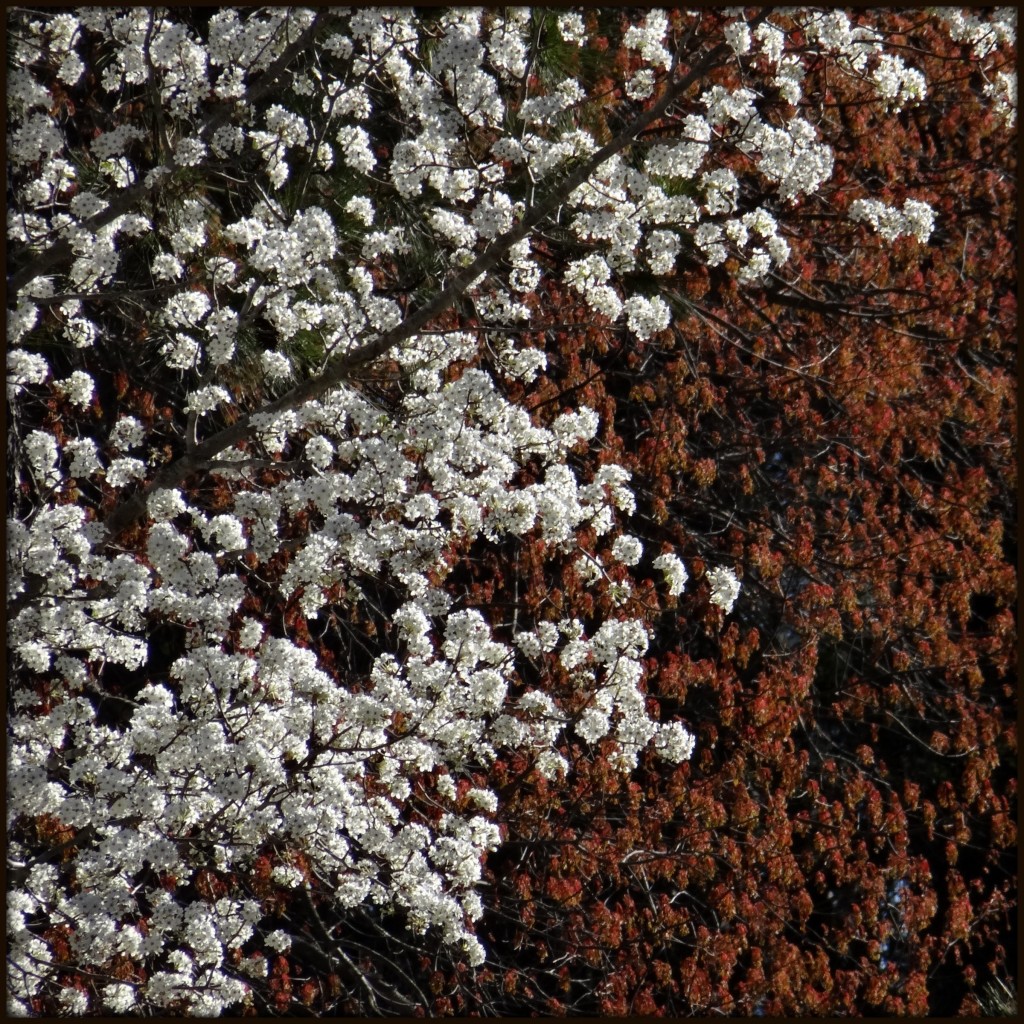
Throughout the neighborhood (including across my own front yard), Bradford pear trees are in bloom.  Their flowers are a brilliant white, with a perfume, well, something like a cross between slaking concrete and ammonia.  They are perhaps best admired from a distance — in this case, along Piney Woods Church Road.  Beyond the Bradford pear, a maple tree is in bloom.  Spring is only a week away.

Bradford Tree

Mar 132014
 

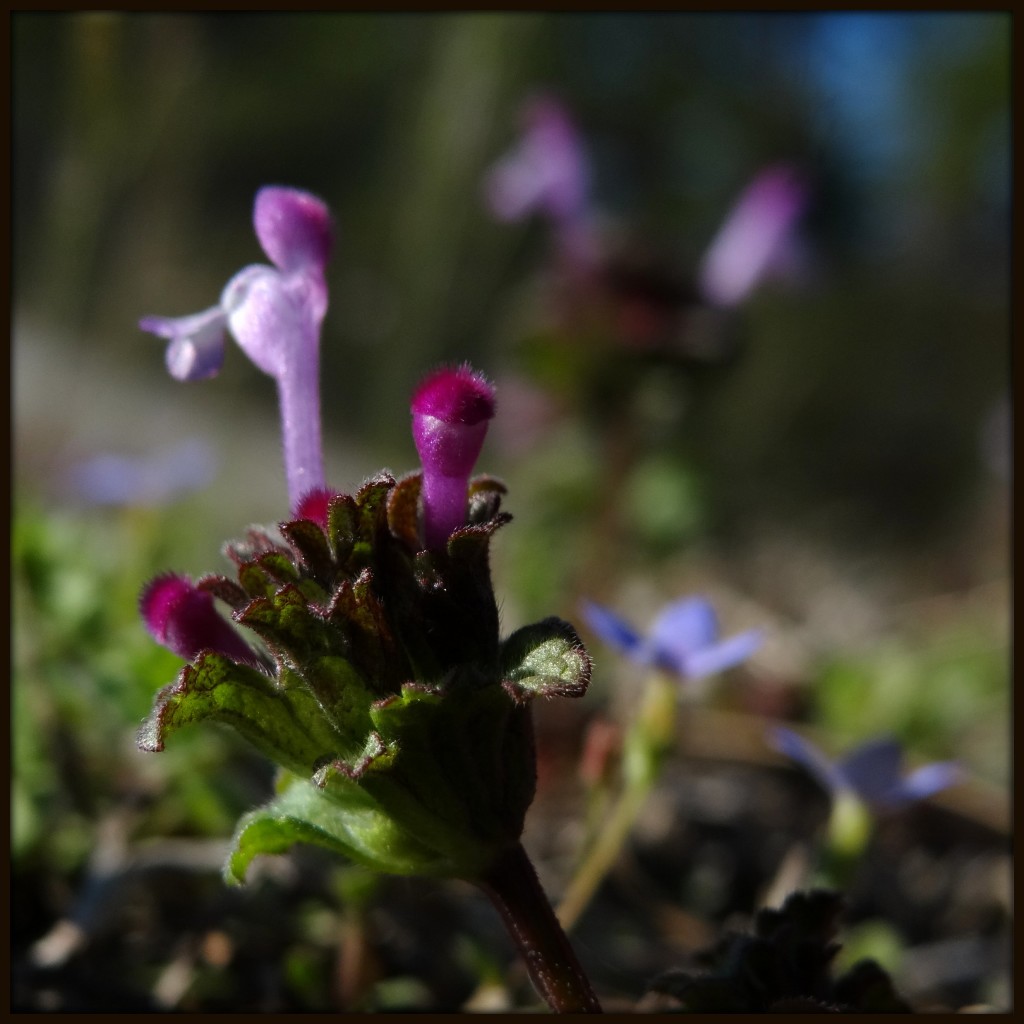
As we approach the middle of March, spring is getting well underway along the roadside where Piney Woods Church Road meets Hutcheson Ferry Road.  Now henbits, bluets, hoary bittercresses, and other ruderal wildflowers begin to carpet the margin with dots of color — whites, blues, and purples.   There is a sense of celebration in the air.

Celebrating Ruderal Spring

Mar 122014
 

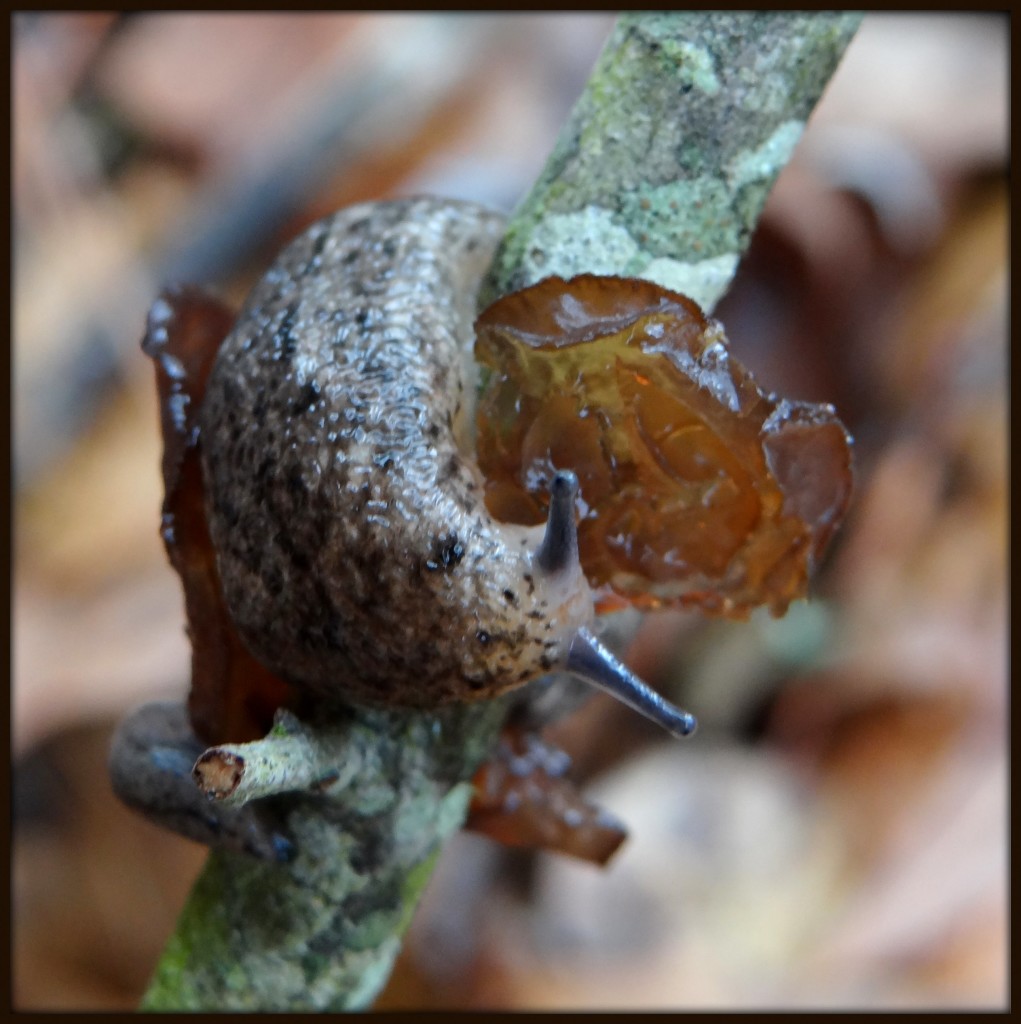
After an overnight rainfall but before the predicted arrival of cold air and strong winds, I encountered this Carolina mantleslug (Philomycus carolinianus) grazing on a wood ear jelly fungus (Auricularia auricula) along Piney Woods Church Road.  This jelly fungus is evidently edible, according to my field guidebooks; related species of wood ear fungi are commonly used in Chinese cuisine.  I cannot vouch for it personally, though.  And I definitely cannot address the question of this slug’s edibility, or the viability of this particular combination in a luncheon sandwich.

Slug and Jelly


Mar 112014
 

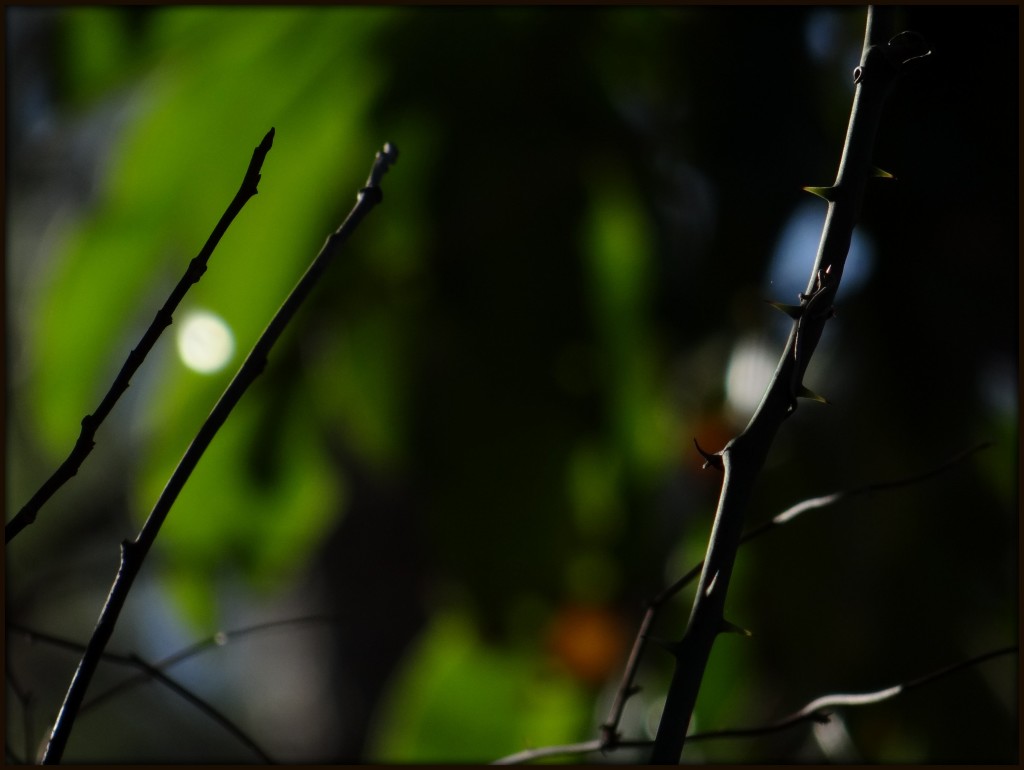
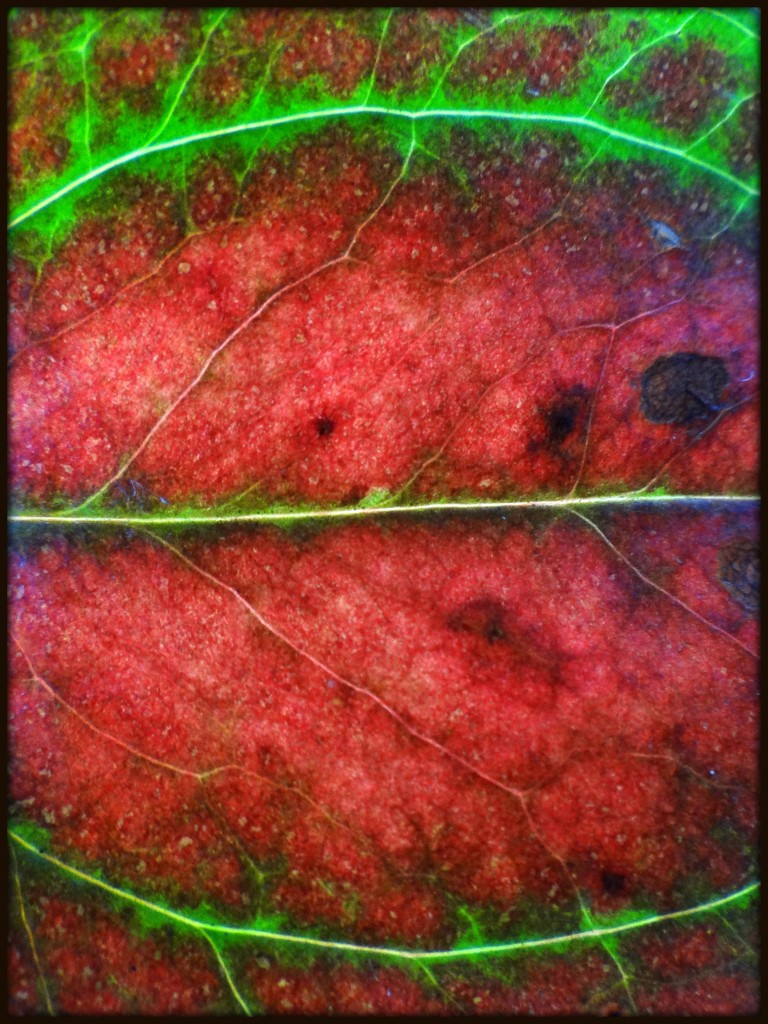
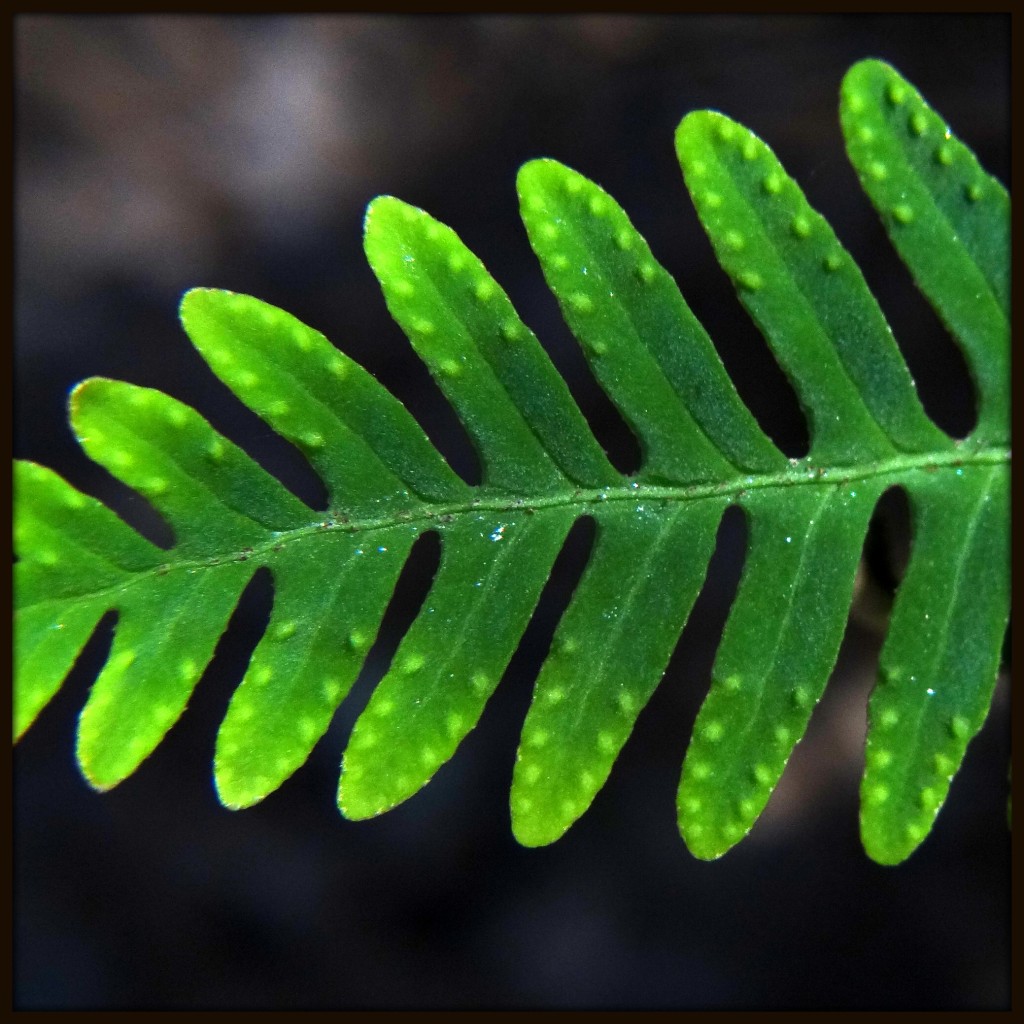
Thank you, Karen Reed, for your excellent suggestion of a title for today’s photograph of a greenbrier leaf.  I feel drawn to photographing the fascinating internal structures of leaves, and this is one of the most stunning examples I have yet encountered.

Chlorophyllia

Mar 102014
 

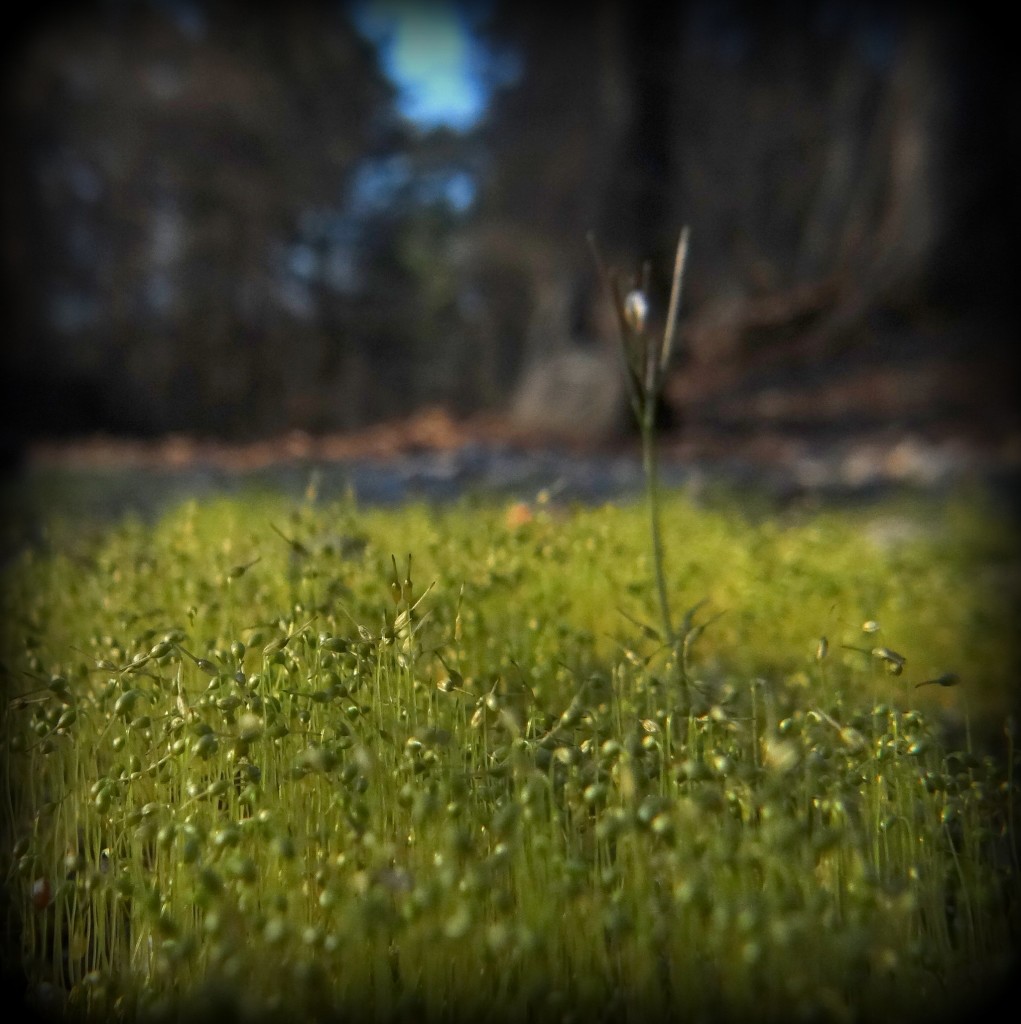
Wandering down Piney Woods Church Road late this afternoon, I passed a driveway all aglow with moss sporophytes, with their globe-like capsules perched atop stalks, called seta, reaching high above the leafy gametophytes.  (That sentence, I realize, begs a lesson in the moss life cycle, but I will instead refer curious readers here.)   The yellow-green of this sporophyte carpet betokens the impending arrival of spring (although not before another cold spell visits the region this Wednesday).

Sporophytes

Mar 082014
 

After a stunning display of orchids, tulips, daffodils, and crocuses at the Atlanta Botanical Gardens yesterday, I returned to Piney Woods this afternoon having difficulty making the shift back to a drab landscape still mostly wearing its winter garb.  Apart from the everlasting daffodils (the blossom I first photographed weeks ago is still going strong), the only flowers blooming at the moment are minute ones.  There are the maple blossoms yet, and then the flower garden of early weeds at the confluence of Piney Woods Church and Hutcheson Ferry Roads.  There, I mostly found more hoary bittercress and the ubiquitous henbit.  It took me a few minutes to discover something new:  yet another tiny white flower, this one clustered atop at tiny stalk.  It is a member of the genus Draba, and almost definitely Draba brachycarpa, shortpod whitlow grass.  Its common name, alas, comes from a swelling near a toenail or fingernail (called a whitlow), for which the juices of this plant are supposedly beneficial in treating.  Even its Latin name of Draba does not strike me as particularly poetic.  However, it was a tiny flowering annual of this very genus that inspired the renowned early ecologist Aldo Leopold to write (in A Sand County Almanac), “He who hopes for spring with upturned eye never sees so small a thing as Draba.  He who despairs of spring with downcast eye steps on it, unknowing.  He who searches for spring with his knees in the mud finds it, in abundance….  Draba plucks no heartstrings.  Its perfume, if there is any, is lost in the gusty winds.  Its color is plain white.  Its leaves wear a sensible wooly coat.  Nothing eats it; it is too small.  No poets sing of it.  Some botanist once gave it a Latin name, and then forgot it.  Altogether it is of no importance — just a small creature that does a small job quickly and well.”
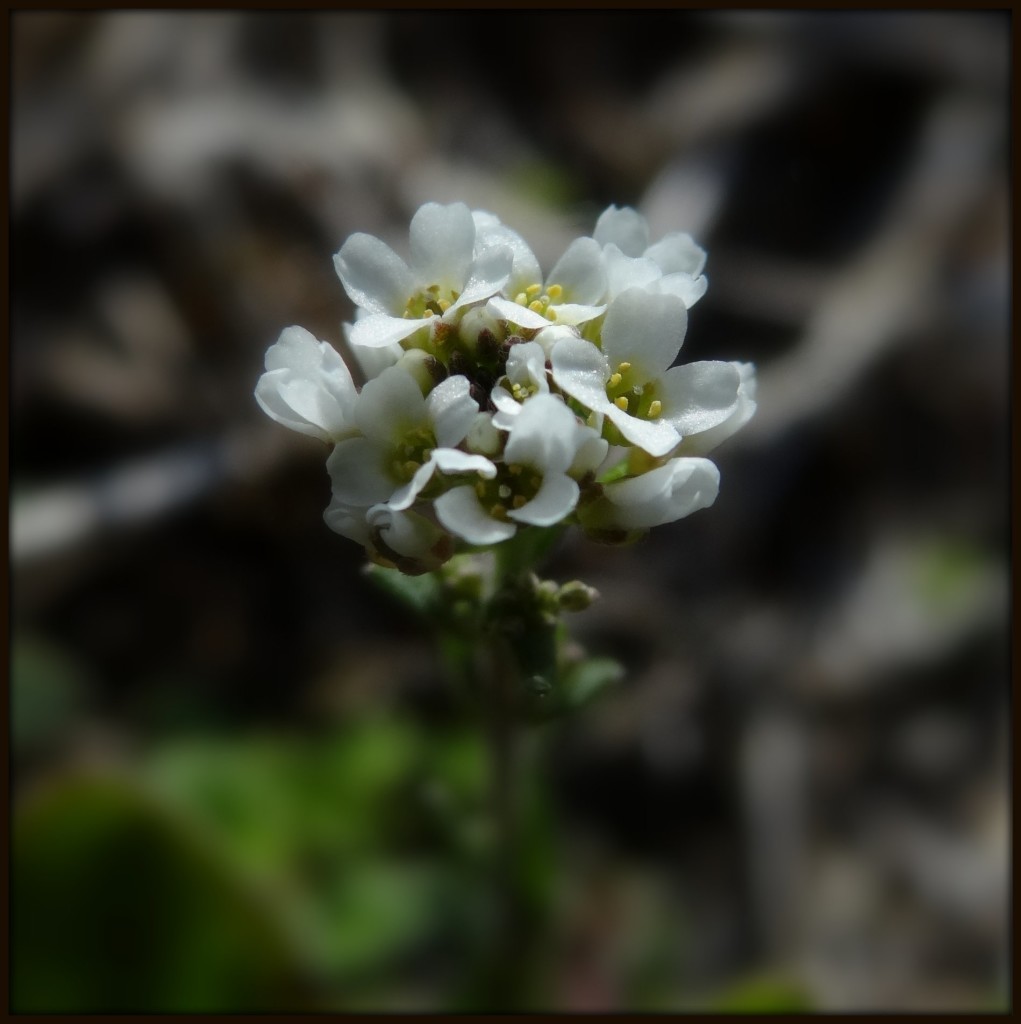
Lowly Draba