 Last Saturday (the first day of Spring), a search for signs of spring took the author to Newman Wetlands Center in Hampton, Georgia. Operated by Clayton Water Authority, the wetlands is part of the county’s innovative wastewater treatment process. It features a lovely half-mile trail, mostly boardwalk, crossing expanses of open water with cattails, as well as through several forested wetland areas.
In North with the Spring, Edwin Way Teale observes that “Spring begins in a swamp…. All along the line of its advance the most sudden changes, the swiftest growth, the most exuberant outpourings of life occur in swamps.” And indeed, a Saturday afternoon saunter through Newman Wetlands afforded abundant evidence of spring’s arrival.
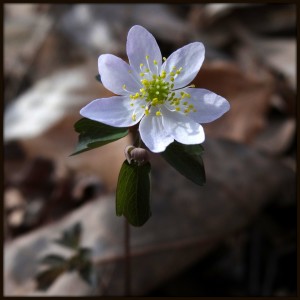
In a small patch of weeds and grass by the trailhead could be seen the familiar ruderal, hairy bittercress (Cardamine hirsuta), introduced in an earlier Examiner article. It was accompanied by a few early purple blooms of henbit (Lamium amplexicaule), a member of the mint family, and some blooms of a forget-me-not (Myostotis sp.), light blue with yellow centers.
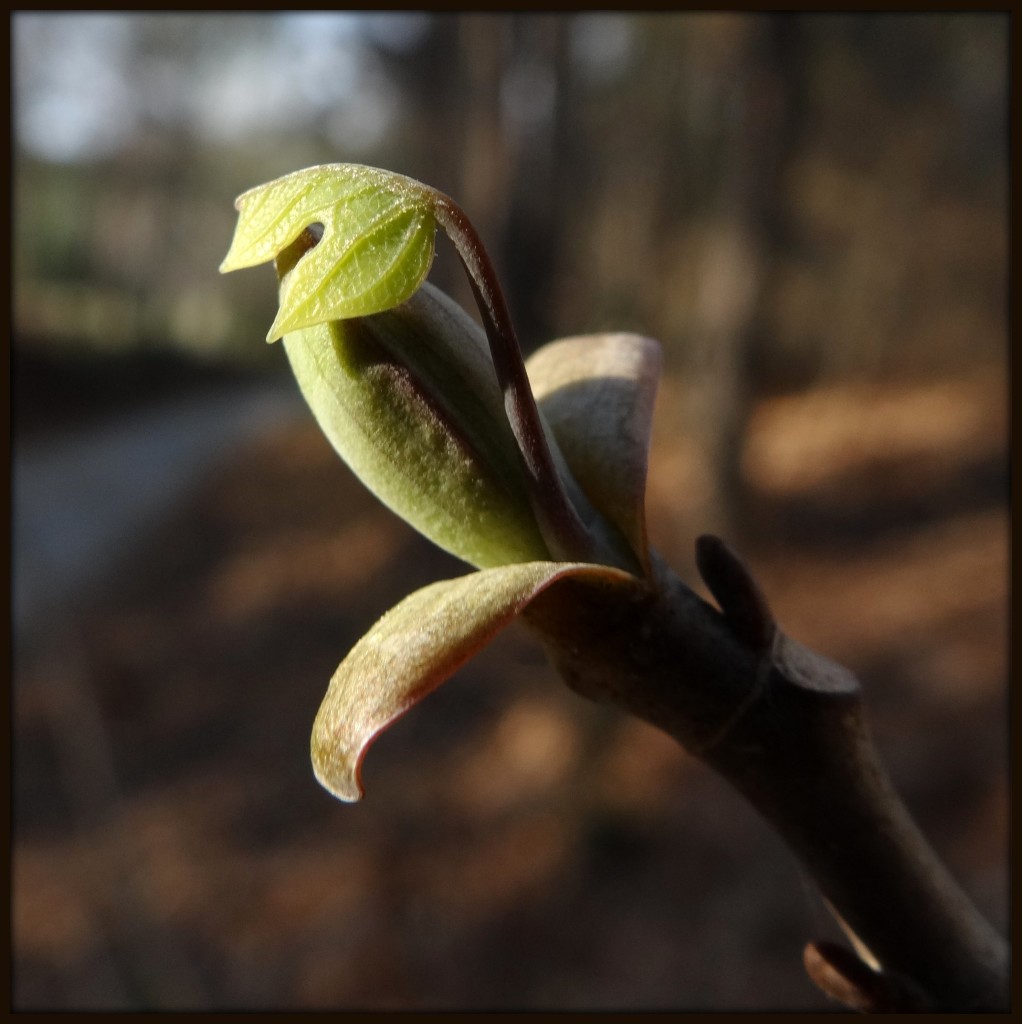
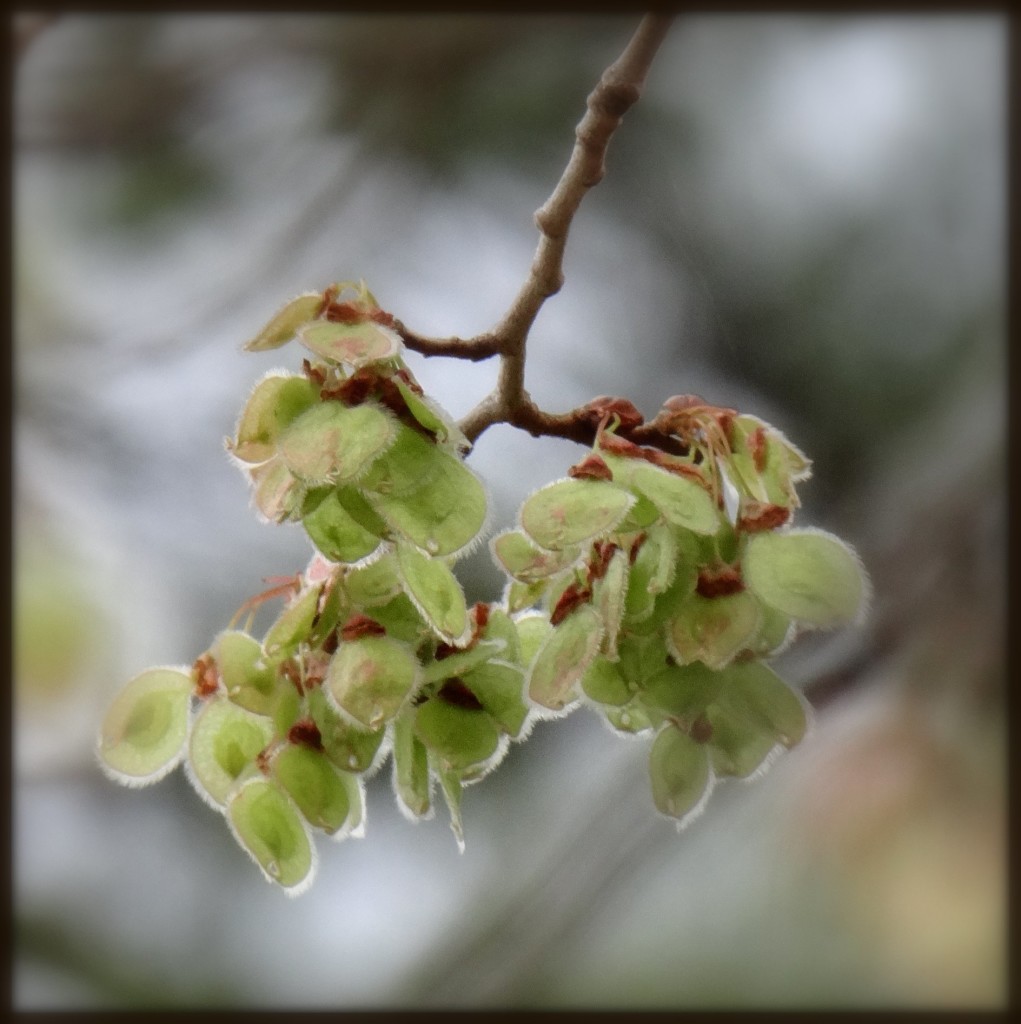
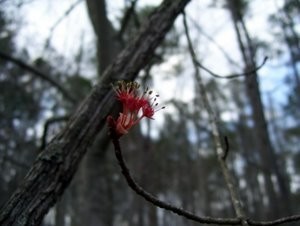
Along the wetland’s edges, maples were in bloom. The red maple (Acer rubrum), a denizen of woodland swamps, was alight with clusters of tiny red blossoms on short stalks. At the edge of a hillside lined with stately beech trees stood a sapling of silver maple (Acer saccharinum), covered in greenish-yellow blossoms that clung tightly to the delicate branches.
The wetland was full of life. Overhead was the insistant call of an eastern wood-pewee, interpersed with the cheery sounds of black-capped chickadees. Minnows swam in the shallows, and a muskrat was briefly glimpsed swimming across a channel. Insects were few, though, so early in the year. A lone black-and-yellow mud dauber paused on a wooden bench just long enough to be photographed.
Turtles were everywhere. Yellow-bellied sliders and painted turtles sunned themselves lazily on logs, while a feisty stinkpot musk turtle trudged across the pond bottom beneath a couple inches of water, busily feeding. The result was the opportunity to take several photos of the “how many turtles do you see here?” variety.
A pair of Canada geese wandered the wetland, one feeding while the other stood guard. They offered a narrative thread for the author’s journey, reappearing at different locations along the trail loop at almost regular intervals. The first animals to appear at the beginning of the walk, they could also be seen at trail’s end, paddling away through the cattails.
This article was originally published on March 21, 2010.