Jan 062014
 

I set out with every intention of photographing the sunset.  After all, it is one of those things that all outdoor photographers inevitably do from time to time.  And, I am proud to say, I took quite a few sunset photos from Piney Woods Church Road.  It was, without doubt, the slowest sunset I have ever witnessed.  I stood at the edge of a cow pasture, hands in pockets, waiting.  The pockets kept my fingers from getting numb, but in the 25-degree air (with winds gusting to 25 miles per hour), I could feel my wrists getting numb where they were exposed between pocket edge and coat sleeve.  While I waited, I snatched what photos I could, including more cows, winter weeds in the golden hour light, and a few quick-flitting LBJ’s (little brown jobs, as ornithologists affectionately refer to small brown nondescript birds).  Usually, by the time I would have the camera lens zoomed and focused, the bird would be long gone from its perch.  I would wait a few more minutes, another bird would perch somewhere, and the race against the clock would begin again.  Photographing small birds is, for me, a bit like entering the lottery.  Perhaps it was my lucky day — I learned this morning that I won a prize in a drawing at a school where I used to teach — but I was surprised to find when I returned home that a couple of my LBJ shots were actually quite lovely.  My day’s contribution to this project is a small bird — a sparrow, perhaps? — perched in the tree branches beside a pasture along Piney Woods Church Road.  The bird has fluffed up its feathers, doing its best to keep warm.  It is comforting to know that I wasn’t the only one feeling the effects of the arctic blast that has covered the Piedmont of Georgia.

Winter Sparrow

Jan 052014
 
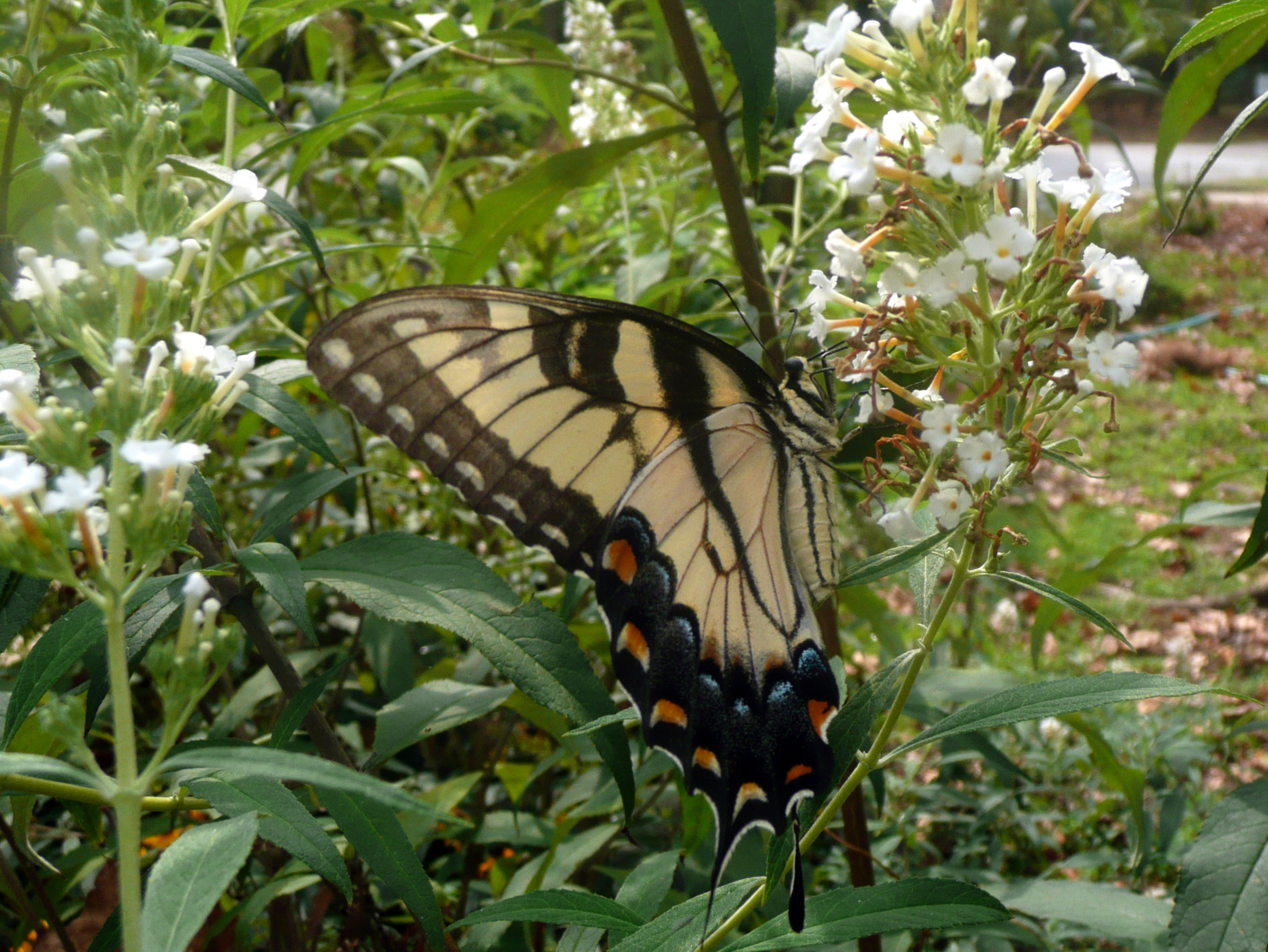
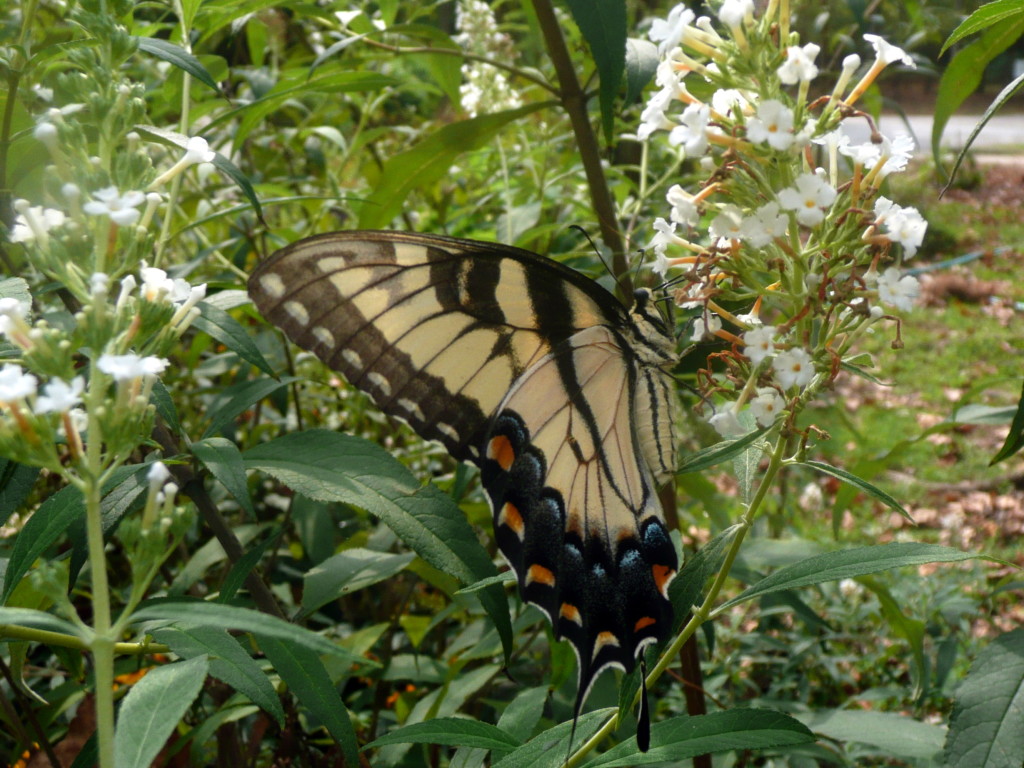
Tiger swallowtail butterfly.  Photographed June 2011 at Newman Wetlands Center, Hampton, GA.

Tiger swallowtail butterfly. Photographed June 2011 at Newman Wetlands Center, Hampton, GA.

According to the book of Genesis in the Holy Bible, one of Adam’s first actions after being created was to gather together all living things and give them names. Clearly, the human predilection for classifying and naming plants and animals goes back thousands of years. It is most evident today in birders’ life lists: collections of scientific names of all the different birds one has seen over a lifetime. My own bookshelves overflow with field guides, nearly a hundred in all, covering birds, trees, salamanders, moths, mushrooms, and many other kinds of living things. In medieval alchemy, names had power to them, as shown by the fact that to spell refers both to stating the letters in a word and exerting magical influence in the world. Nowadays, to know the name (common or scientific) of a plant or animal is enough for a naturalist to find dozens of images and species accounts scattered across the Web. It is possible to take a digital photograph of a butterfly in the morning and spend the rest of the day indoors and online, reading about the butterfly, its life cycle, host plants, behaviors, etc.

But naming is only one access point into learning about the natural world. And particularly for children, perhaps names are not the best place to start after all. The naturalist Barry Lopez warns, in his book of essays, Crossing Open Ground (pp. 150-151), “The quickest door to open in the woods for a child is the one that leads to the smallest room, by knowing the name each thing is called. The door that leads to a cathedral is marked by a hesitancy to speak at all, rather to encourage by example a sharpness of the senses.” Once we learn a name for something, there is a sense of completion, a suggestion that it is all that is necessary. Yet there is so much more out there to discover. When we take the time to study the more-than-human world closely, we begin to notice how trees and insects have individuality and personality of their own. A label just captures a static form, while living things are always changing. Caterpillars become butterflies, and a holly bush outside my window comes into bloom and suddenly swarms with bees and other flying insects craving nectar.

Thinking back to my own childhood (with many hours spent running barefoot across neighbors fields or tromping through a woodlot behind my house), I recall how few plants and animals I could identify. I knew what poison ivy looked like, and my brother taught me about jewelweed because it could be used to treat poison ivy. There was a shrub that grew in several places in the yard that I was confident was witch hazel; a few years ago, I learned that it was actually spicebush. There were dandelions, bane of my father, resident Lawnkeeper. And then there was Queen Anne’s lace, or wild carrot. My brother taught me that one, too. It’s roots tasted quite similar to carrot, but their texture was much closer to that of many strands of dental floss twisted together. In the front yard, there were black walnut trees that periodically covered the lawn with large green nuts, and in the far front, by the road, a stately sycamore that I learned in school was one of the oldest deciduous trees in the evolution of life on Earth. Animals I knew only by categories: ants, spiders, squirrels. My knowledge of classification was ad hoc and full of holes, having as much to do with uses plants could be put to as anything else.

I am in good company. Even the famous biologist E.O. Wilson recognized that this kind of nature experience may be more important in fostering a love of nature and sense of wonder about the environment around us. In his autobiography, Naturalist, he wrote (pp. 12-13) that “Hands-on experience at the critical time, not systematic knowledge, is what counts in the making of a naturalist. Better to be an untutored savage for a while, not to know the names or anatomical detail. Better to spend long stretches of time just searching and dreaming.” Wilson went on to quote Rachel Carson’s essay, The Sense of Wonder, in which she commented that “If facts are the seeds that later produce knowledge and wisdom, then the emotions and the impressions of the senses are the fertile soil in which the seeds must grow. The years of childhood are the time to prepare the soil.”

How, then, to encourage children to connect with nature, if not by way of field guides? One approach would be simply to encourage children to go on backyard safaris, to see what they can discover and study it closely. All that is needed are long pants and repellant against ticks and chiggers, knowledge of how to avoid fire ants, poison ivy, and other hazards of going adventuring, a magnifying lens, perhaps a jar with holes in the lid, maybe even a digital camera, and plenty of time. I suspect the child will return with tales of sights and wonders you had not imagined before.

Another activity is to choose a few trees and shrubs, observe them closely with a child, and encourage him or her to give them names. Periodically over the seasons, the child can be encouraged to revisit Bendy Tree and Prickly Shrub. How are they changing day to day, and season to season? Are there new visitors to the tree that weren’t there before? Are the leaves just unfurling, or are they perhaps riddled with holes from someone’s latest meal? Eventually, as the child gets to know the plants better, and is on familiar terms with them, he or she may inquire after their scientific names (or at least their common ones). Then it will be time to break out a field guide. The name will add one more layer of knowledge to what is already there, rather than being sufficient by itself. There is so much about nature hidden beneath the names, like salamanders beneath cobbles in a stream, just waiting to be explored.

This article was originally published on April 30, 2012.

Jan 052014
 

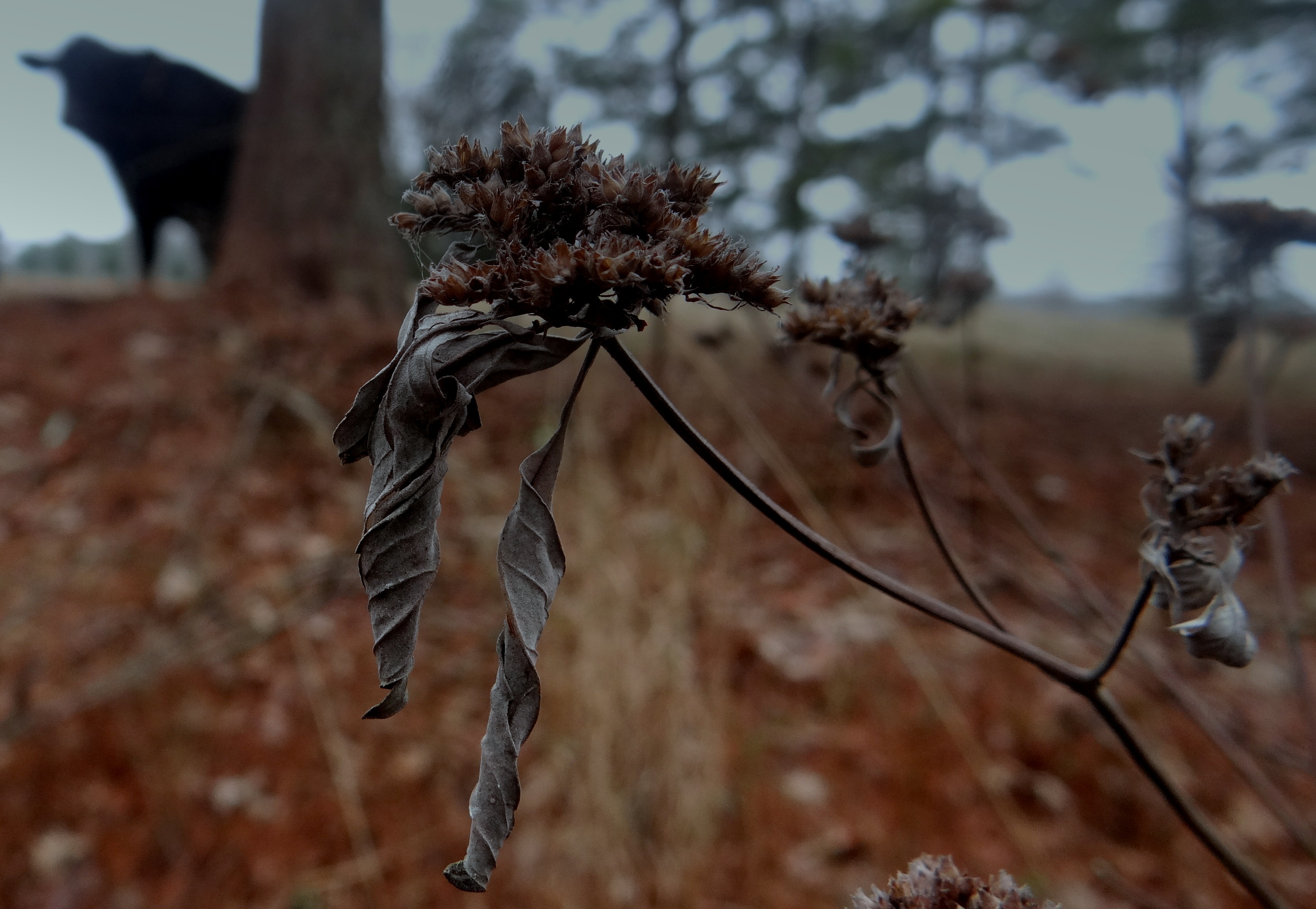
Yet another gray-sky afternoon, but much milder than yesterday — I delighted in the warm (mid-50’s), moist air that is the precursor to an arctic front expected to sweep through Georgia overnight, bringing rain turning to snow by Monday morning.  I spent my time along Piney Woods Church Road mostly experimenting with my macro lenses.  My favorite shot of the day contained, yet again, a cow, though it plays a cameo role in the background.  I am weaning myself slowly from cows.  Tomorrow, I promise myself, will be a cow-free day.

Winter Weed (and Cow)


Jan 042014
 

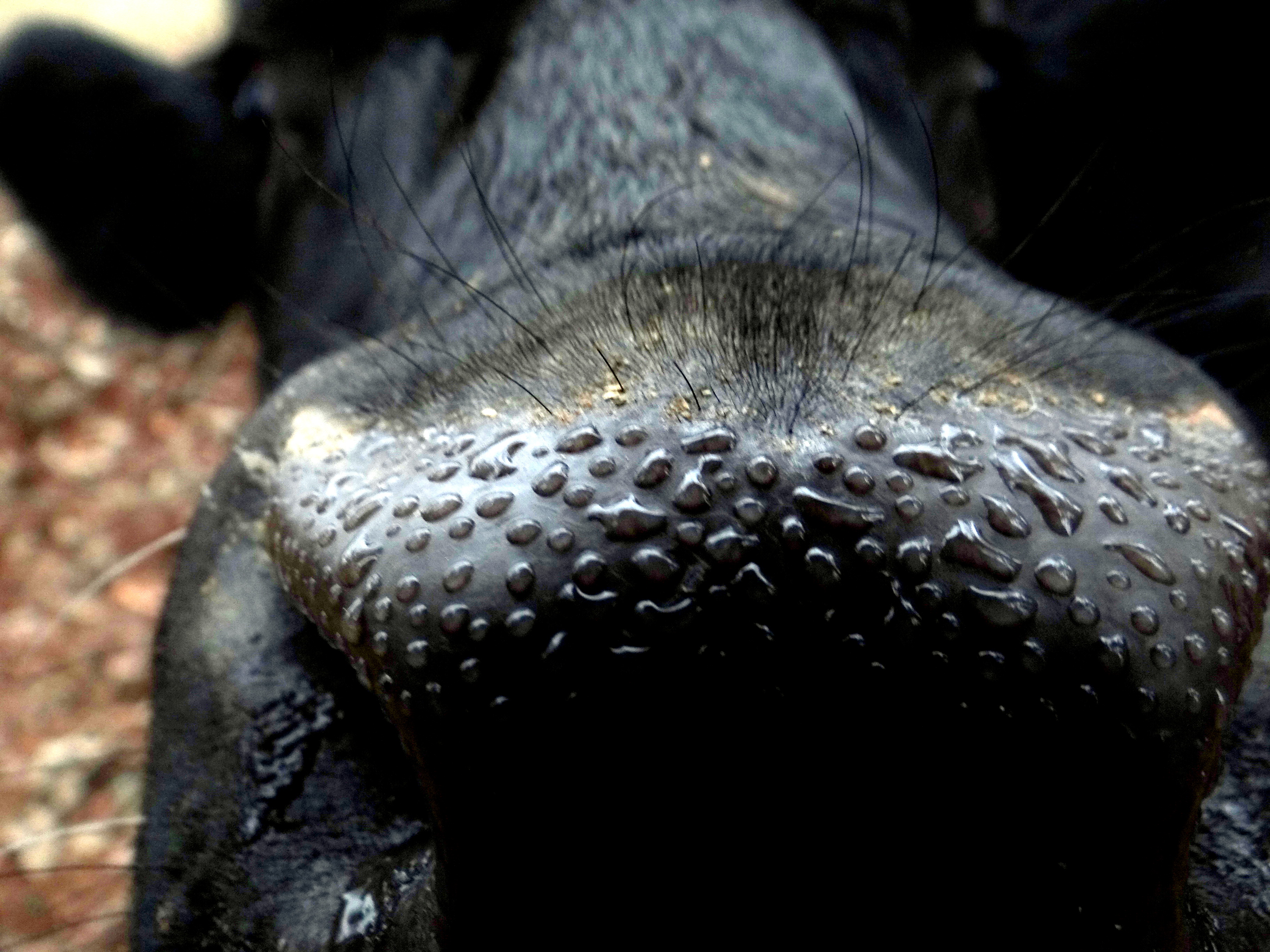
I set out under leaden skies to see what I could discover along Piney Woods Church Road.  The forecast promised 45 degrees, but I had to settle for 35 instead.  The light was muted, the sky almost oppressive; it truly felt like rain (or even snow) was on its way.   “No more cows,” I promised myself.  I had joked with my wife yesterday after posting my cow photograph that it might be possible to do 365 different cow photographs across a year.  I sincerely promise my readers that I won’t do that.  I took quite a few macro photographs of lichens, moss and leaves, and some intriguing abstract images through tangles of greenbrier.  Still, after wading through the over sixty photos I took today, the cow clearly topped the list.  I suppose one could say that he won by a nose.

Landscape with Cow Nose


Jan 032014
 

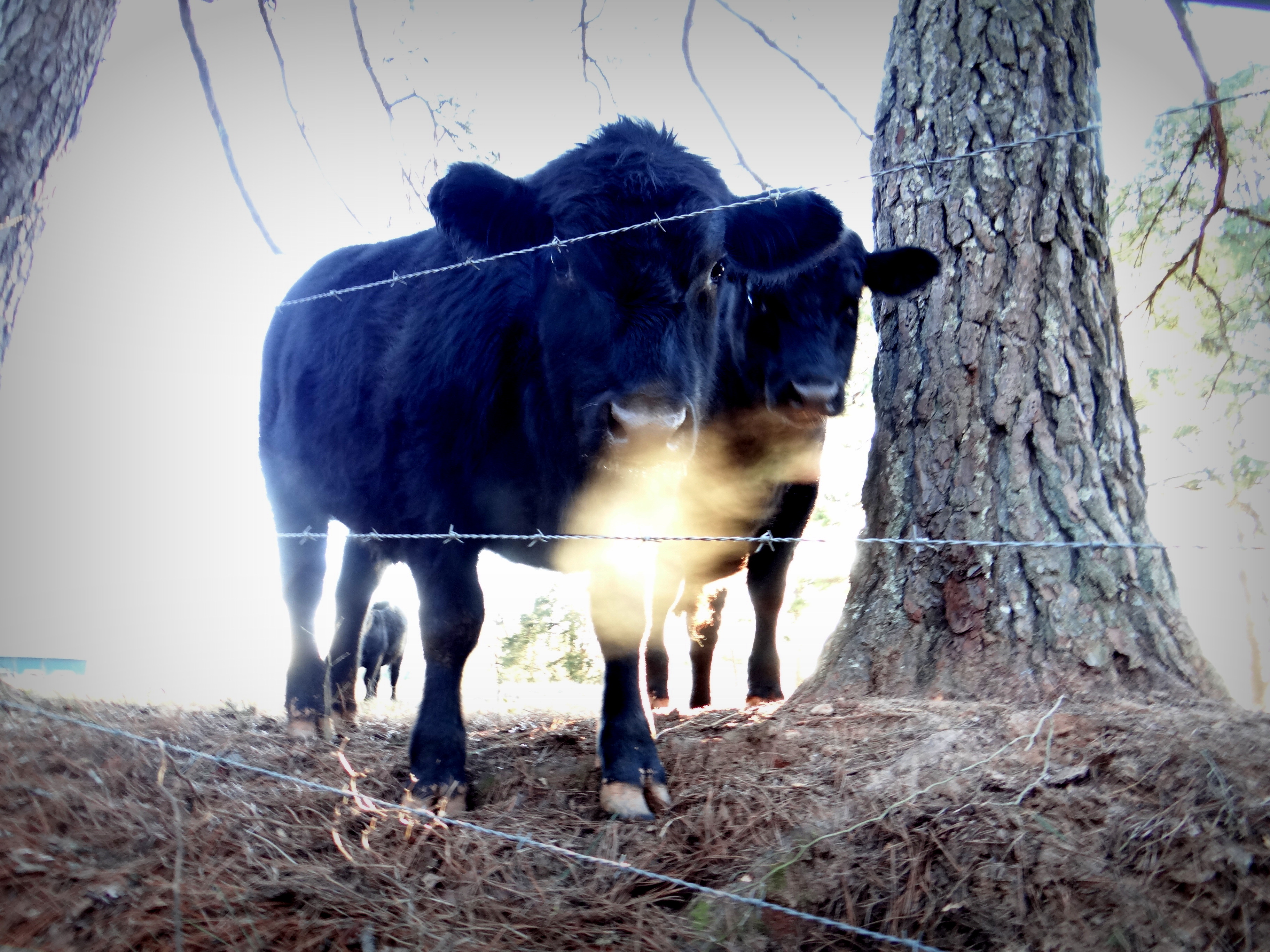
It was a cold day by Georgia standards, with the temperature just a couple degrees above freezing, though without the harsh wind of yesterday afternoon.  Ice had formed along the edges of the ditch beside Piney Church Road.  The sky was deep blue, the sunset less than spectacular, but a delight to see anyway, after so many cloudy days of late.  While waiting for the sunset, I hung out with some cows who were at least as curious about me as I was about them.  I could see their breath in the late afternoon air.

A Cold Day for Cows

Jan 022014
 

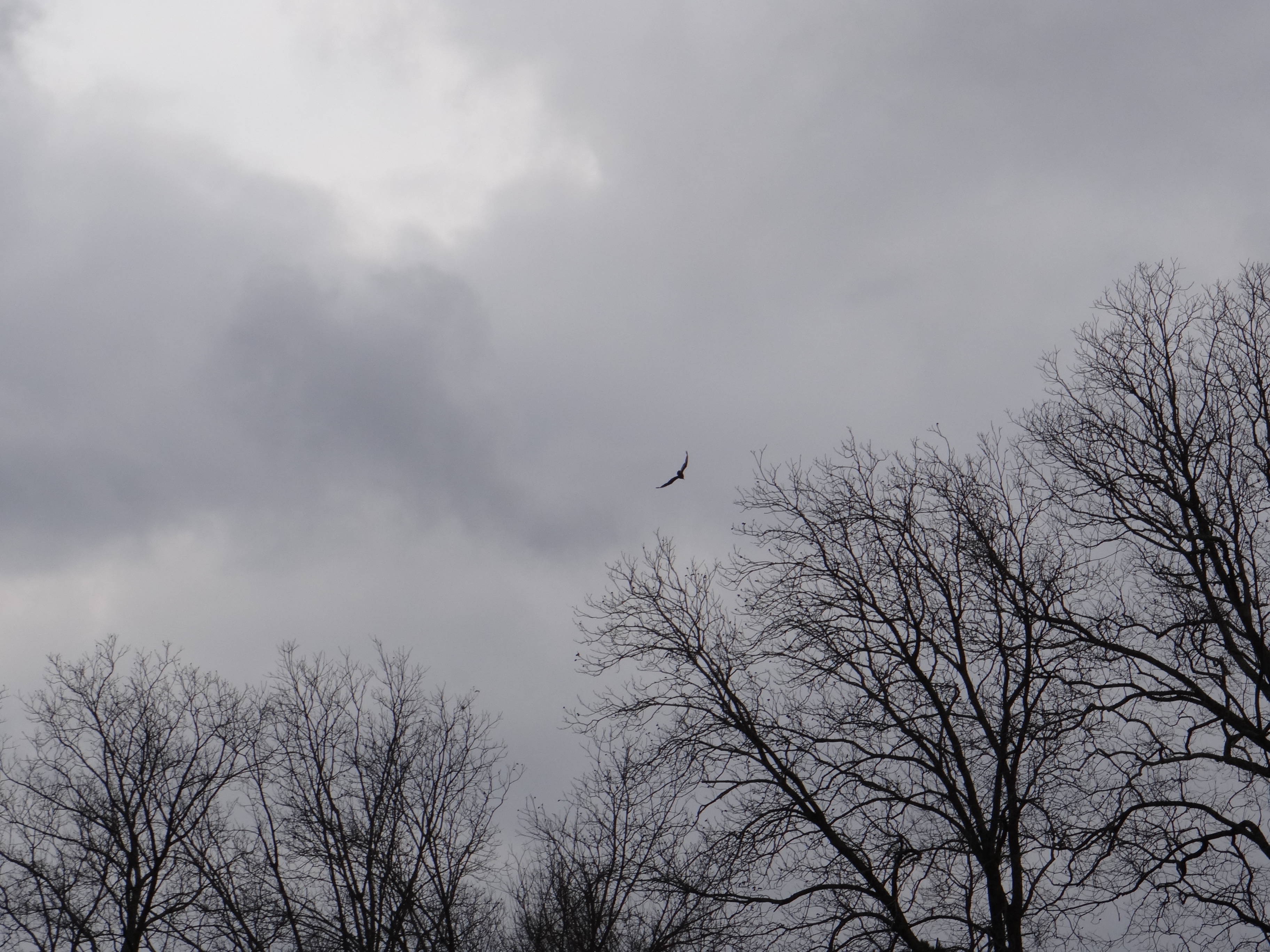
Wind Bird

Another cloudy day. The morning rain had passed, and with the cold front moving through the wind was picking up, the chill gusts numbing my fingertips and setting leaves and branches into motion. After several attempts to capture close-up images of mosses, lichens, and ferns, I decided to embrace the wind instead. Looking across an open pasture about two-thirds of the way from Rico Road to Hutcheson Ferry Road, I saw this turkey buzzard gliding on the wind currents. The same wind that made macro photographs well nigh impossible for me had granted this crow an opportunity to soar amid the breaking clouds.

Jan 012014
 

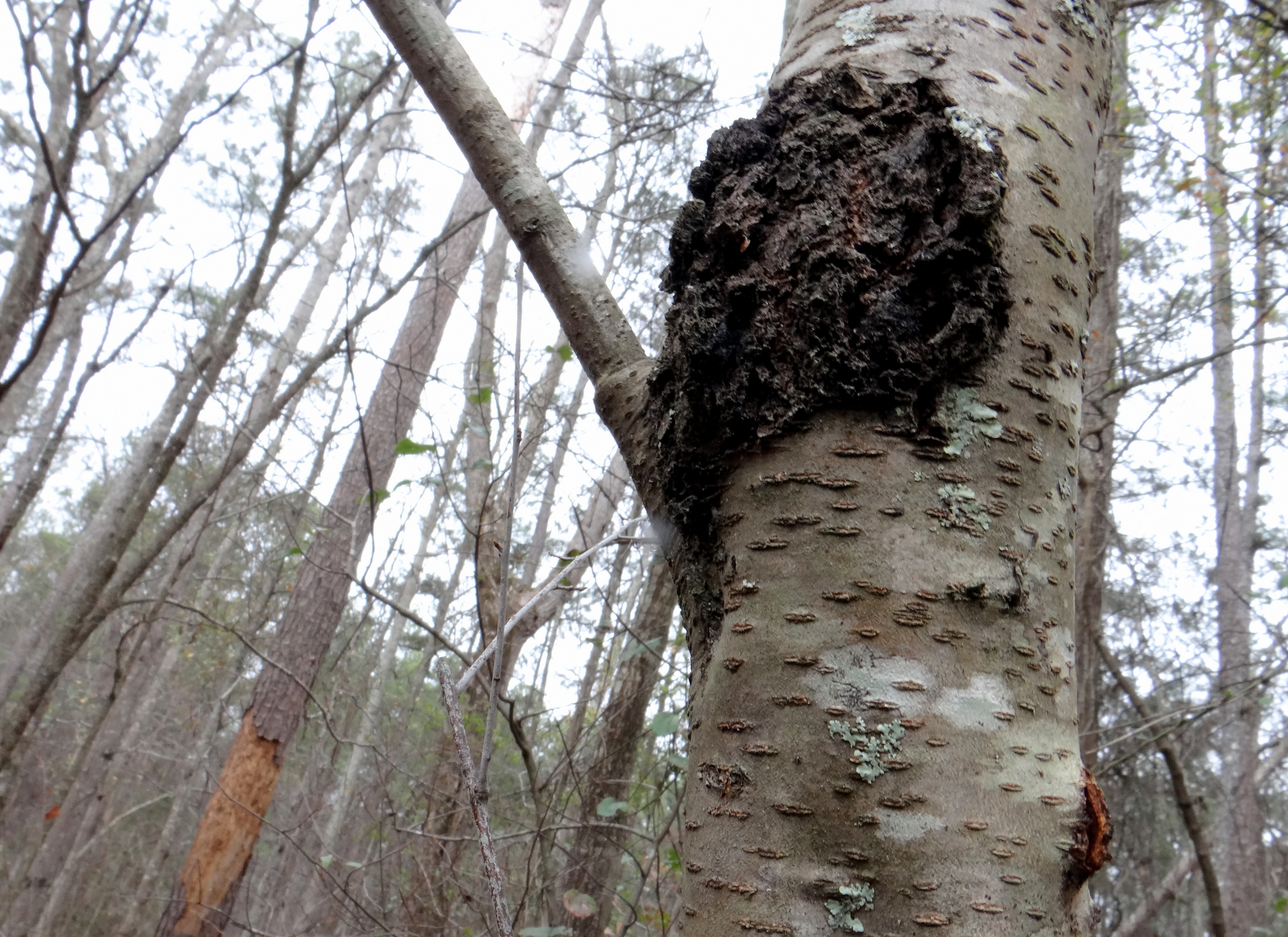
A grim, overcast day greeted me for the start of a new year and my new project documenting the Piney Woods Church Road landscape.  So much for plans to begin with a sunrise.  Instead, I leisurely made my way to the road late in the afternoon, an hour or so of what passed for sundown.  Glancing into a grove of trees between Piney Woods Church Road and Rico Road, my eye was caught by a loblolly pine (Pinus taeda) that has most likely been killed by the southern pine beetle (Dendroctonus frontalis), an insect measuring only 2 to 4 millimeters as an adult.  Closer at hand, a young pin cherry (Prunus pennsylvanica) growing beside the road has been disfigured by crown gall, a woody tumor caused by the bacterium, Agrobacterium tumefaciens.  All around me, tiny organisms were slowly devouring the forest.

Devouring Forest

Dec 312013
 

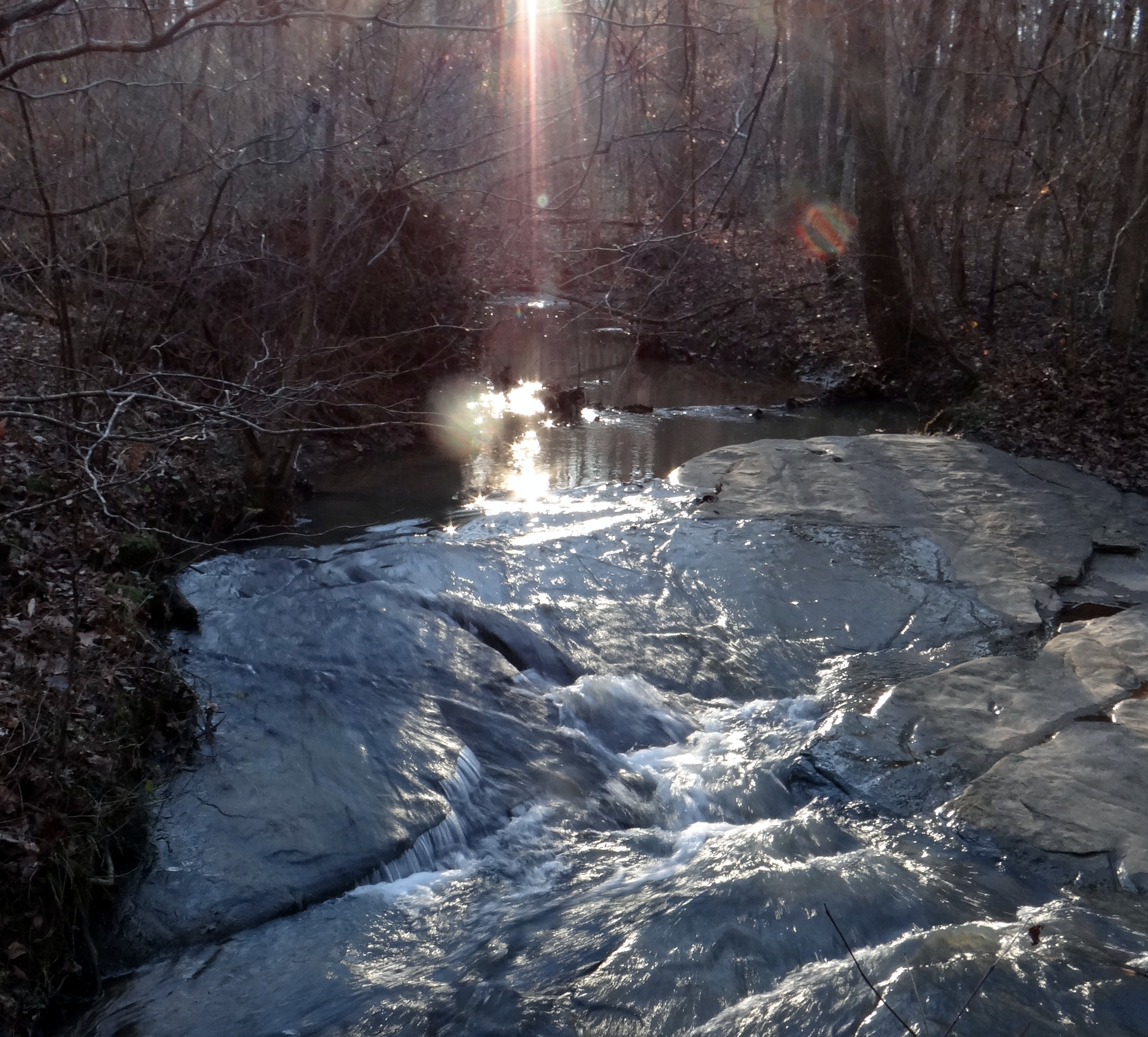
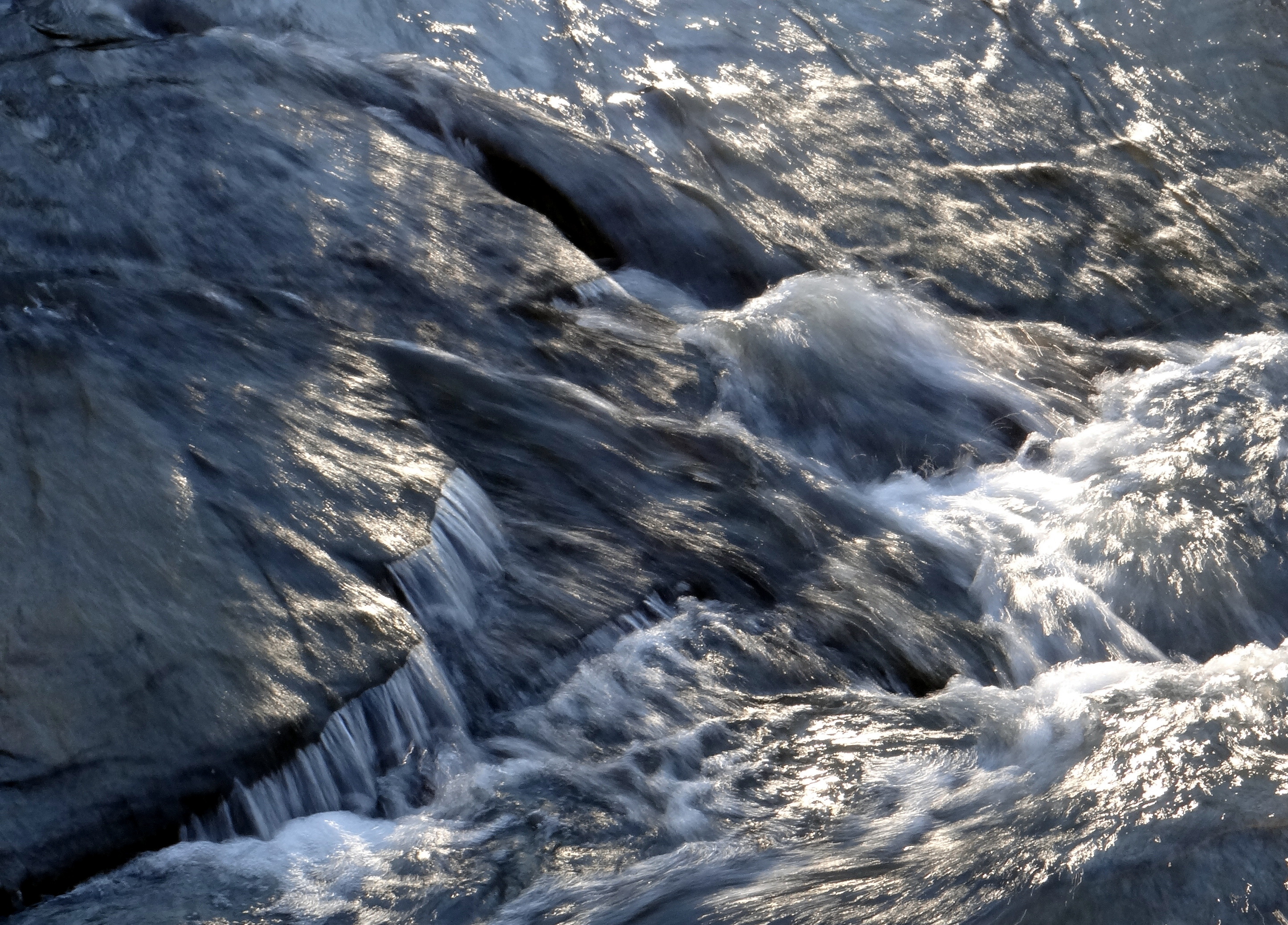
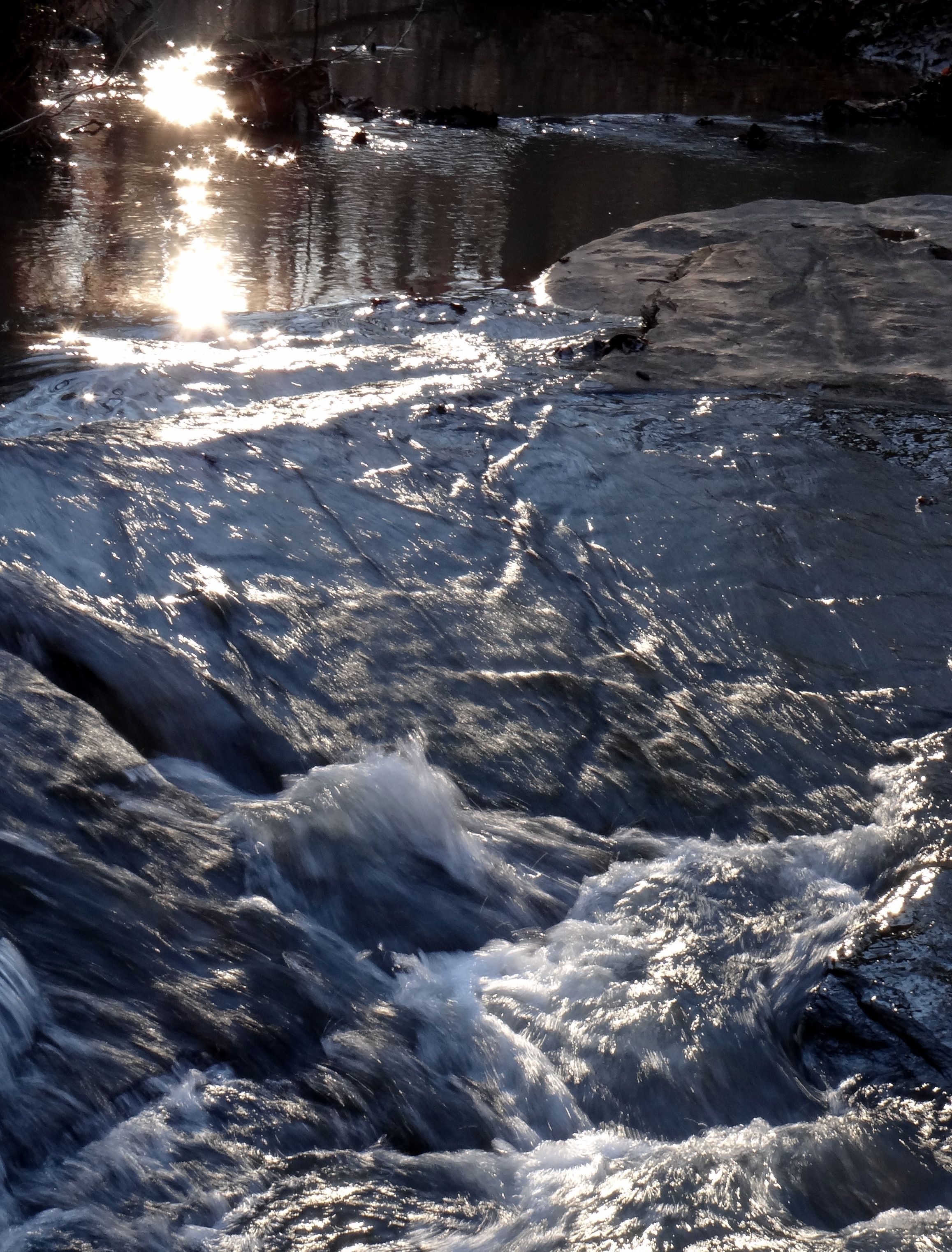
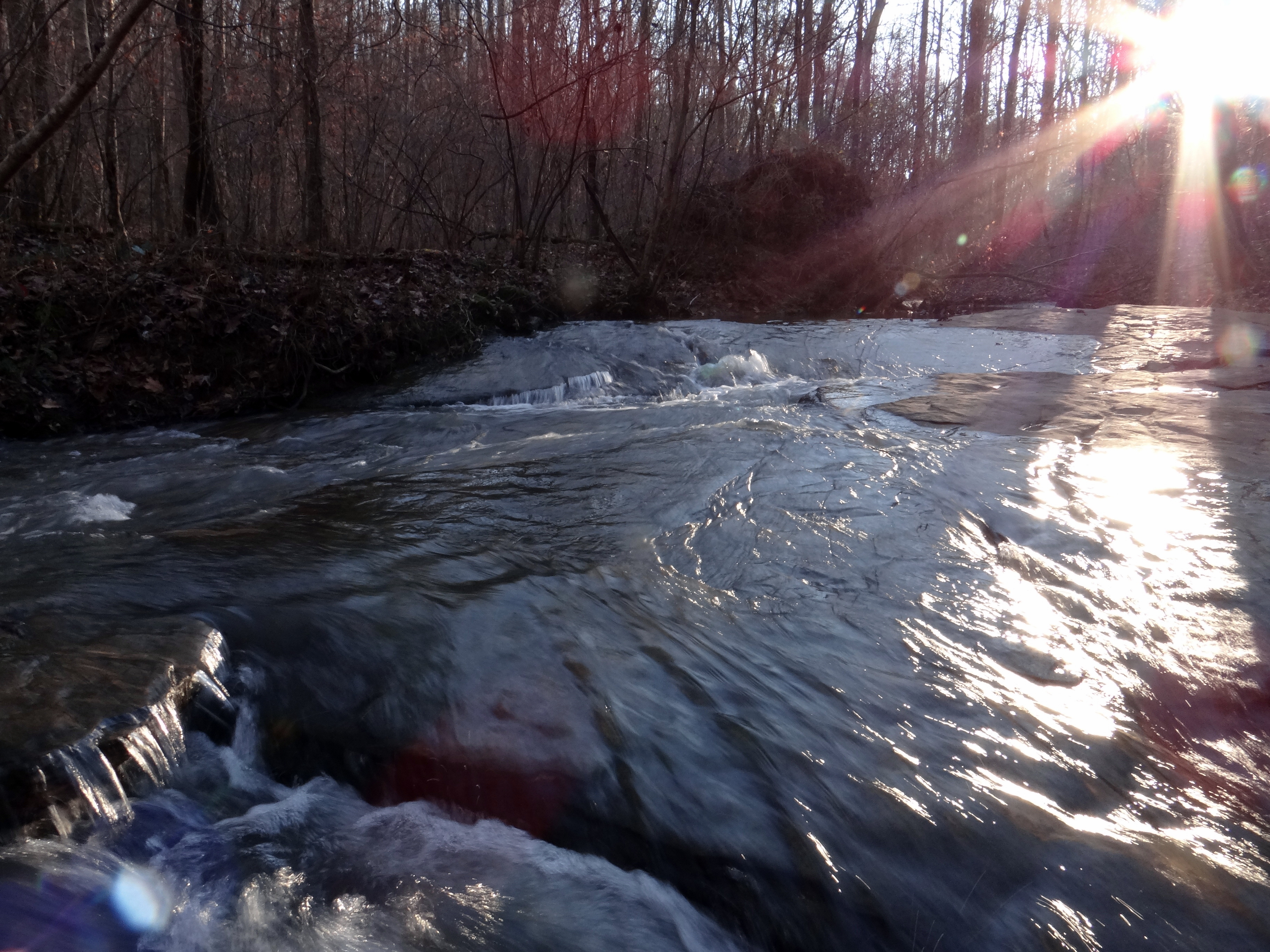
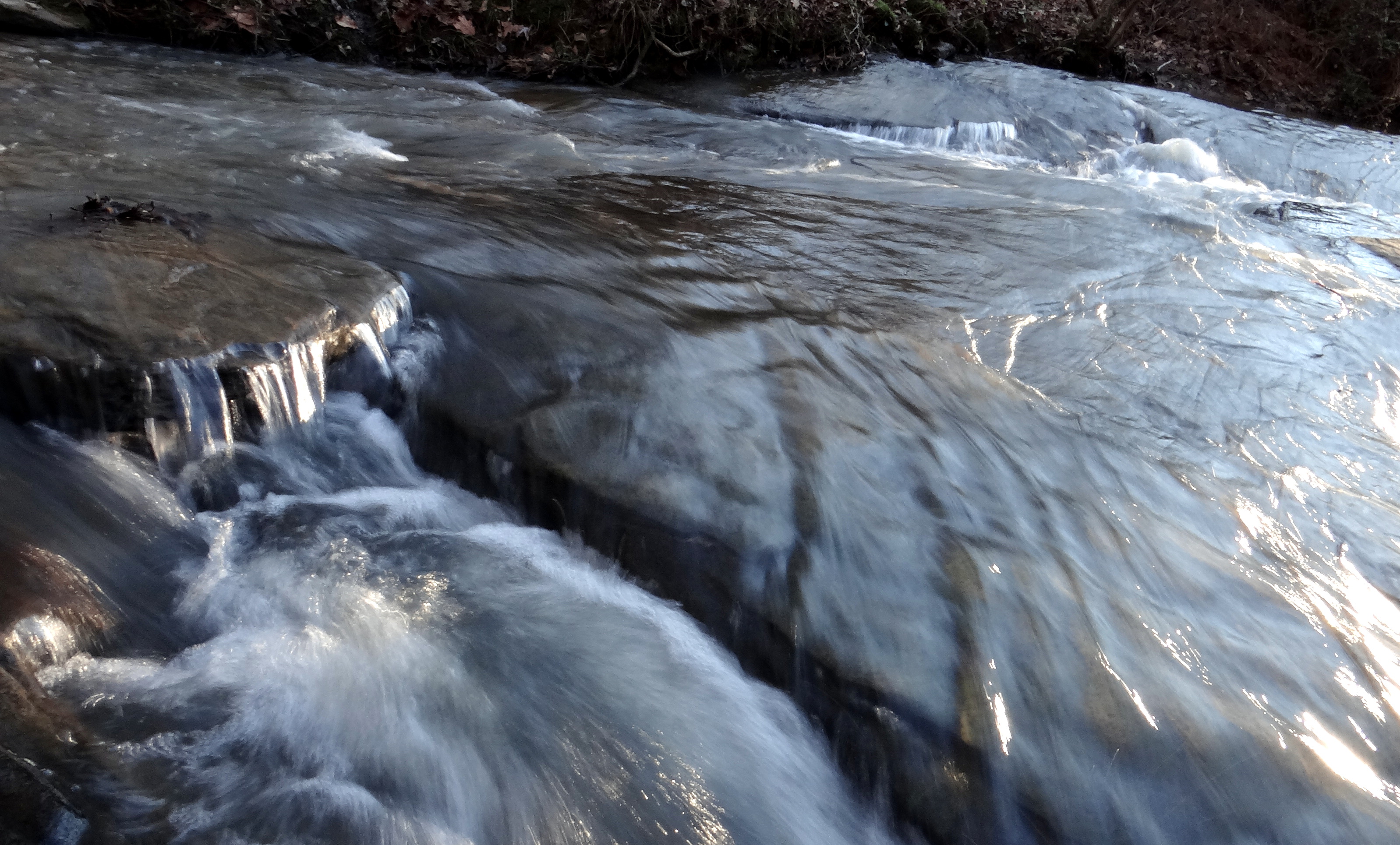
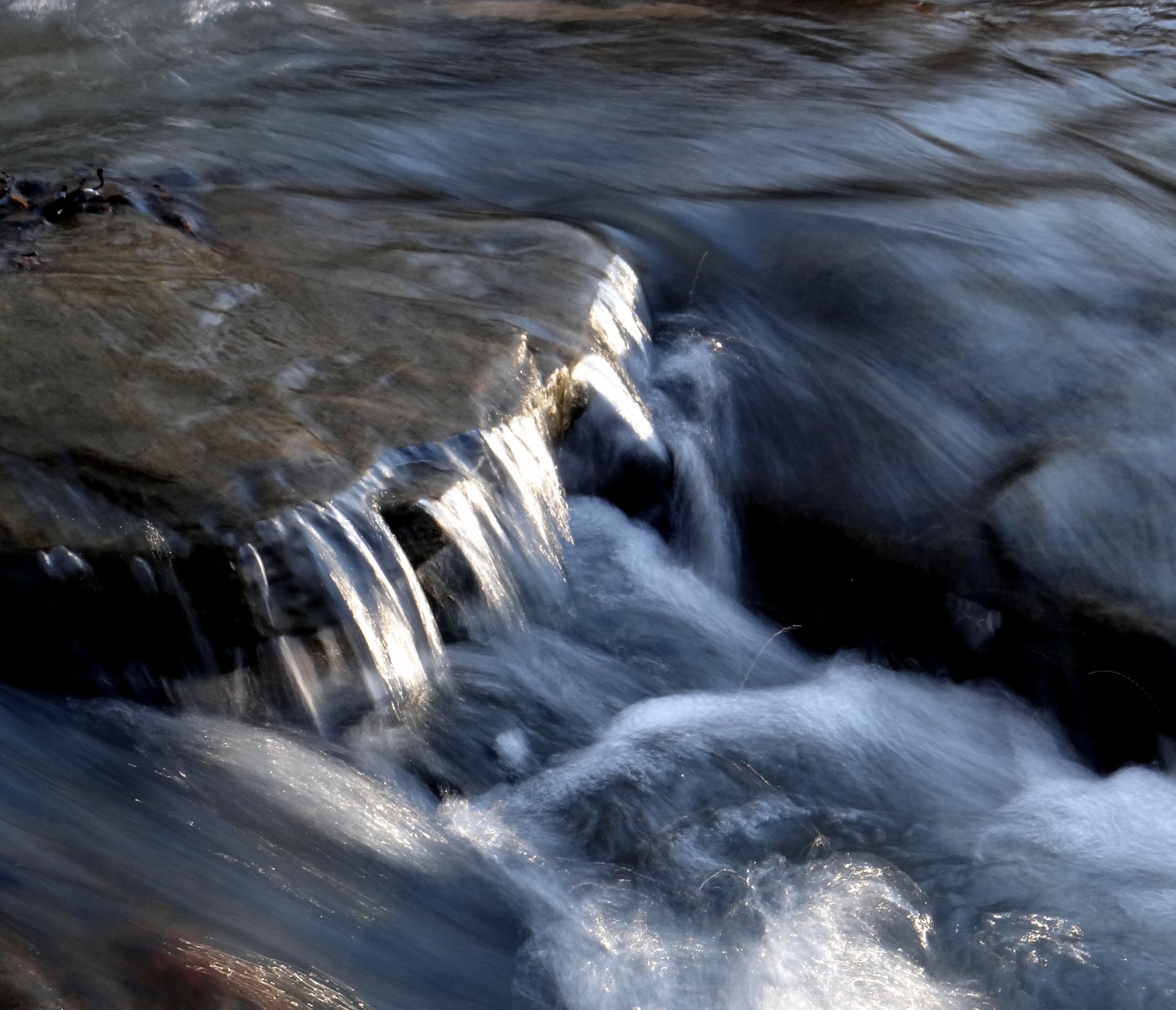
After viewing the stone piles along the Gorge Trail at Little Mulberry Park in Gwinnett County, my wife and I continued along the Gorge Trail.  We soon arrived at the banks of a small, swift-flowing stream.  It was that magical time of day photographers call “the golden hour”, and the lighting on the rushing water was stunning.  Enraptured, I took photograph after photograph.  Here, I would like to share a few of them with you.  While I may not have encountered the sacred amid the park’s stone piles, I did meet up with it there, along the stream, during a few golden moments.


Golden Hour Stream One


1-DSC02652


1-DSC02654


1-DSC02660


1-DSC02668


1-DSC02670

Dec 302013
 
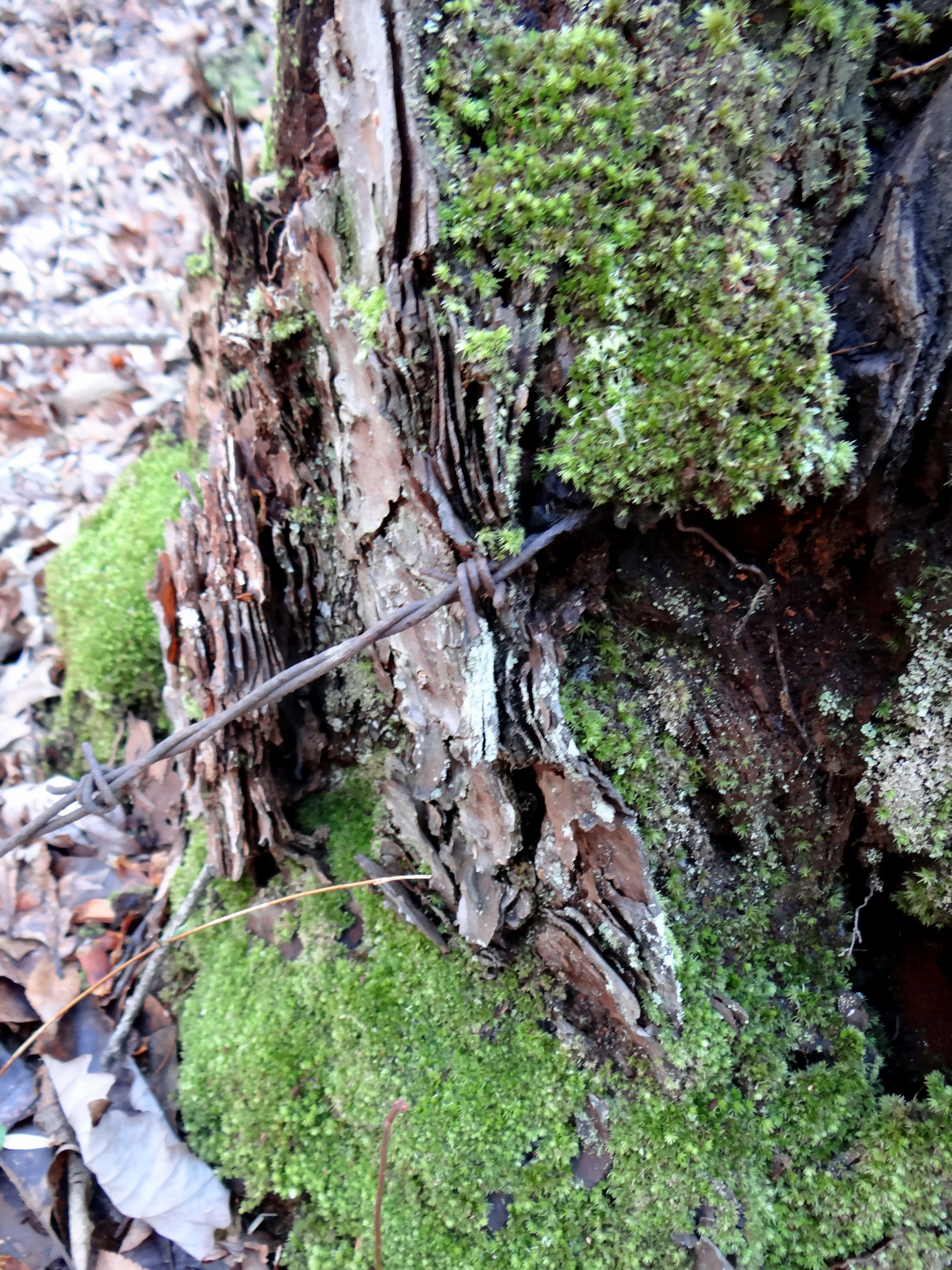
Barbed wire emerges from tree stump, Little Mulberry Park.  26 Dec. 2013

Barbed wire emerges from tree stump, Little Mulberry Park. 26 Dec. 2013

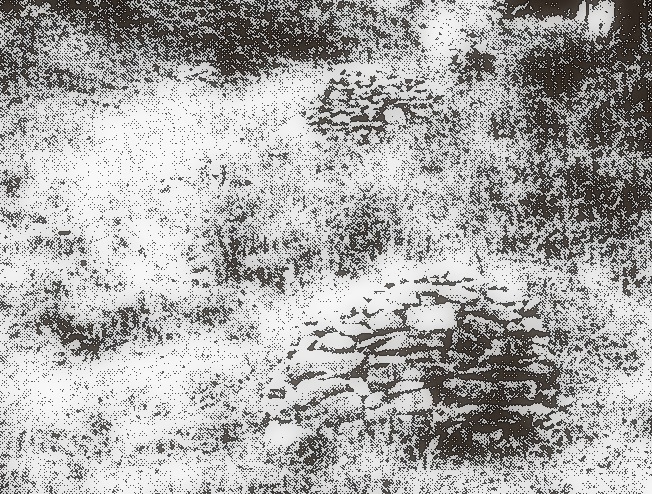
Mid 20th Century stacked rock piles, Madison County, North Carolina.  From Early Georgia article by Thomas Gresham (1990).

Mid 20th Century stacked rock piles, Madison County, North Carolina. From Early Georgia article by Thomas Gresham (1990).

What do the stone piles of Little Mulberry Park in Gwinnett County have to tell us about the past history of the area?  If they are not prehistoric burial and ritual sites, what other possibilities remain?  In this final blog post in my series about this stone mounds, I will explore another explanation for their origin, one that relates them to the past agricultural history of the area.  Evidence that the land was once open pasture can be found in the large pasture trees that follow former fence lines (see my post from 12/28 for an example), and bits of barbed wire that emerge from old tree stumps in the park.

But why would settlers choose to pile up rocks on the property in the first place?  Patrick Garrow, the archaeologist who did the initial investigation of the site in 1988, argued that the stone piles locations and structure argued against the stones having been piled up by farmers clearing the ground for planting.  Indeed, since the land was never tilled but only used for pasture, that explanation seems unlikely.  Perhaps the farmers wanted to clear the ground so that there would be more graze for their animals, or so that the animals would be less likely to injure themselves?  Why, then, go to the trouble of stacking the rocks?

It is the fact that the rocks were stacked which convinces many people that the mounds are evidence of a prehistoric origin.  Clearly, someone (or someones, plural) went to considerable effort to place the rocks in layers that can still be seen today.  In fact, as archaeologist Thomas Gresham argued in an Early Georgia article in 1990, southern farmers have stacked rocks into cylindrical piles like these within recent history.  In his paper, entitled, “Historic Patterns of Rock Piling and Rock Pile Problems”, Gresham included photographs of such rock piles.  Before 1940, Gresham explained, flat rock and flagstone quarrying in Georgia was “small scale, localized, and done by hand.”  Stones found close to the surface of the ground would be pried up with crowbars, sorted, and stacked for temporary storage until being sold for use building chimneys, terraces, foundations, and steps.  Why, then, would so many such stone piles have survived in Little Mulberry Park?  Perhaps, Gresham proposed, the stone proved inferior for use, and did not sell, or there was some other event that prevented a sale from going forward, or alternative building materials (such as brick) become widely available and prevented the stone from being sold.

Beyond the documented historic occurrence of such piles on North Carolina farms, is there other evidence to support the idea that the structures are historic stone piles rather than prehistoric Indian mounds?   In fact, there is archaeological evidence to support this idea.  In 1995, Thomas Gresham excavated eight stone piles at the Little Mulberry Park site.  He found no prehistoric artifacts, but he did unearth early 19th century artifacts (ceramics, glass, and metal, including an 1838 penny) beneath two of the piles, conclusively showing that both were constructed in historic times.  During the excavation, Gresham’s team also found evidence of a former small-scale rock quarry in the vicinity of the piles, lending further credence to the idea that stone was being cleared from the land and stockpiled in the area.

Ultimately, we will probably never know for certain what cultural forces shaped the stone piles at Little Mulberry Park.  In my own explorations, both on-ground and via the Internet, I am satisfied that the piles are not prehistoric at all, but were built by settlers gathering field stone for future construction efforts.  I suspect that this explanation will be less than satisfactory to many who have visited the park or who read enthusiastically about Mysteries from the Past.  There is a certain allure in thinking that the stone mounds were constructed by Native Americans thousands of years ago as part of a mysterious ritual.  Many human beings are hungry for the sacred, and find solace in the mythical prospect of a distant time when people lived in harmony with nature, leading lives deeply connected to their communities and to the forces animating the cosmos.  To say that the stone piles are actually Indian mounds is, I will admit, a much more enticing story.  And maybe that is why the information sign at the park, rather than proposing several different theories behind the stone structures, instead declares to this day that they are “almost certainly associated with native american cultures.”

Dec 292013
 

I would like to announce a new weekly blog feature:  posts from my years writing for The Examiner, in my role as the Atlanta Nature Examiner.  Now that The Examiner has made viewing its posts a bit like walking through a minefield (with not only pop-ups, but pop-unders, pop-overs, and blaring videos that begin unexpectedly), I am transferring my writings here, one at a time, every Sunday during 2014 (and perhaps beyond).  I hope that you enjoy them.  For those that are courageous enough to try to view them in their original location (along with all the others not yet transferred), they can be found here.

This article was originally published on April 20, 2010.

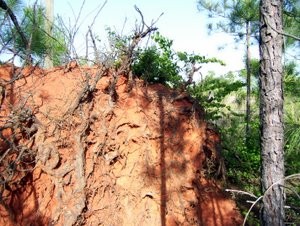
Georgia red clay covers the roots of a loblolly pine in Chattahoochee Hills, Georgia.

Georgia red clay covers the roots of a loblolly pine in Chattahoochee Hills, Georgia.

Once upon a time, the Piedmont of Georgia was blanketed in a rich, black topsoil, covering the rolling landscape to a depth of between four inches and a foot, and in places, even more. Rich in organic matter, this “A horizon” (as the upper layer of a soil profile is called) nourished a forest of predominantly oak, hickory, and pine.

Beneath the topsoil was a nearly infertile “B Horizon” of what is now called Georgia red clay. Leached of nutrients including calcium, magnesium, and potassium, the layer was stained red from iron oxide (rust). Because of this leached, clay-rich layer, the soil would have been classified as an ultisol, a soil type common in long-stable, humid temperate forests. The result of thousands of years of intense weathering, ultisols can be found throughout the Southeast.

But then the settlers came and cleared the land. Plantation owners and sharecroppers planted row crops, especially cotton. The result was dramatic soil erosion. Enormous gullies formed in abandoned fields, carrying the topsoil away into rivers like the Chattahoochee and the Oconee, and eventually into the Atlantic Ocean and Gulf of Mexico. The A horizon was lost across nearly every acre of the Georgia Piedmont.

Now all that remains is the Georgia red clay. Referred to as a “cultural icon” by a failed General Assembly bill in 2006 that would have designated it as the official soil of Georgia, it is a soil without a top layer, stripped of most of its nutrients. Nowadays, farmers apply hefty amendments of fertilizer before the soil will yield much. A local organic farm here in Chattahoochee Hills, where this author resides, trucked in large piles of compost in order to make the soil fertile enough to plant. Left alone, somehow the red clay is sufficient to grow a forest composed principally of sweet gum and loblolly pine.

The topsoil, meanwhile, has been lost, perhaps forever. Maybe, given a couple thousand years of careful stewardship of the land, it can be restored to the parts of the Piedmont not covered over with asphalt or buildings. Meanwhile, it seems fitting to offer at least a few humble words in its memory.